

Upper Eyelid Canthoplasty
What is upper eyelid canthoplasty surgery?
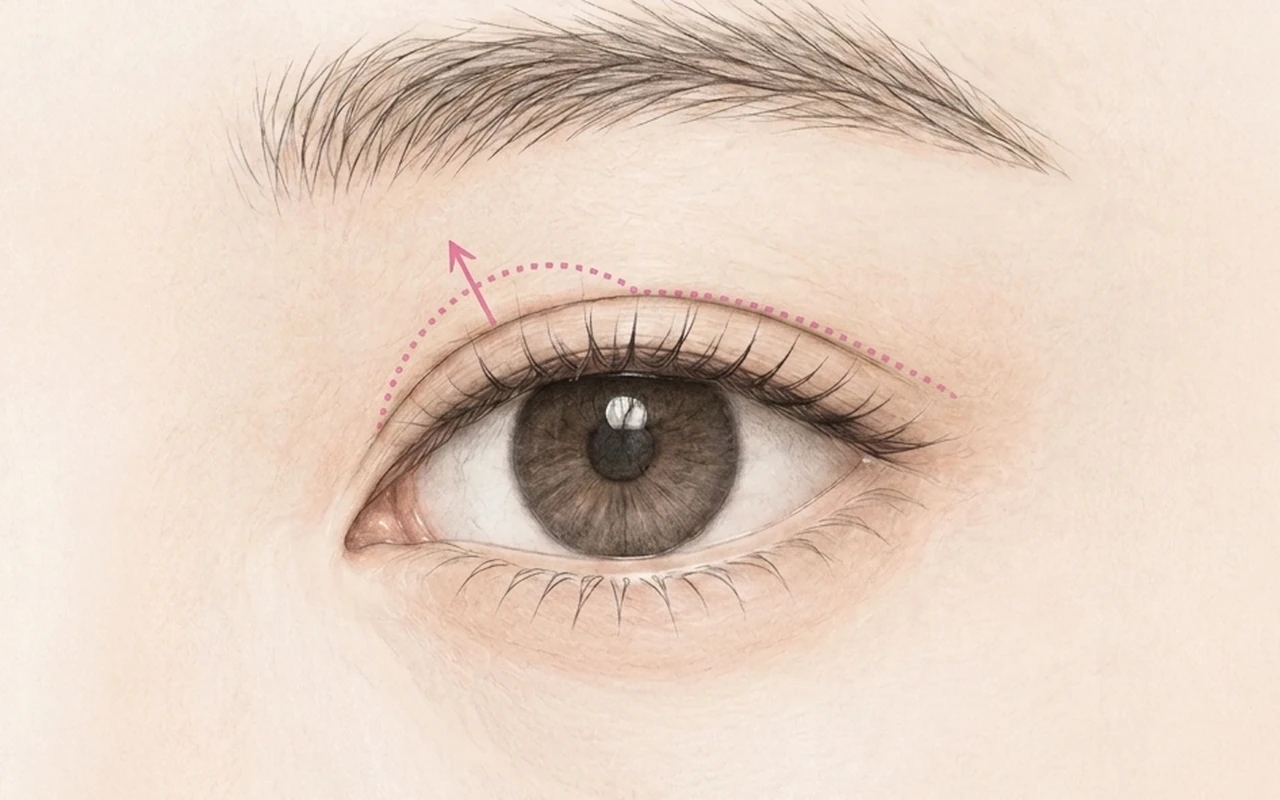
Upper eyelid canthoplasty is a surgery that adjusts the tension of the upper skin of the inner corner of the eye and the Mongolian fold to naturally reveal the previously covered front and upper part of the eye.
While medial epicanthoplasty mainly improves the horizontal length of the eye and exposure of the inner corner, upper eyelid canthoplasty focuses on correcting the stuffy line above the inner corner of the eye so that the front double eyelid line continues naturally and creates a softer and more refreshed eye shape.
It is important to correct only the necessary range by considering the individual's degree of Mongolian fold, inner corner shape, double eyelid line, and distance between the eyes.
At a Glance
Immediately after canthoplasty, the eye shape continues to change due to swelling and scar contraction, so it is advisable not to judge the result too early. When double eyelid surgery and canthoplasty are performed together, swelling, bruising, and conjunctival edema may occur more easily.
Upper Eyelid Canthoplasty Surgical Process
- 1Before surgeryThe front part of the double eyelid line is hidden by the skin and Mongolian fold above the inner corner of the eye.
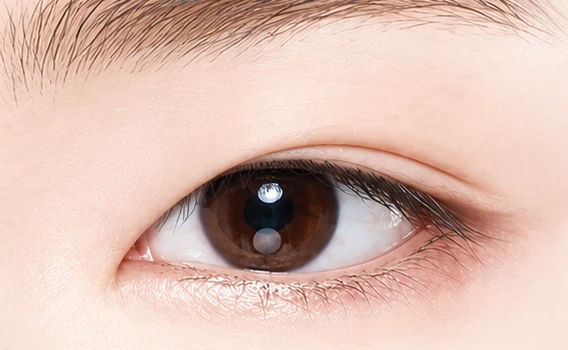
- 2DesignThe upper eyelid canthoplasty line is designed by considering the eye shape and proportions.
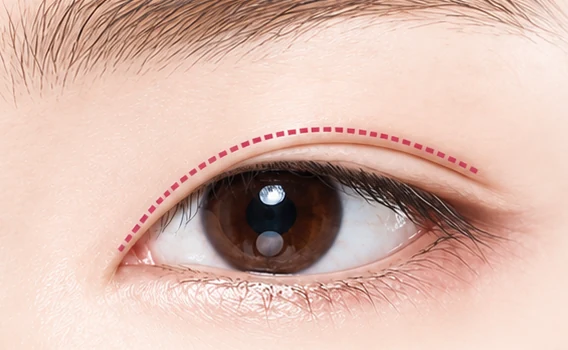
- 3Tissue correction and suturingThe skin and muscle layer on the upper inner side of the inner corner of the eye are incised at a 45-degree angle only as much as necessary, then finely corrected and sutured.
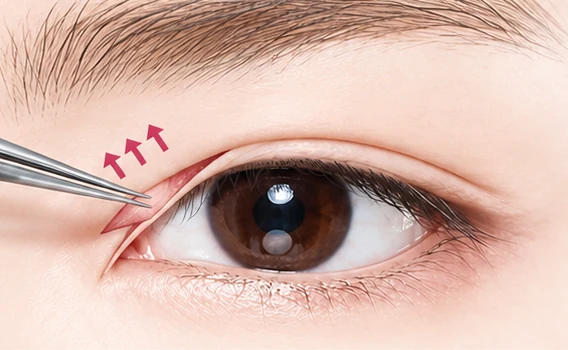
- 4After surgeryThe inner corner of the eye becomes clearer, and a more open, refreshed eye shape can be expected. Results vary from person to person.
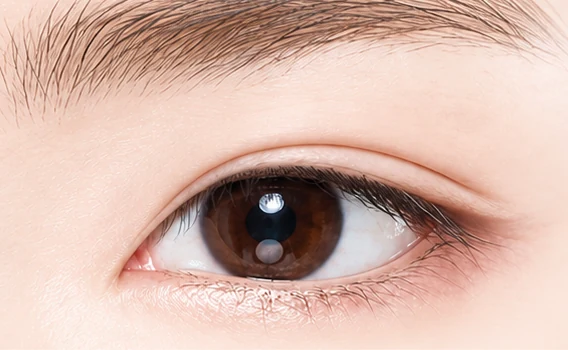
Effects of Upper Eyelid Canthoplasty
Upper Eyelid Canthoplasty, KakaoTalk 1:1 Consultation
The anesthesia method and recovery schedule for Upper Eyelid Canthoplasty can be inquired in advance via KakaoTalk before the consultation.
What area does Upper Eyelid Canthoplasty address?
Upper Eyelid Canthoplasty mainly corrects the skin and Mongolian fold above the inner corner of the eye. The surgical range and whether to combine it with other eye surgeries are decided after examining the anatomical structure of the eye.
Recommended for
- When the Mongolian fold is strong and the upper part of the front of the eyes looks tight
- When the front line of the double eyelid is covered by the Mongolian fold
- When desiring an eye shape that naturally connects from in-line to in-out line
- When the front of the eyes sags downward or looks tight
- When it is difficult to create the desired eye shape with existing Medial Epicanthoplasty alone
- When desiring a natural and soft front of the eyes rather than excessive change
Postoperative precautions
In the early stage after surgery, swelling, bruising, redness, or a pulling sensation may appear and will gradually ease during the recovery process.
Avoid rubbing the eyes hard or applying strong stimulation to the surgical site, and it is recommended to avoid drinking, smoking, sauna, and intense exercise for a certain period. The timing for suture removal, washing the face, makeup, and wearing lenses follows the guidance of the medical staff.
Frequently Asked Questions about Upper Eyelid Canthoplasty
Exactly what part does Upper Eyelid Canthoplasty open, and is it different from Medial Epicanthoplasty?
Upper Eyelid Canthoplasty is a surgery that adjusts part of the Mongolian fold covering the upper area from the front of the eyes to reveal the upper line in the front of the eyes more naturally. It treats a similar area to Medial Epicanthoplasty, but in many cases the purpose is to make the shape of the front of the eyes and the double eyelid line connect naturally rather than simply increasing the horizontal length of the eyes.
How does the eye appearance change after Upper Eyelid Canthoplasty?
As the skin that was covering the upper part of the front of the eyes is reduced, the eye shape that looked tight can appear a little more refreshed. In particular, changes can be felt well when the front line of the double eyelid is covered due to the Mongolian fold or when the front of the eyes looks tight downward.
Do I need to do Upper Eyelid Canthoplasty together when having double eyelid surgery?
Upper Eyelid Canthoplasty is not necessary for all double eyelid surgeries. It can be considered together if the Mongolian fold covers a lot of the front line of the double eyelid or interferes with creating the desired double eyelid shape. Conversely, if the Mongolian fold is not severe, double eyelid surgery alone may be sufficient.
Do I have to do Upper Eyelid Canthoplasty to create in-out or out-line double eyelids?
It is not necessarily so. Whether the desired double eyelid line is possible is influenced by various factors including not only the Mongolian fold but also the thickness of the eyelid skin and fat, the distance between the eyebrows and eyes, and the existing double eyelid structure. However, if the Mongolian fold strongly covers the front line, doing Upper Eyelid Canthoplasty together can help create the desired line.
Can I add Upper Eyelid Canthoplasty if I have already had Medial Epicanthoplasty?
Even after Medial Epicanthoplasty, additional correction may be possible depending on the shape of the remaining Mongolian fold and the skin laxity at the front of the eyes. However, since there may be scars and tissue adhesions from the previous surgery, it is important to accurately evaluate the current condition compared to the first surgery.
Will the eyes not look closer together after Upper Eyelid Canthoplasty?
Upper Eyelid Canthoplasty can be designed in a slightly different direction from general Medial Epicanthoplasty that greatly expands the front of the eyes inward. However, as it is a surgery that increases exposure of the front of the eyes, if the original distance between the eyes is close, the change must be adjusted so that it is not excessive. It is important to view the overall facial proportions together.
Can the eye shape become fierce if Upper Eyelid Canthoplasty is done too much?
If the tissue covering the front of the eyes is corrected excessively, the front of the eyes may be overly exposed, making the impression look strong or unnatural. For Upper Eyelid Canthoplasty as well, what is important is not incising a lot but correcting to the extent that matches the existing eye shape and double eyelid line.
Does Upper Eyelid Canthoplasty also leave scars?
If Upper Eyelid Canthoplasty uses a method that incises the skin, there is a possibility of scarring. In the early stage, the front of the eyes may look red or the incision line may stand out, and it often fades gradually over time. The degree of scarring varies depending on the surgical method, skin characteristics, and the recovery process after surgery.
Is it okay if the front of the eyes feels pulled or the shape is uneven after Upper Eyelid Canthoplasty?
In the early stage after surgery, swelling and pulling from scar tissue may appear differently on both sides, so the shape of the front of the eyes or the starting point of the double eyelid may look different. It often becomes natural as the tissue softens and swelling decreases over time. If a clear difference remains even after sufficient recovery, it is good to check the condition.
If the effect seems less than expected after Upper Eyelid Canthoplasty, can I open it more again?
Immediately after surgery, it is difficult to judge the final shape of the front of the eyes due to swelling and scar contraction. Even after sufficient recovery, if a lot of Mongolian fold remains and there is enough tissue laxity for additional correction, revision surgery can be considered. However, excessively repeated surgeries can cause scars or unnatural exposure of the front of the eyes, so the goal should not be simply to open more.
If you are not satisfied with the epicanthoplasty surgery results, when can you have surgery again?
Right after surgery, the eye shape continues to change due to swelling and scar contraction, so it is better not to decide on revision surgery too early. Unless there is a problem that requires early correction, the tissue and scar are allowed to stabilize sufficiently before evaluating the current condition to determine the timing and method of revision surgery.
In what order is Upper Eyelid Canthoplasty performed?
The condition in which the double eyelid is hidden or seems to disappear because of the skin covering the inner corner is checked, and the Upper Eyelid Canthoplasty line is designed in consideration of the shape and proportions of the eye. The skin and muscle layer at the upper inner part of the inner corner are incised only as much as needed in a 45-degree direction, finely corrected, and sutured. After surgery, a clearer inner corner can be expected, and results vary by individual.
For which eyes is Upper Eyelid Canthoplasty considered?
It is considered when a strong epicanthal fold makes the area above the inner corner look stuffy, when the front line of the double eyelid is hidden by the epicanthal fold, or when the inner corner droops downward or looks stuffy. It also applies when you want eyes that connect naturally from an in-line to an in-out line, or when it is difficult to achieve the desired eye shape with the existing Medial Epicanthoplasty alone.
Can Medial Epicanthoplasty and Upper Eyelid Canthoplasty be done together?
Depending on the structure of the inner corner, Medial Epicanthoplasty and Upper Eyelid Canthoplasty can be designed together to correct in the direction needed. The extent of the canthoplasty and whether to combine the two procedures are decided at the consultation after the eye structure is evaluated.
What should I be careful about after Upper Eyelid Canthoplasty?
In the early period after surgery, swelling, bruising, redness, or a tight feeling may appear and gradually ease during recovery. Do not rub the surgical area hard, avoid drinking, smoking, saunas, and strenuous exercise for a certain period, and follow the medical team's guidance on the timing of stitch removal, face washing, makeup, and wearing lenses.
Depending on the individual, side effects such as bleeding, infection, swelling, asymmetry, and scarring may occur, and the degree may vary. Please make your decision after sufficient consultation with a specialist.
View by Canthoplasty Type
Please review the medial epicanthoplasty, upper eyelid canthoplasty, lateral canthoplasty, lower eyelid canthoplasty, and the overall canthoplasty guide together.
Medial epicanthoplasty, upper eyelid canthoplasty, lateral canthoplasty, and lower eyelid canthoplasty are viewed together on one page.
EYE Medial EpicanthoplastyAdjusts the Mongolian fold at the inner corner of the eye to correct the distance between the eyes and the shape of the inner corner.
EYE Lateral CanthoplastyRelocates the outer structure of the eye corner to increase the horizontal length of the eye.
EYE Lower Eyelid CanthoplastyAdjusts the outer part of the lower eyelid to change the vertical width of the eye and the angle of the eye corner.
For additional inquiries, contact us via KakaoTalk
1:1 KakaoTalk pre-inquiry — Mon–Thu 10:00 - 19:00 · Fri 10:00 - 21:00 · Sat 10:00 - 16:00.