

Under-eye Fat Repositioning
What is conjunctival under-eye fat repositioning?
It is surgery that accesses through the conjunctiva inside the eye and moves and repositions the protruding under-eye fat to an appropriate position. It is performed without skin incision and improves both the bulging under-eye area and the sunken tear trough together to create a smoother and more natural under-eye line.
At a Glance
Under-eye fat repositioning is guided based on a surgery time of about 1 hour under sedation anesthesia. When performed together with fat grafting, there may be initial lumpiness or a firm feeling, and confirmation through consultation is required. Temporary excessive tearing or dryness after surgery may be due to dry eye caused by swelling, and using artificial tears can be helpful.
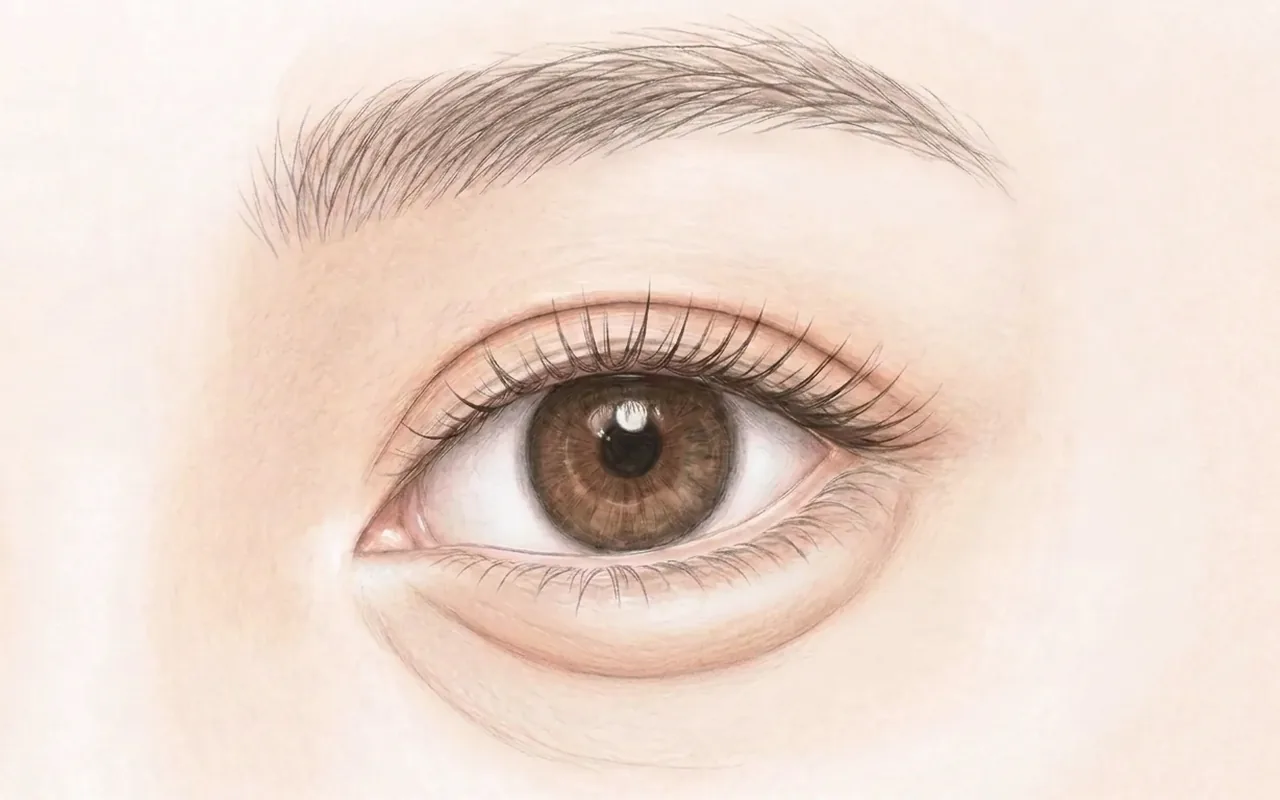 Before surgery (explanatory diagram)
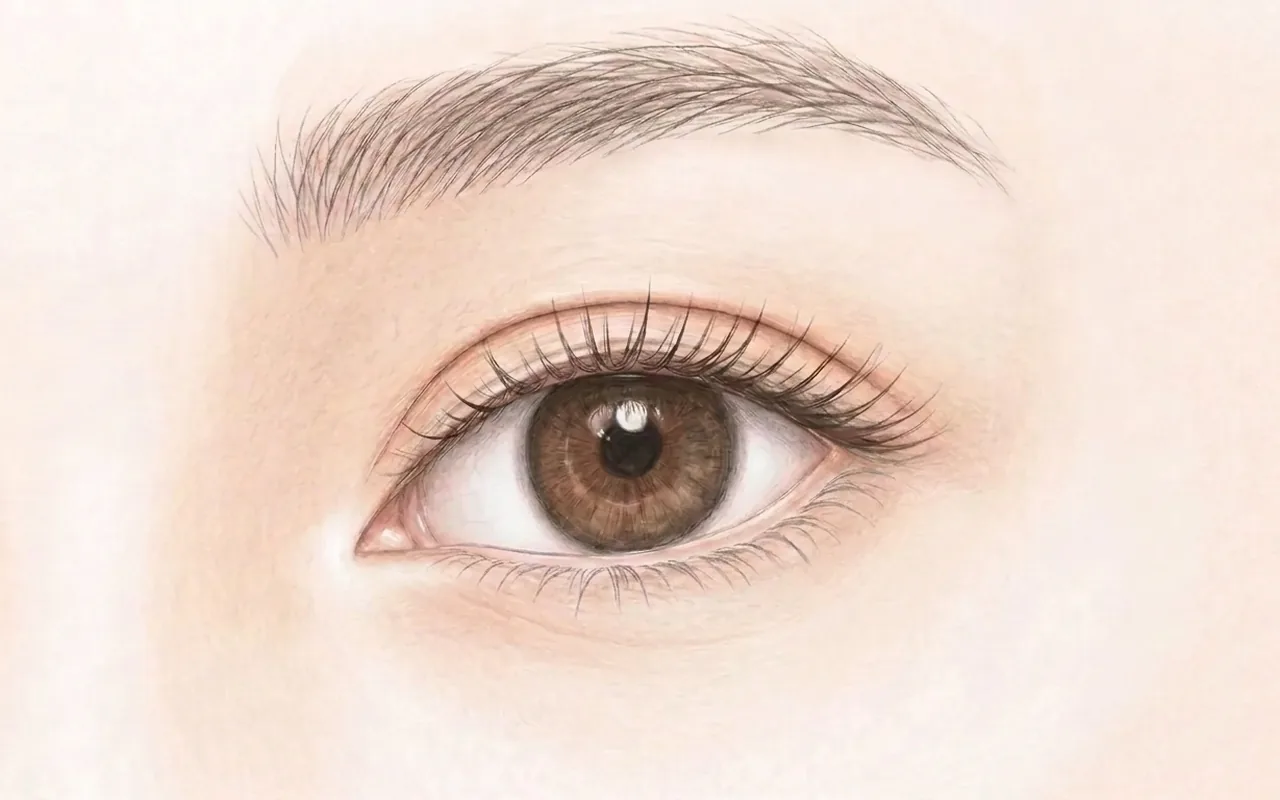 After surgery (explanatory diagram)
Conjunctival under-eye fat repositioning surgery process
- 1Anesthesia and conjunctival incisionA small incision is made through the conjunctiva on the inner side of the lower eyelid. There is no incision on the skin surface.
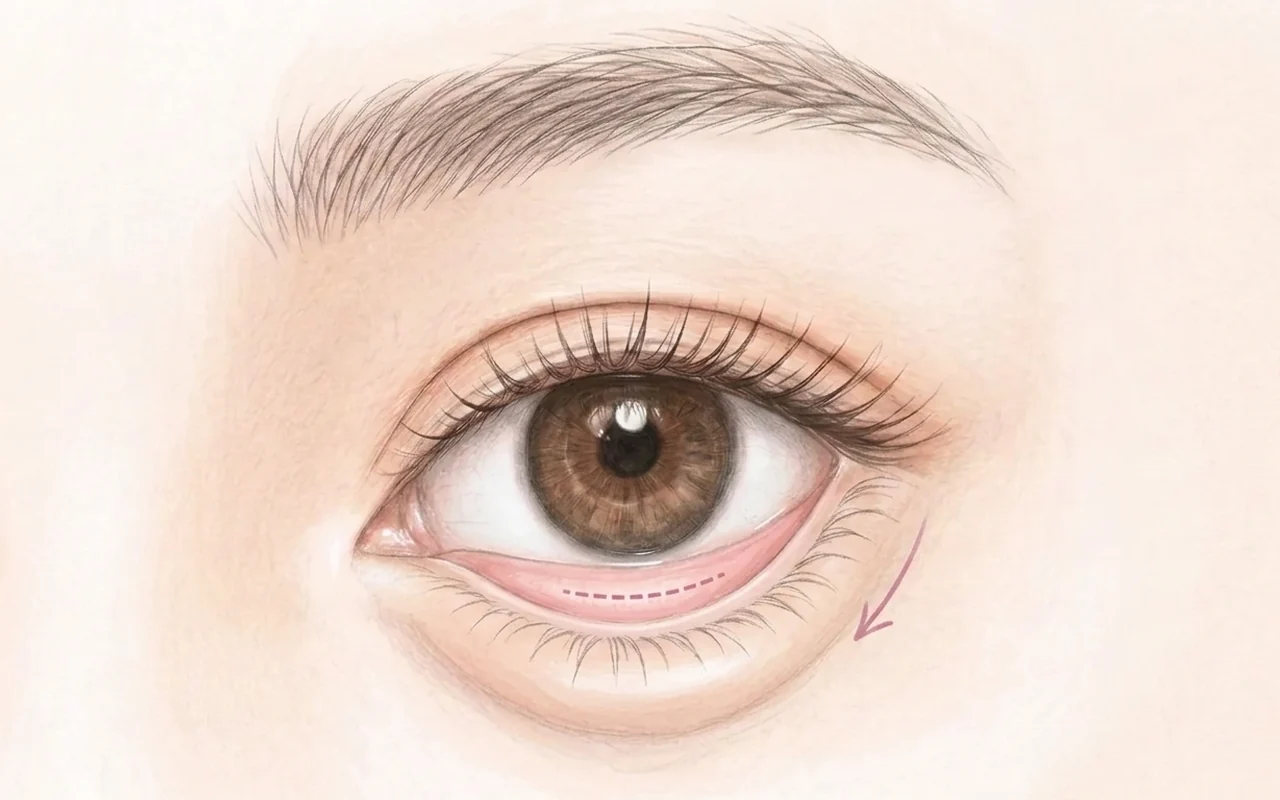
- 2Confirmation of protruding under-eye fatThe amount and position of the protruding orbital fat are confirmed, and space is secured to move the fat to the tear trough area.
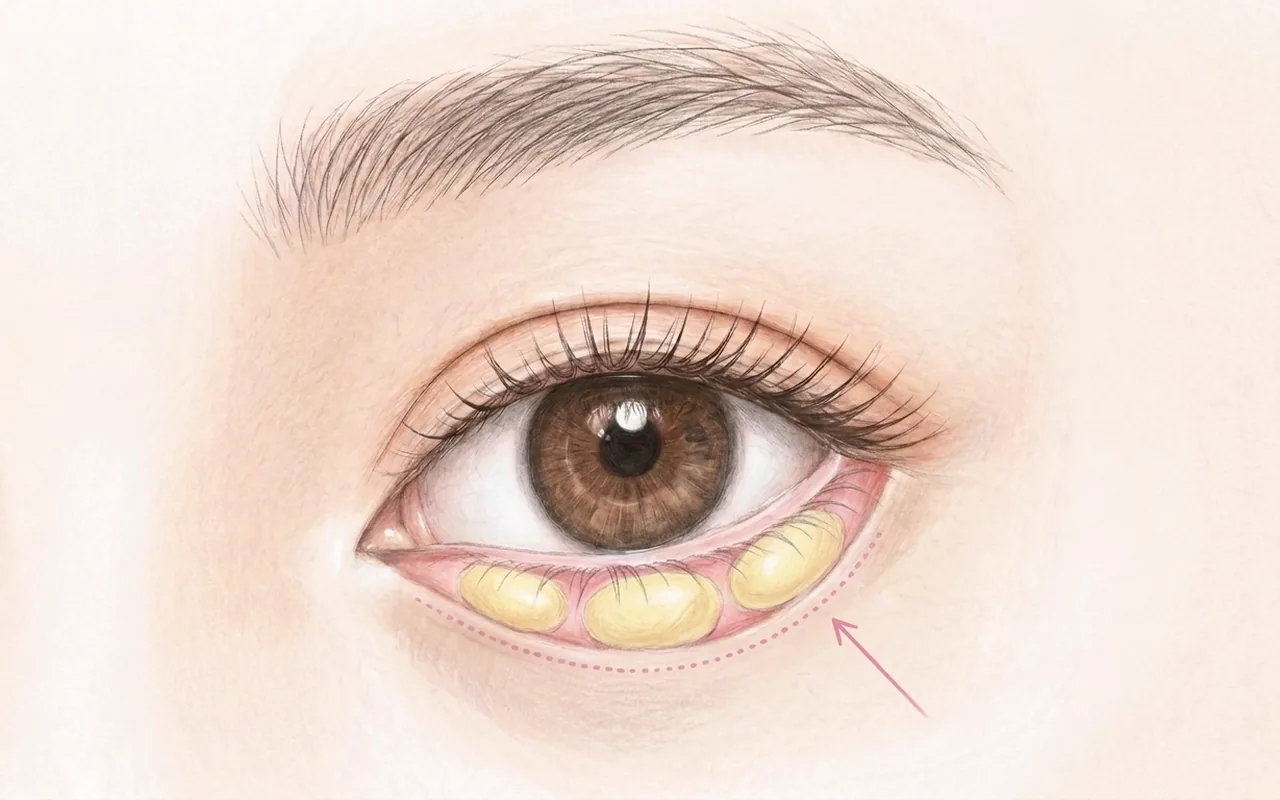
- 3Under-eye Fat RepositioningInstead of simply removing the protruding fat, it is moved and repositioned to the sunken tear trough area to improve the under-eye step-off.
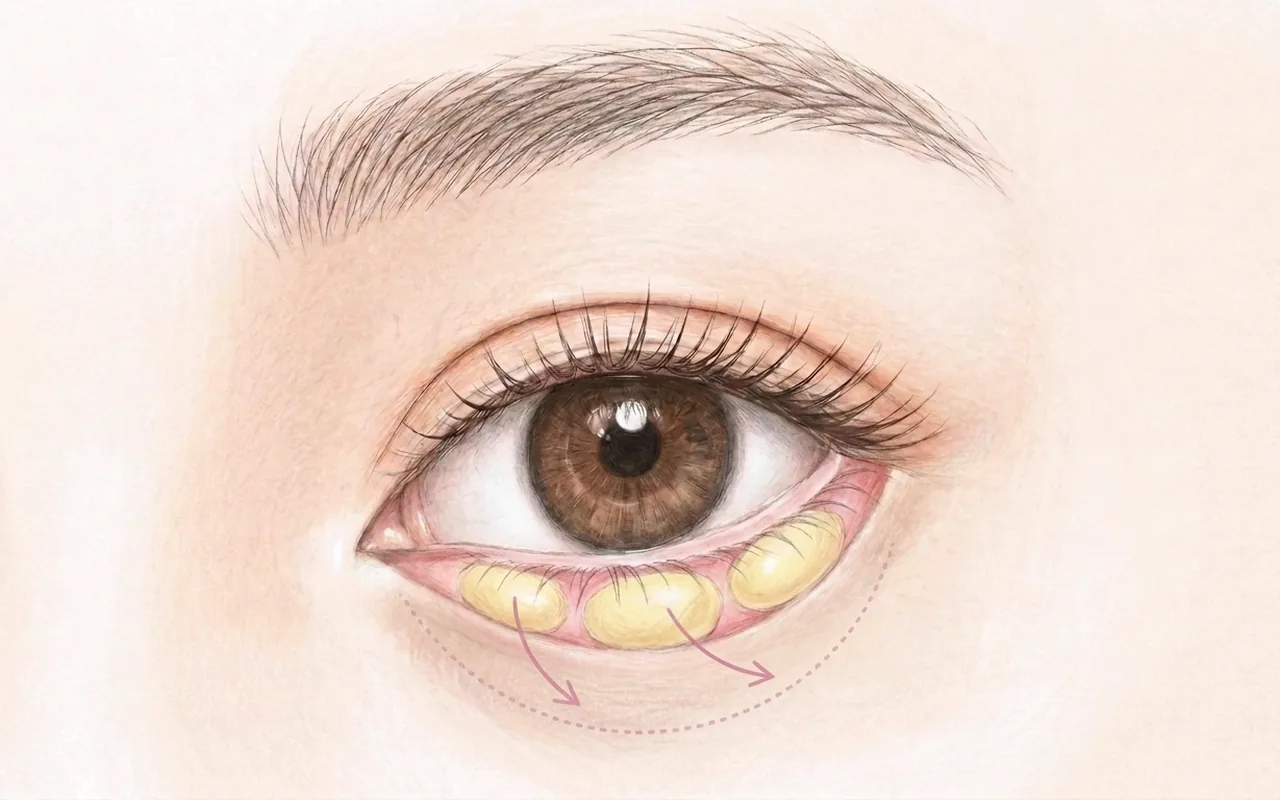
- 4Excess fat removal (if necessary)If there is a large amount of fat, only the necessary amount is appropriately removed to create a natural under-eye line.
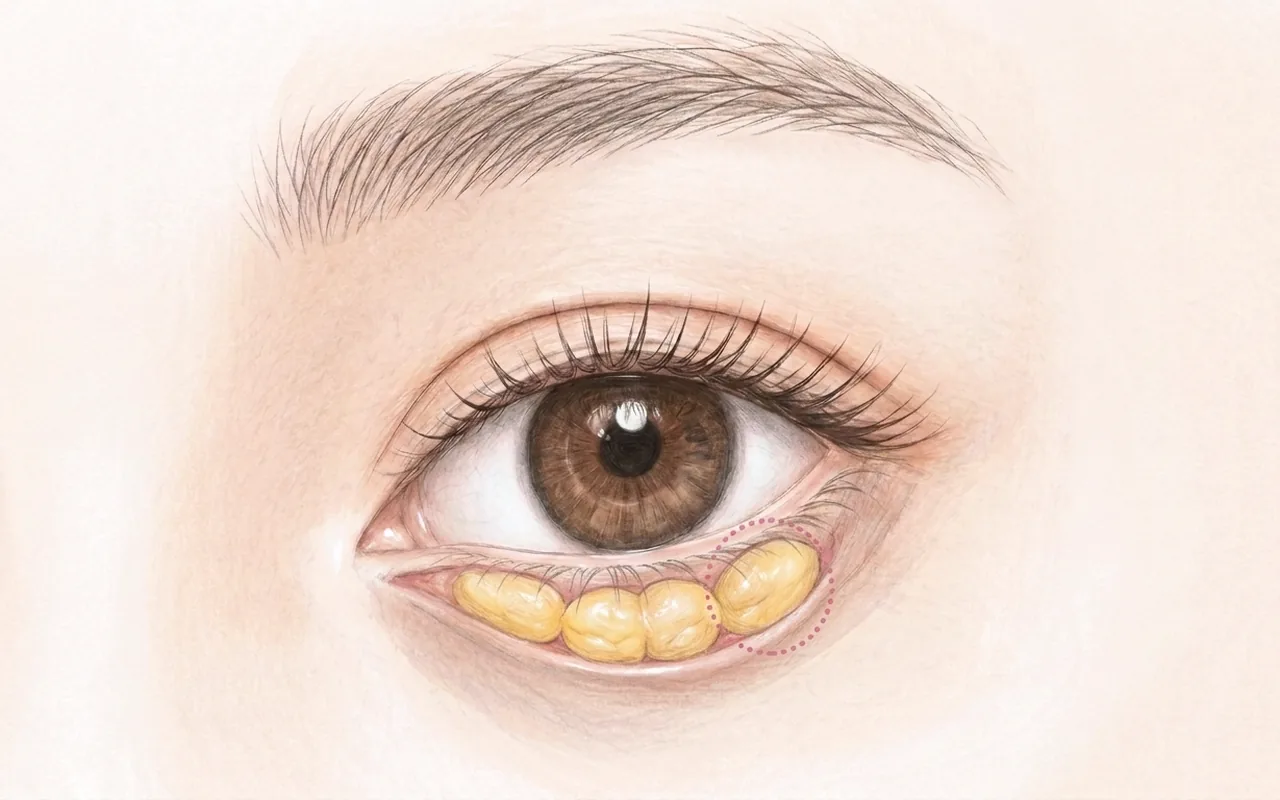
- 5Surgery completionThe conjunctival incision site is finished. Because the skin is not incised, there is no incision line on the skin surface.
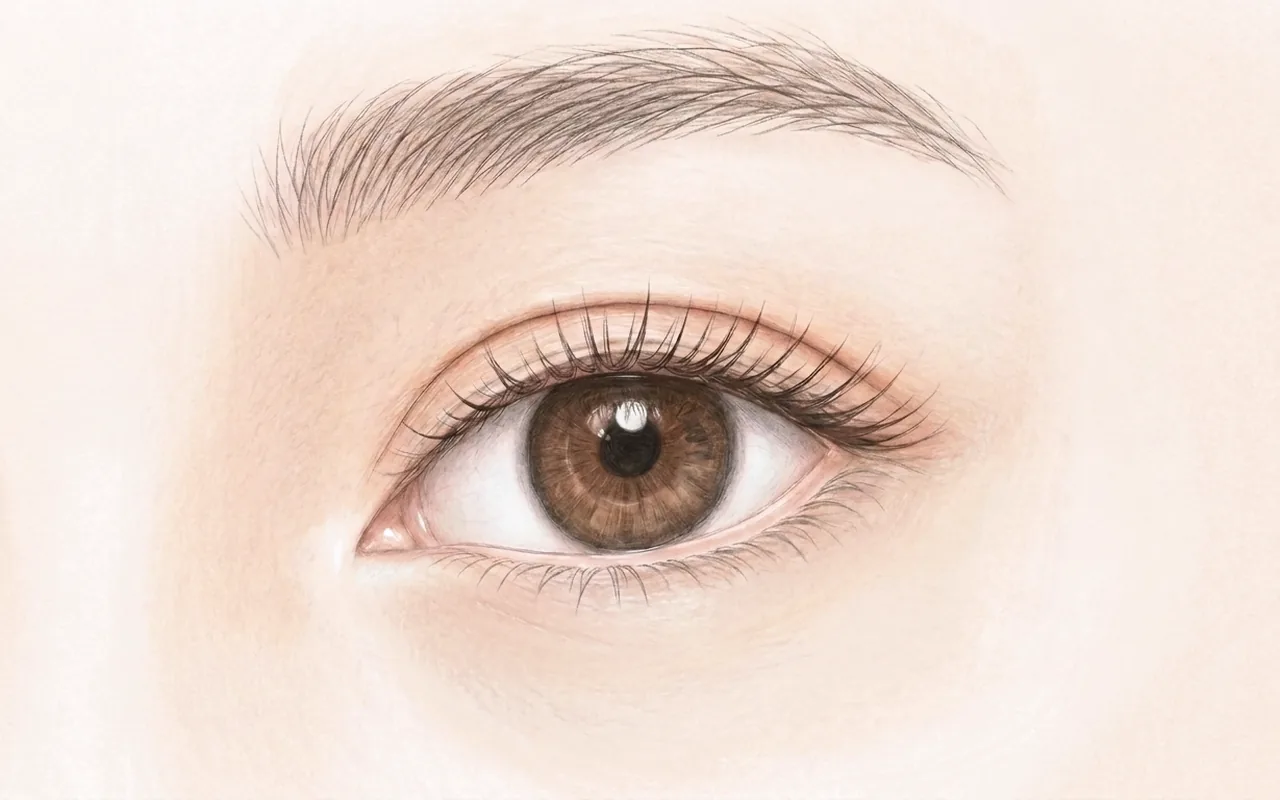
Points of conjunctival under-eye fat repositioning surgery
Under-eye Fat Repositioning, KakaoTalk 1:1 Consultation
The anesthesia method and recovery schedule for Under-eye Fat Repositioning can be inquired in advance via KakaoTalk before the consultation.
Recommended for
It can be considered when under-eye fat protrudes prominently and makes one look tired, when the tear trough is deep and appears like dark circles, when there is both protrusion and hollowing under the eyes, or when there is reluctance toward skin incision.
Frequently Asked Questions
If the under-eye area is bulging, will under-eye fat repositioning improve it?
If under-eye fat protrudes forward and looks puffy, and the tear trough below it is hollow, under-eye fat repositioning can be considered. The goal is to reposition the protruding fat into the hollowed area to make the uneven under-eye border smoother.
Is it better to just remove under-eye fat, or is it better to reposition it?
Having a lot of under-eye fat does not mean it should always be removed. If fat is removed excessively, the under-eye area can actually look hollow. When an under-eye groove is also present, fat repositioning, which appropriately moves the fat to improve both the bulging area and the hollowed area at the same time, may be suitable.
Will there be a visible scar on the outside after under-eye fat repositioning?
If skin laxity is not severe, surgery is generally performed through the conjunctiva on the inner side of the lower eyelid, so no incision line remains on the skin surface. If there is significant skin laxity, Lower Blepharoplasty requiring a skin incision may be considered.
Will dark circles also go away after under-eye fat repositioning?
It depends on the cause of the dark circles. Shadow-type dark circles caused by under-eye fat and the tear trough may improve together as the under-eye contour is eased. In contrast, dark circles due to pigmentation or blood vessels showing through thin skin may require separate treatment.
Does a deeply hollowed tear trough under the eyes also improve at the same time?
Yes. If under-eye fat is bulging and the tear trough below it is hollow, repositioning the protruding fat into the hollowed area can help reduce the height difference under the eyes. However, additional treatment may be needed depending on the degree of hollowing, the bony structure, and the skin condition.
How long do swelling and bruising last after surgery? When can I return to work?
Although there are individual differences, swelling and bruising may occur after surgery, and major swelling usually decreases gradually over 1–2 weeks. The time when daily activities or returning to work is possible varies depending on the degree of swelling and bruising and on the occupation, so if you have important schedules, it is advisable to allow extra time when scheduling surgery.
Can it become puffy again later even after under-eye fat repositioning?
Because aging continues even after surgery, the elasticity of the skin and surrounding tissues may decrease over time, and the under-eye area may look puffy or sagging again. Therefore, it is advisable to distinguish changes that appear over time from simple ‘recurrence’ in which fat returns to its original position.
What is the difference between under-eye fat repositioning and Lower Blepharoplasty?
Under-eye fat repositioning is mainly a surgery that improves bulging fat and the tear trough, and Lower Blepharoplasty is a surgery that also corrects sagging of the skin and muscle. If skin elasticity is acceptable, fat repositioning alone may be sufficient, but if the under-eye skin is significantly sagging, Lower Blepharoplasty may be more suitable.
I'm still young. Can I still have under-eye fat repositioning?
Under-eye fat can protrude even at a young age due to genetic and anatomical causes, regardless of age. Therefore, whether surgery is needed is determined by looking at the degree of under-eye fat protrusion, the tear trough, skin elasticity, and under-eye structure rather than age.
Will under-eye fat repositioning make my aegyo-sal disappear?
Under-eye fat and aegyo-sal are different anatomical structures. Under-eye fat repositioning is not a surgery that removes aegyo-sal itself, so surgery can generally be performed while preserving aegyo-sal. However, the impression after surgery may look different depending on the individual’s under-eye structure and the extent of surgery, so a sufficient evaluation before surgery is necessary.
It is the second day after Under-eye Fat Repositioning surgery, but why is there too much tearing only in one eye?
After Under-eye Fat Repositioning surgery, temporary dry eye symptoms may occur due to swelling or other reasons. The increased tear volume appears to be due to dryness caused by swelling. Applying artificial tears several times a day will be helpful.
How long does Under-eye Fat Repositioning surgery take, and what type of anesthesia is used?
Under-eye Fat Repositioning surgery takes about 1 hour and is performed under sedation anesthesia.
When can I wear contact lenses after Under-eye Fat Repositioning surgery?
We usually advise wearing contact lenses from 3–4 weeks after surgery. Wearing lenses before then may irritate the eyes because of swelling and other reasons.
In what order is Under-eye Fat Repositioning performed?
A small incision is made through the conjunctiva on the inside of the lower eyelid, and the amount and position of the protruding orbital fat are checked to secure space for moving the fat down to the tear trough. Rather than simply removing the protruding fat, it is moved and repositioned into the hollow tear trough, and if there is a lot of fat, only as much as needed is trimmed before the conjunctival incision is closed.
What is considered when planning Under-eye Fat Repositioning?
The surgery is planned individually, considering the amount and distribution of under-eye fat, the depth of the tear trough, skin condition, and other factors. The actual method is decided individually at the consultation.
Depending on the individual, side effects such as bleeding, infection, swelling, asymmetry, and scarring may occur, and the degree may vary. Please make your decision after sufficient consultation with a specialist.
Eye surgery pages worth viewing together
Please also look at Lower Blepharoplasty and Middle-aged Eye Surgery.
For additional inquiries, contact us via KakaoTalk
1:1 KakaoTalk pre-inquiry — Mon–Thu 10:00 - 19:00 · Fri 10:00 - 21:00 · Sat 10:00 - 16:00.