

Body Filler
Breast Filler
This is a non-surgical procedure that supplements hollow upper breasts, asymmetry, and post-pregnancy sagging with filler. Before and after the procedure, breast ultrasound is used to check the mammary gland tissue and the filler location.
At a Glance
Breast filler is a non-surgical procedure that supplements hollow upper breasts, asymmetry, and post-pregnancy sagging by splitting hyaluronic acid (HA) body filler into the fascial layer above the pectoralis major. Director Kwak Yeojin, an Obstetrics & Gynecology Specialist (Korea), checks the mammary gland tissue and the presence of any masses with breast ultrasound before the procedure, and injects while viewing the layers with real-time ultrasound during the procedure. The total for both sides rarely exceeds 300cc, and the goal is a natural change of about one cup.
On which areas is the breast filler procedure performed?
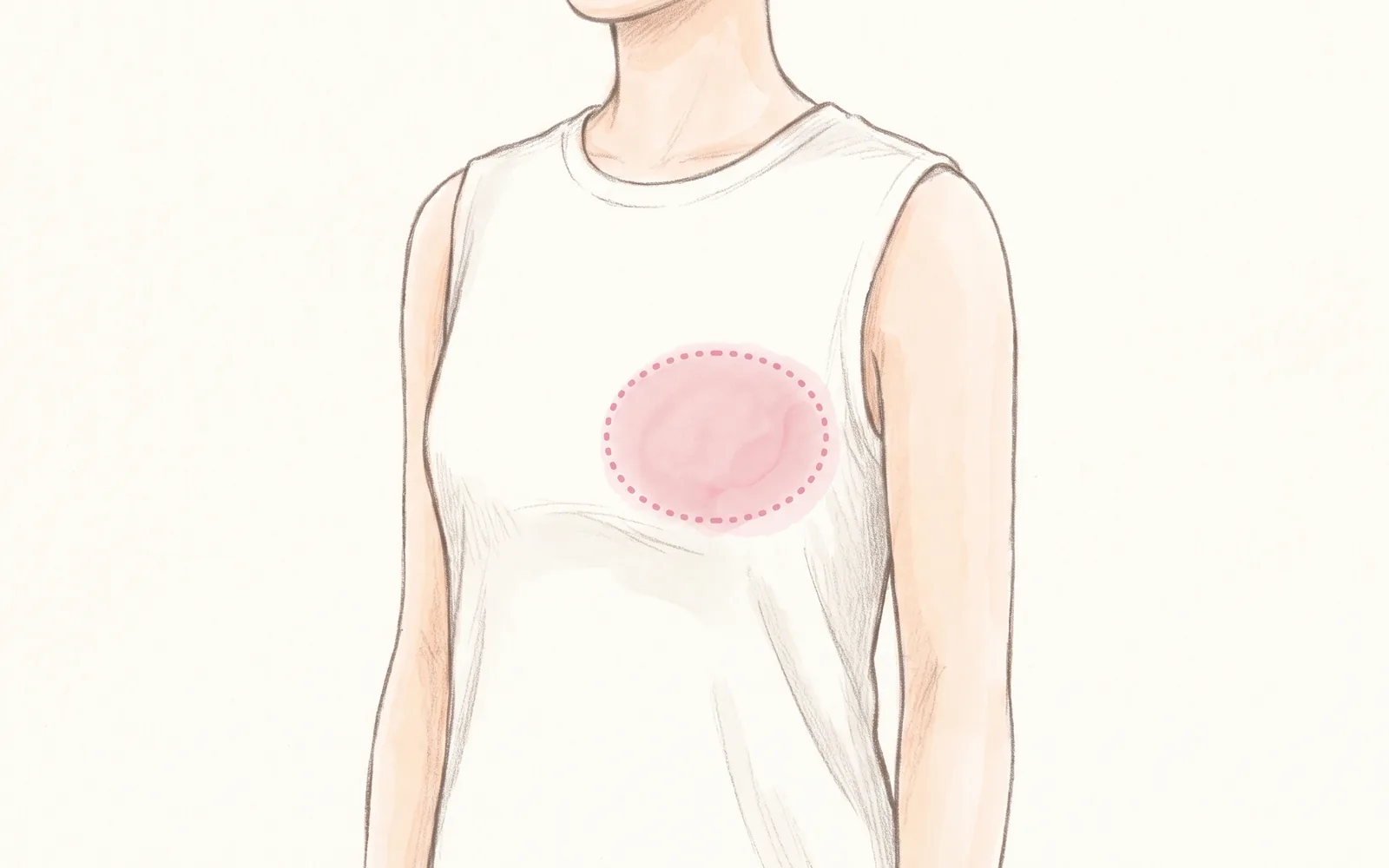
The illustration is an explanatory illustration to aid understanding, and procedure results vary by individual. The actual method is determined individually during consultation.
Things to consider before a breast filler procedure
Breast Filler — KakaoTalk 1:1 Consultation
Area condition and prior procedure history — You can make a preliminary inquiry via KakaoTalk before your visit.
Breast filler, what changes can be expected?
For hollow upper breasts after childbirth and in grade 1 breast ptosis, filler is layered in front of the pectoralis major to expect a lifting effect that pushes up lax tissues with the filler’s elasticity and cohesiveness. Filling the hollow upper breast also makes the nipple line appear higher.
If a size difference between sides is a concern, inject only into the side that differs to balance them. The degree of change varies individually depending on the original breast volume and skin condition.
How does the procedure proceed?
Through consultation and breast ultrasound, check the thickness of the mammary gland tissue, the space the breast can accept, and the presence of any masses, and decide the amount suited to your body type and concerns. Rather than injecting a large amount from the start, also consider shaping a framework with about 70–80% and then reviewing progress 1–2 months later for a touch-up.
During the procedure, real-time ultrasound is used to confirm the location of the fascial layer above the pectoralis major and to inject while avoiding the mammary gland tissue. One month and 6 months after the procedure, ultrasound is used to check the filler location, any nodules, and the state of the mammary gland tissue.
How many cc of breast filler are injected?
A one-cup difference in the breast is usually about 100–150cc. Director Kwak Yeojin uses the following ranges by concern type and determines the amount according to chest circumference size, skin elasticity, and ultrasound findings.
| Concern type | Total volume for both sides | Purpose |
|---|---|---|
| Hollow upper breast · cleavage enhancement | 60–100cc (30–50cc per side) | Fill the sunken upper breast and create a gathered cleavage line |
| Asymmetrical breasts (asymmetry) | 20–60cc on the side with the difference | Match the size difference between both sides |
| Overall volume increase (A cup → B cup or more) | 150~200cc (70~100cc per side) | Noticeable volume change · When there is some existing breast volume |
| Sunken upper chest after childbirth · Grade 1 breast ptosis | 200~250cc (100~150cc per side) | Lifting that pushes up sagging tissues |
※ Breast filler for both sides combined rarely exceeds 300cc. The actual amount is determined after consultation and ultrasound confirmation.
How are breast filler and autologous fat grafting different?
As a physician who can perform both procedures, Kwak Yeojin summarizes the differences as follows.
| Category | Breast Filler | Breast fat grafting |
|---|---|---|
| What is placed | Hyaluronic acid (HA) filler | Your own fat harvested from the thighs/abdomen |
| Procedure method | Direct injection | Liposuction → purification → breast injection |
| Duration | About 1~3 years (absorbed by the body) | Engrafted fat is maintained for a long time (engraftment rate about 40~60%) |
| Suitable body type | Most body types, including lean builds | Body types with sufficient fat to harvest |
| Reversal | Can be dissolved with an enzyme injection | After engraftment, removal by aspiration or surgery |
| Points to note | Nodules (lumps) · delayed allergy · repeat procedures needed to maintain | Calcification · fat necrosis · difficult to predict engraftment rate |
※ Both filler clumping and calcification after fat grafting can make breast cancer screening difficult to interpret, so breast ultrasound before and after the procedure is important in either case.
At which layer is breast filler placed?
The breast consists of layers of skin, fat layer, glandular tissue, the pectoralis major, and the fascia enclosing the muscle. Kwak Yeojin does not touch the glandular tissue; filler is layered along the fibers in the fascial layer above the pectoralis major, which is firm fibrous tissue. To confirm this layer visually, injection is performed under ultrasound.
Breast filler: frequently asked questions
Breast Filler results and duration vary depending on breast tissue, injection volume, and product characteristics, and a precise evaluation through consultation is necessary.
What products are used for breast filler?
ImageUp Plastic Surgery uses body filler products such as e.p.t.q. eve s plus (Eptiq eve s plus)·SketchFill according to the area and purpose. The products used are explained during consultation.
How many cc are injected for breast filler?
It depends on the concern. For upper-chest hollowing or cleavage enhancement, 60~100cc in total for both sides; to raise overall volume by about one cup, 150~200cc; for sunken upper chest after childbirth and grade 1 breast ptosis, 200~250cc are used as a reference. For asymmetry, only the side with less volume receives 20~60cc. The actual amount is determined based on chest size, skin elasticity, and ultrasound findings.
Can breast filler make an A cup become a C cup?
Breast filler for both sides combined rarely exceeds 300cc. It is a procedure to naturally increase volume by about one cup or to correct deficient shape; if you want an A cup to become a C or D cup, you should consult about Breast Surgery.
Can I still undergo breast cancer screening after getting breast filler?
Yes. However, having filler can create imaging densities that differ from normal, so points to note vary by test method. Kwak Yeojin recommends that those who have received breast filler undergo breast ultrasound together with, or preferably before, other screening.
Are there any precautions when receiving a mammogram (mammography)?
Because mammography compresses the chest firmly, the filler may be displaced, and the filler appears as a white opacity on X-ray images and can obscure small lesions. At check-in, please inform the examiner in advance that you received breast filler so they can adjust the compression strength or shooting angle.
Why is breast ultrasound recommended after breast filler?
Ultrasound can distinguish the glandular tissue, the layer containing filler, and the layer with any lump, and it does not press the chest hard, so there is less concern about pushing the filler out. Along with breast condition, it can also check for filler nodules, clumping, or inflammation.
Do you perform a breast ultrasound before the procedure?
Yes. Kwak Yeojin routinely performs breast ultrasound before the procedure. You need to check in advance whether there are any masses or microcalcifications in the breast so that changes due to filler and actual tumors can be distinguished during later screening. When you undergo screening, please tell the medical staff which areas received filler and approximately how many cc were injected.
Do you also check with ultrasound after the procedure?
Immediately after the procedure, we confirm by ultrasound that the filler is well placed in the capsule in front of the pectoralis major, and then perform routine ultrasound exams at one month and six months after the procedure. If there is slight asymmetry or insufficient volume at the one-month check, you can discuss a touch-up.
How does recovery progress by date after breast filler?
From the day of the procedure to day 3, there may be swelling and heaviness, and bruising or throbbing around the needle marks. On days 4–7, major swelling subsides and the filler begins to settle, and by weeks 2–3, the feel softens and the final shape begins to appear. After one month, capsule formation around the filler finishes and the line stabilizes. Progress varies by individual.
How should I handle showering and medication right after the procedure?
On the day of the procedure and until the next day, avoid getting water on the needle marks. Even if you apply waterproof tape, it is best to avoid long showers. Take the prescribed antibiotics and anti-inflammatory painkillers to the end even if you are not in pain.
Can I sleep on my stomach after the procedure?
Avoid sleeping on your stomach or positions that compress the chest for at least 2–4 weeks. Because pressure can push the filler to the side or downward or change its shape, it is better to sleep on your back.
What kind of bra should I wear?
Avoid wire bras that press the filler line and wear non-wire or seamless bras with minimal compression. You can wear a wire bra after about one month, once the filler has settled.
When can I start exercise and sauna?
Activities that raise body temperature and cause heavy sweating, such as jjimjilbang, sauna, half-body bath, and strenuous exercise, can bring on a delayed inflammatory reaction, so it is best to avoid them until at least the 3rd week. Upper-body weight training, sauna, and alcohol can be resumed after about a month.
Can I massage to spread the filler evenly?
Strong self-massaging or kneading of the breasts can cause clumping or filler migration, so it is better not to do it. If you feel anything unusual, do not massage or apply warm compresses; contact the clinic first.
What symptoms mean I should go to the clinic right away?
If days or weeks later the breast suddenly becomes red and swollen with a warm sensation (suspected delayed inflammation), if there is unbearable pain or the skin turns pale white or deep purplish (suspected vascular compression), or if a palpable bead-like lump grows or becomes painful, contact the clinic where you had the procedure immediately and receive care.
What is a delayed allergic reaction?
It is a reaction in which, despite no issues immediately after the procedure, the breast suddenly becomes swollen and red or throbbing 6 months or 1–2 years later. It can occur with all fillers, not only body fillers. It is more likely when immune balance is disrupted, such as with a cold or accumulated fatigue, so if early signs appear, it is best to visit promptly for a prescription.
Why do lumps (nodules) occur after breast filler?
They occur when filler is not layered across multiple planes and is concentrated in one spot, or when the body encapsulates the filler and overproduces fibrous tissue. Because nodules can make it difficult to distinguish from tumors during breast cancer screening, Kwak Yeojin considers it most important to distribute the filler evenly at the appropriate planes and to keep the amount suited to the body type.
Does breast filler flow down as far as the abdomen?
Stories of filler flowing down often come from cases with non-degradable, semi-permanent fillers that are no longer used. Kwak Yeojin uses body-dedicated HA filler with high viscosity, elasticity, and cohesiveness. However, strong pressure or massage can still cause migration, so for 2–4 weeks after the procedure, avoid strong massage, sleeping prone, and excessive weight training to allow the filler time to settle.
Which is right for me: breast filler or autologous fat grafting?
Breast filler is suitable for thin individuals with little fat who find fat grafting difficult, those who want correction without surgery, and those who prefer a method that can be reversed if undesired. Autologous fat grafting is suitable for those who also want to contour abdominal or thigh bulges, have a strong aversion to foreign materials, and want longer maintenance from a single procedure.
Can sagging breasts after childbirth be improved with filler?
It can be an option for grade 1 breast ptosis, where the nipple is at a similar height to the inframammary fold or within 1 cm below it, and for a hollow upper pole. After childbirth, filler is layered in front of the pectoralis major to push up lax tissue within the expanded skin envelope. In a case on Kwak Yeojin’s blog, 300cc was used. If sagging is severe, surgery is discussed together.
Are there any side effects?
Immediately after the procedure, swelling and bleeding from injections may occur. In the early period, the area may feel firm or uneven due to swelling.
However, if a distinct lump persists over time or redness, warmth, or pain accompanies it, you should consider not only simple filler clumping but also possibilities such as inflammation or nodules. A delayed inflammatory reaction may occur long after the filler procedure, with swelling, redness, or firm nodules appearing at the injection site. Because various causes such as infection or immune reactions may be involved, it is important to confirm the cause through medical evaluation rather than assuming it is simply filler clumping and massaging or self-treating.
If filler enters a blood vessel or compresses it and obstructs blood supply, vascular occlusion can occur and lead to serious complications such as skin damage. If severe pain persists right after the filler procedure, the skin turns white, or mottled color changes appear, you should check for the possibility of circulatory compromise rather than simple swelling or bruising. Because vascular occlusion requires rapid judgment and management, if these symptoms appear, do not wait—contact the clinic that performed the procedure immediately and receive care.
During the pre-procedure consultation, we review personal risk factors such as medications, allergies, and past procedure history. Depending on the individual, side effects such as bleeding, infection, swelling, asymmetry, and scarring may occur and vary in degree, so please decide after sufficient consultation with a specialist.
How do I book a consultation for breast filler?
You can receive guidance to book a consultation via KakaoTalk 1:1 or by phone (+82-2-555-1550).
How long does Breast Filler last?
Breast Filler results and duration vary depending on breast tissue, injection volume, and product characteristics, and a precise evaluation through consultation is necessary.
Depending on the individual, side effects such as bleeding, infection, swelling, asymmetry, and scarring may occur, and the degree may vary. Please make your decision after sufficient consultation with a specialist.
Check other body filler areas as well
For additional inquiries, contact us via KakaoTalk
1:1 KakaoTalk pre-inquiry — Mon–Thu 10:00 - 19:00 · Fri 10:00 - 21:00 · Sat 10:00 - 16:00.