

Body Lift
What is a Body Lift?
A Body Lift is a surgery that removes skin and subcutaneous tissue that has become loose and sagging after liposuction surgery, weight changes, aging, pregnancy and childbirth, and then pulls and repositions the remaining tissue to refine the body line. The surgical method and incision lines differ depending on where and how much sagging there is, such as the abdomen, arms, thighs, back and flanks, and around the buttocks, and the exact plan is explained individually during consultation. Guidance is based on a surgery time of 1 hour under sedation anesthesia.
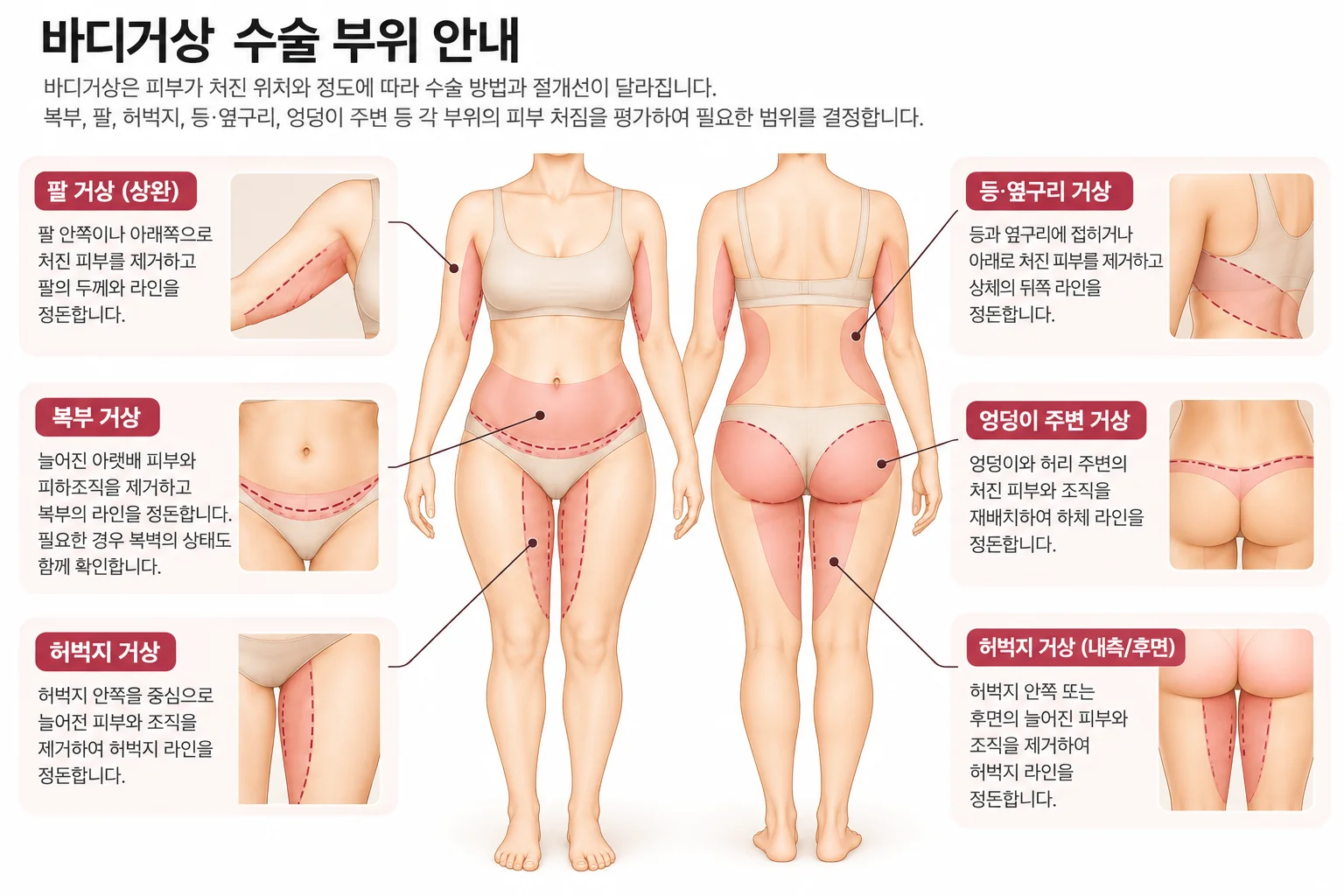
Unlike liposuction, which simply reduces the amount of fat, when the skin is so loose that it is hard for it to contract on its own, unnecessary skin must also be removed to create a smoother body shape.
The location and degree of skin sagging, the thickness of subcutaneous fat, skin elasticity, and existing scars are checked comprehensively to decide the surgical range and incision location.
How is a Body Lift performed?
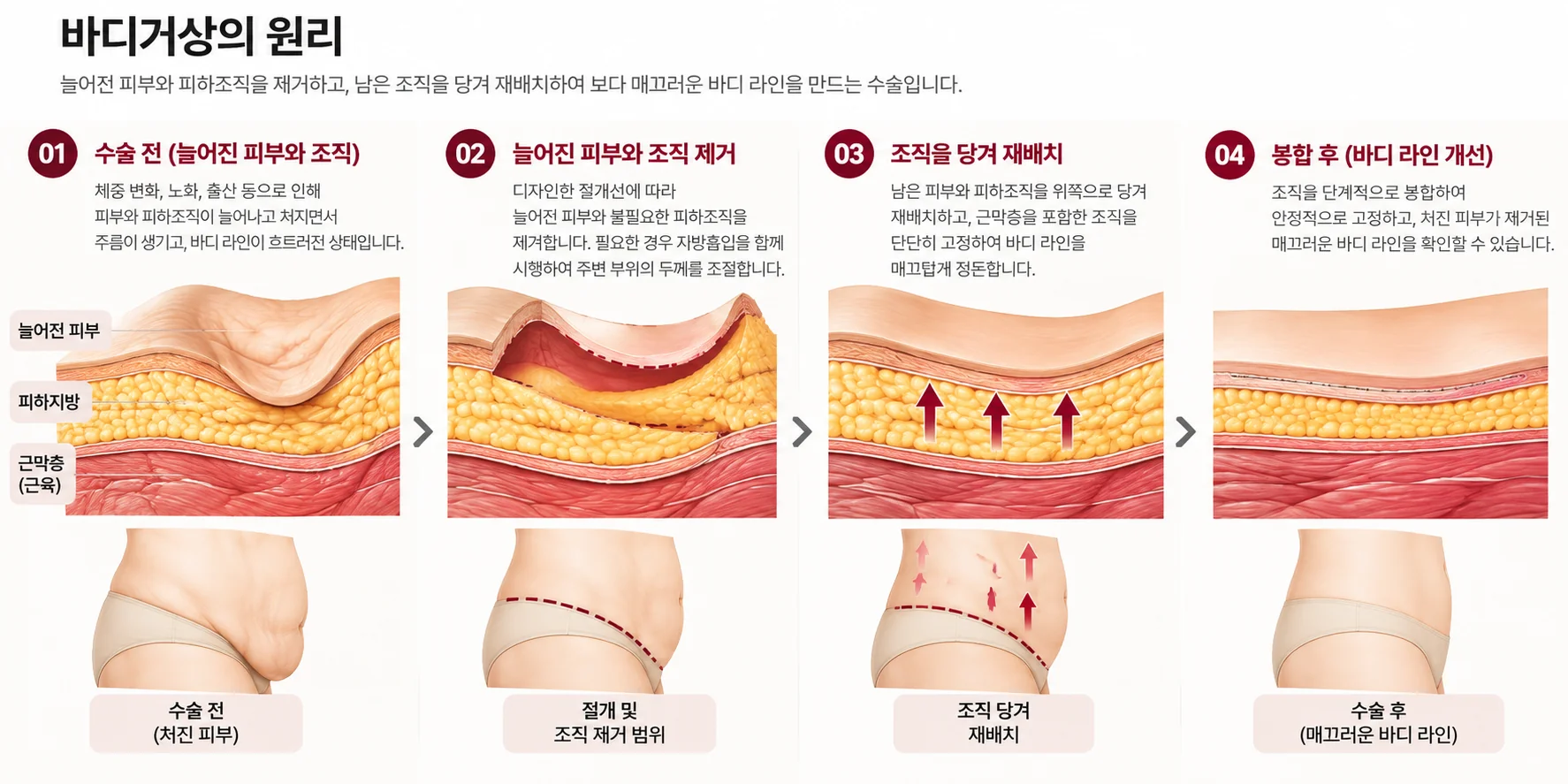
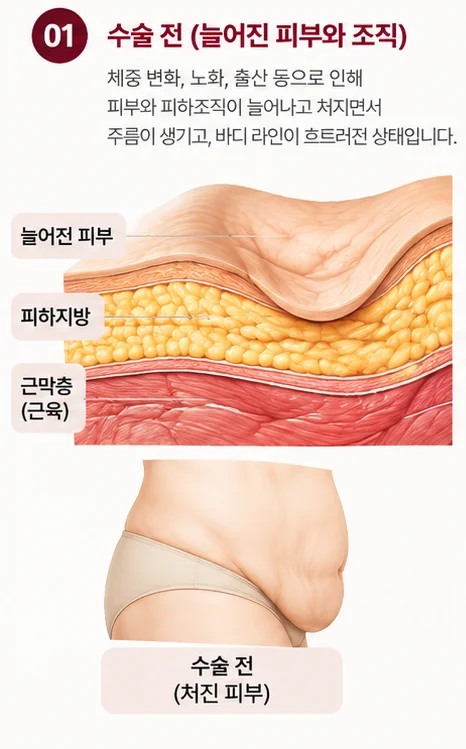
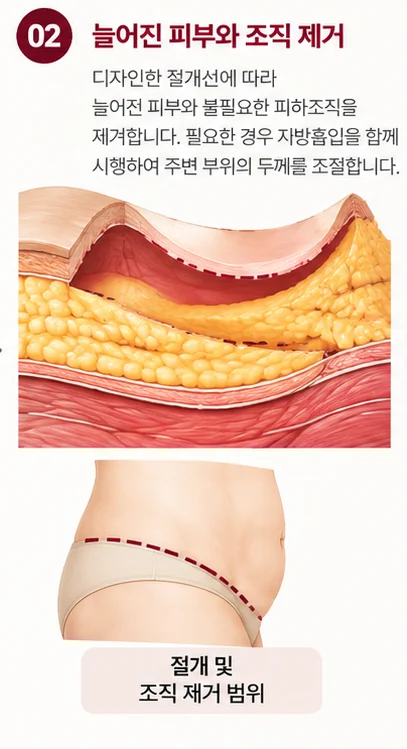
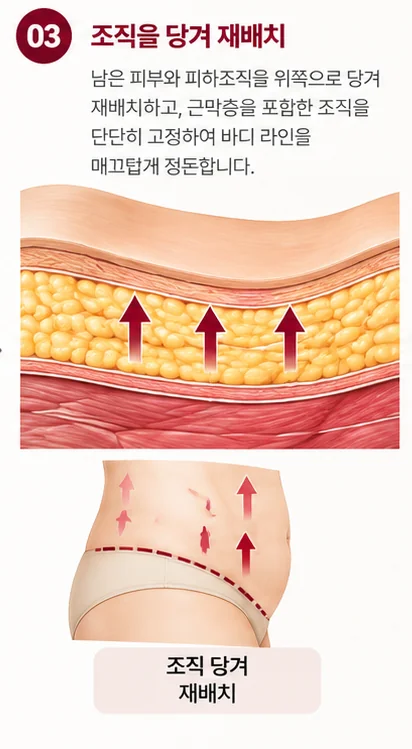
- 01
Analysis of skin sagging and body shape
In a standing position, the direction and degree of skin laxity, the distribution of subcutaneous fat, and the overall body shape are checked.
- 02
Designing the incision lines and removal range
How much sagging skin to remove is decided, and the incision lines are designed so that the scar after surgery is placed as much as possible where underwear or clothing covers it.
- 03
Removal of loose skin and tissue
Loose skin and unnecessary subcutaneous tissue within the planned range are removed. If needed, liposuction is performed on the same day to adjust the thickness and line of the surrounding areas.
- 04
Pulling and repositioning the tissue
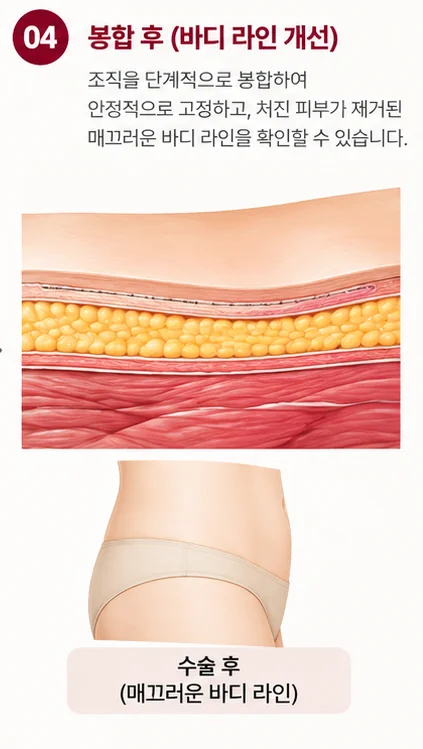
The remaining skin and subcutaneous tissue are pulled in an appropriate direction and repositioned, and left-right balance and the overall body shape are checked.
- 05
Step-by-step suturing
The internal tissue is sutured step by step first so that excessive tension does not concentrate on the skin, and the incision site is finished.
Sagging skin is hard to resolve with liposuction alone
Liposuction is a surgery that reduces the amount of subcutaneous fat, but it is not a surgery that removes skin that is already very loose.
When skin elasticity is sufficient, the skin may contract to some extent after liposuction, but when body weight has decreased greatly or the skin is very loose, skin sagging may actually look more noticeable after fat is reduced.
Therefore, it is important to evaluate the amount of fat and the skin sagging separately and decide whether liposuction is needed, a Body Lift is needed, or performing both surgeries together is appropriate.
The surgical method differs depending on the area
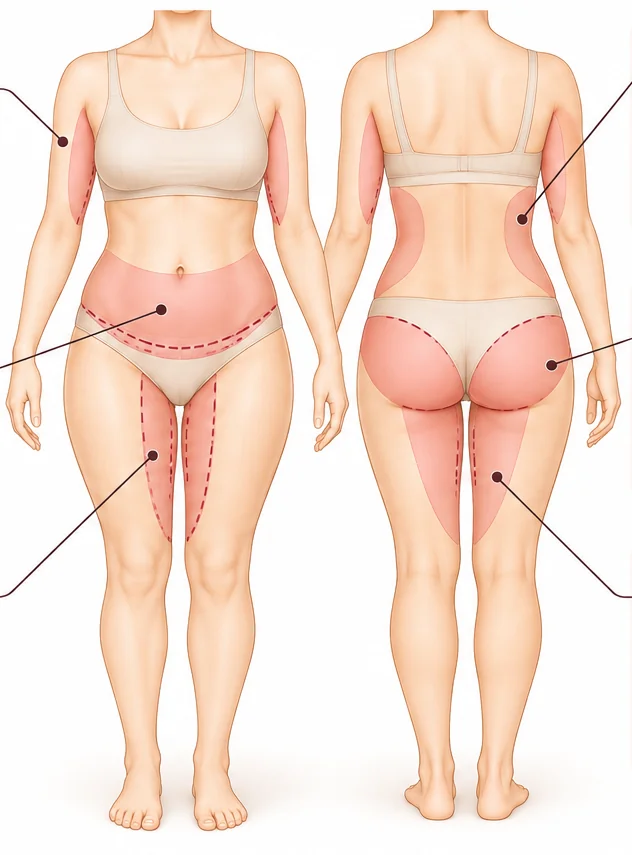
With a Body Lift, the surgical method and incision lines differ depending on the location and direction of the skin sagging.
Areas not shown in the illustrations below can also be treated surgically.
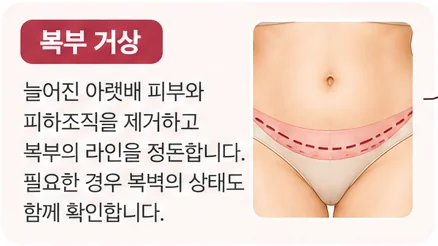
Abdomen
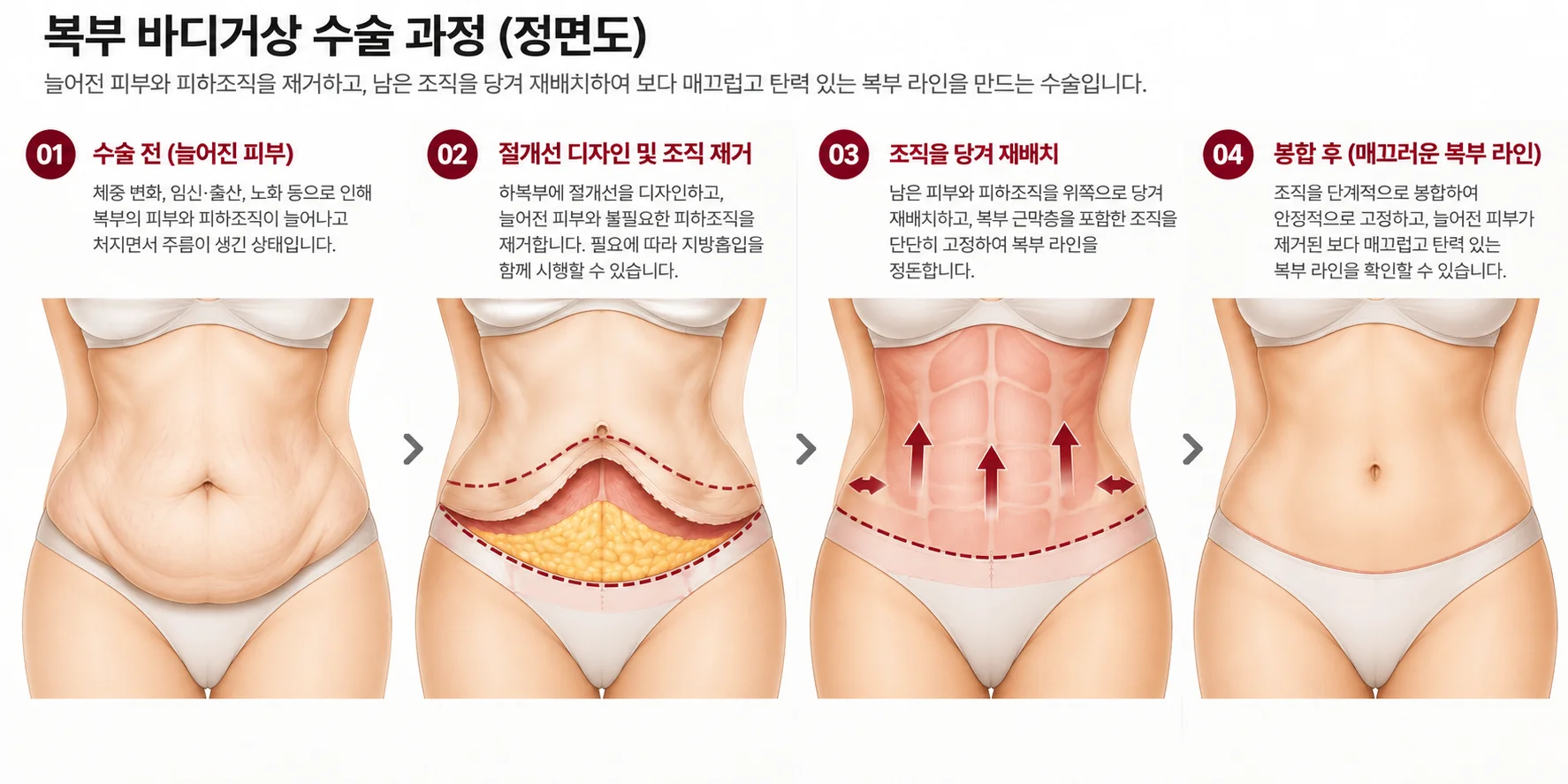
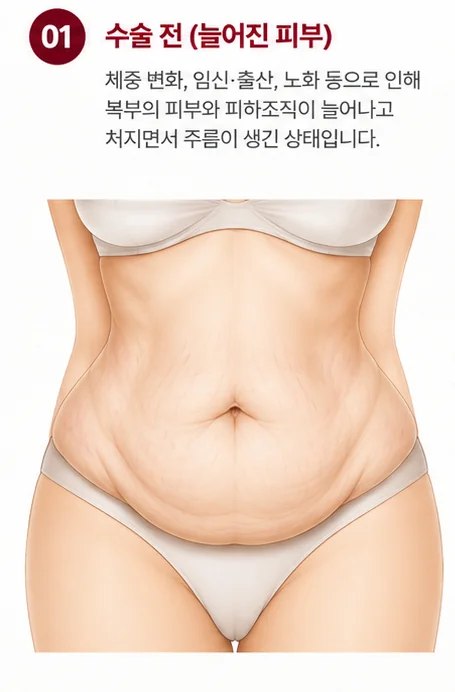
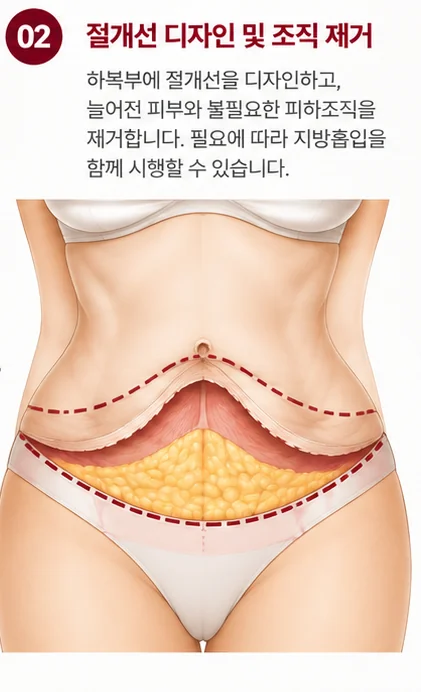
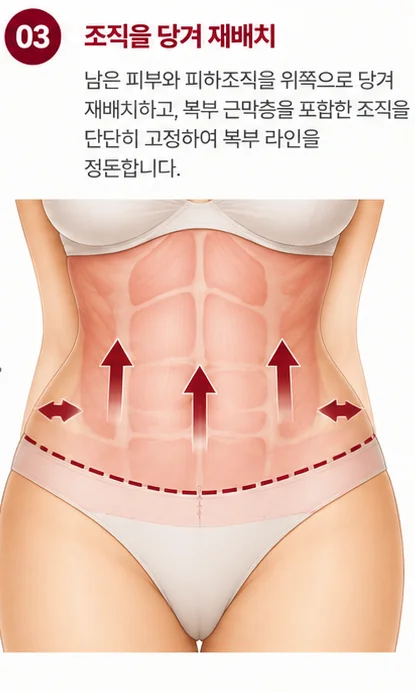
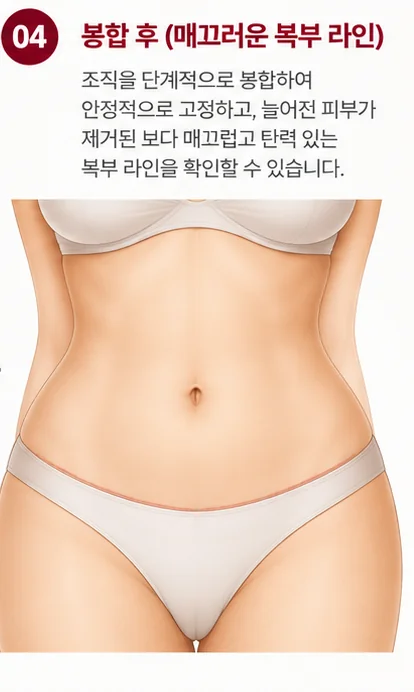
Loose lower-abdominal skin and subcutaneous tissue are removed and the line of the abdomen is refined. If necessary, the condition of the abdominal wall is also checked.
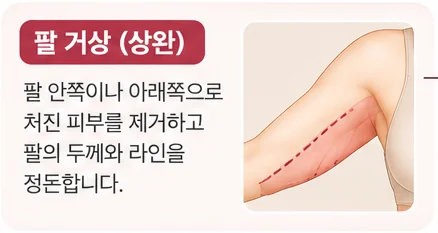
Arm
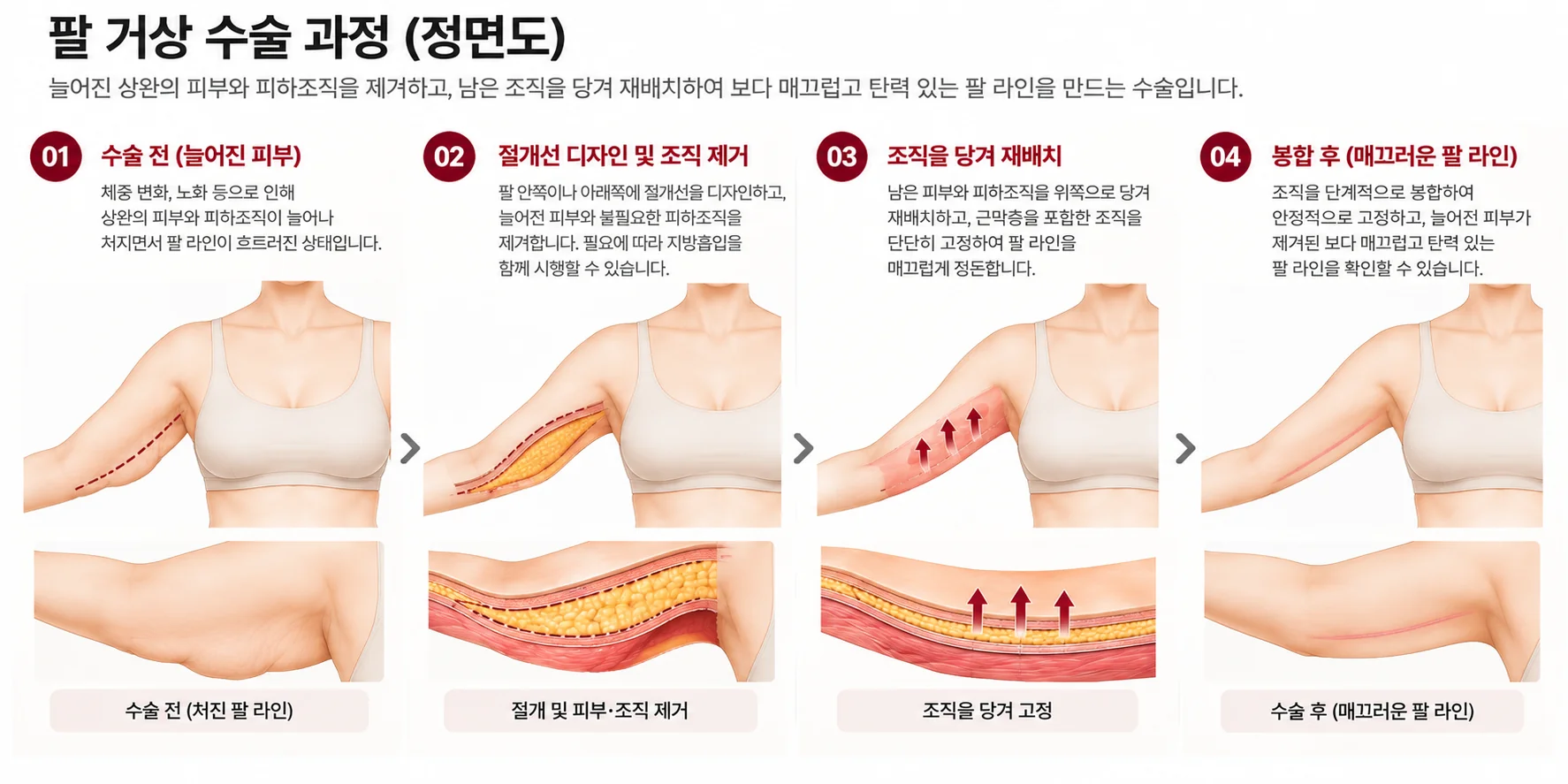
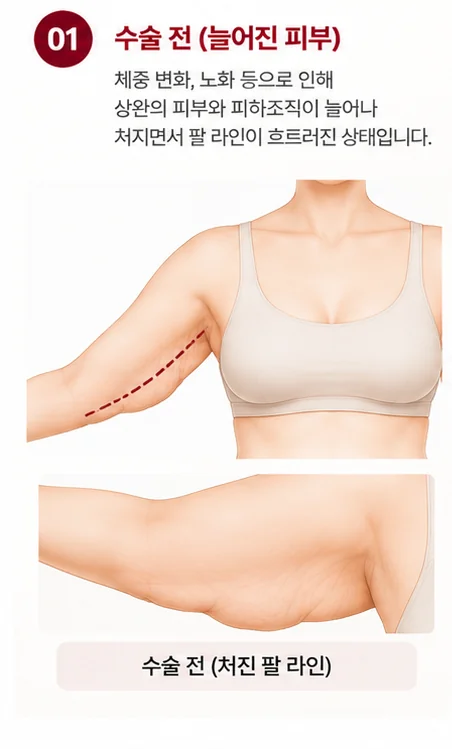
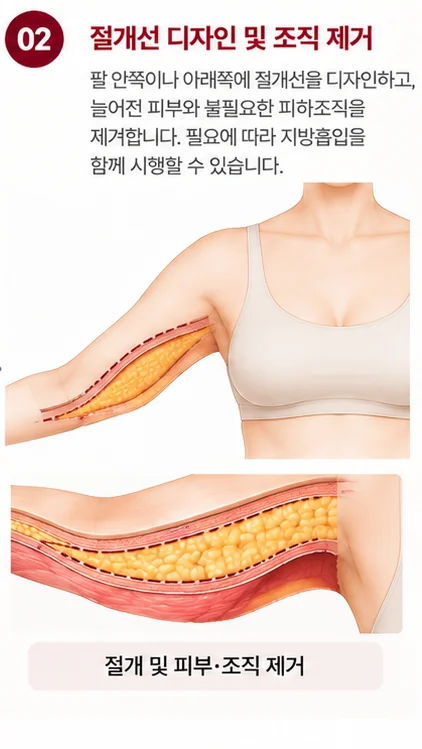
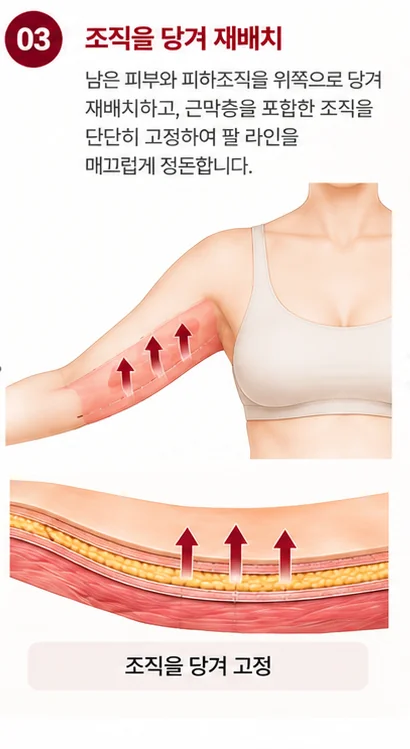
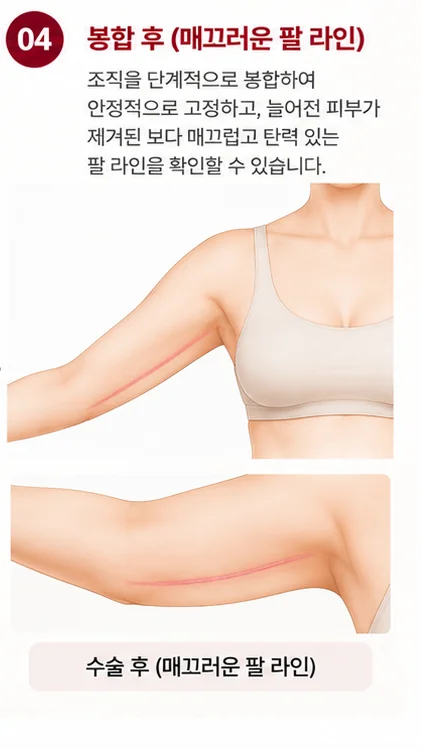
Skin sagging on the inner or lower side of the arm is removed and the thickness and line of the arm are refined.
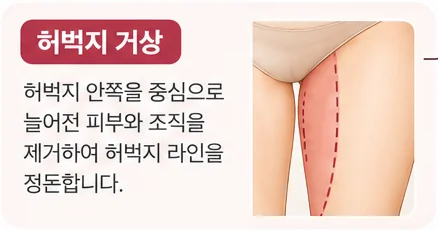
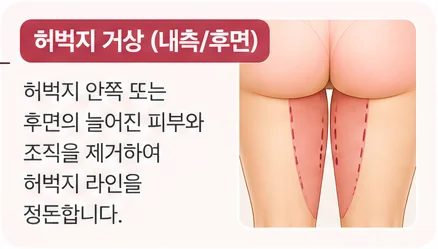
Thigh
Loose skin and tissue, mainly on the inner thigh, are removed and the thigh line is refined.
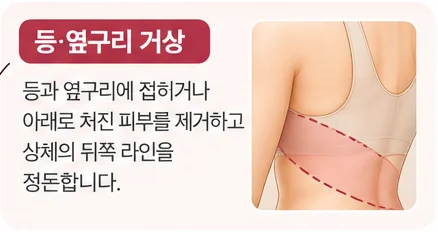
Back and flanks
Skin that folds or sags downward on the back and flanks is removed and the back line of the upper body is refined.
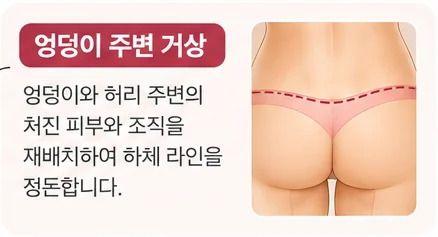
Around the buttocks
Considering the skin sagging and body shape of the lower body, the tissue around the buttocks and waist is repositioned and the overall lower body line is adjusted.
Natural distribution of tension matters more than pulling a lot
A Body Lift is not a surgery that is better the more skin is removed and the more strongly it is pulled.
Excessive skin removal or tension can widen the scar or delay wound healing, so it is important to remove an appropriate amount of skin and distribute the tension by considering the elasticity of the skin, the thickness of the tissue, and the direction of pull.
Especially when a wide area is operated on, blood circulation at the incision site and wound recovery must be considered along with the balance of the overall body shape.
Where do scars remain after a Body Lift?
Because a Body Lift, which directly removes loose skin, requires incision lines at the surgical site, a certain amount of scarring remains.
The incision location differs depending on the surgical site and the degree of skin sagging, and where possible it is designed with consideration for positions that can be covered by underwear or clothing.
In the early period, the scar may look red or feel firm, but it changes over time, and depending on the recovery process, scar care such as scar ointment, scar injections, and laser may be used alongside.
How is recovery after a Body Lift?
After surgery, swelling, bruising, and a pulling sensation may appear, and the wider the surgical range, the more recovery time is needed.
In the early period, it is advisable to wear a compression garment as guided by the medical staff and to avoid postures or exercise that put excessive tension on the surgical site. Afterwards, walking, daily activities, and the amount of exercise are increased step by step according to the state of wound recovery.
With a Body Lift, the body shape gradually settles as swelling decreases and the tissue stabilizes rather than right after surgery, so the result is checked after allowing sufficient time.
What should I consider for body lift?
Body Lift FAQ
When is a body lift considered?
It is considered when the skin and subcutaneous tissue have stretched and sagged after liposuction or due to weight change, aging, pregnancy, or childbirth. A body lift is surgery that removes the stretched skin and subcutaneous tissue and pulls and repositions the remaining tissue to refine the body contour.
Can sagging skin be resolved with liposuction alone?
Liposuction is surgery that reduces the amount of subcutaneous fat, but it does not remove skin that has already stretched a lot. If skin elasticity is sufficient, the skin can contract to some extent after liposuction, but if you have lost a lot of weight or the skin has stretched considerably, the sagging may look more noticeable after the fat is reduced.
Can liposuction and a body lift be done together?
The amount of fat and the degree of skin sagging are evaluated separately to decide whether liposuction, a body lift, or both is appropriate. If needed, liposuction is performed on the same day to adjust the thickness and contour of the surrounding areas.
Which areas can be treated surgically?
Surgery can be performed according to where the skin sags, such as the abdomen, arms, thighs, back and flanks, and around the buttocks, and other areas can also be treated. The surgical method and incision line differ by area.
How is a sagging lower abdomen treated?
Loose lower-abdominal skin and subcutaneous tissue are removed and the line of the abdomen is refined. If necessary, the condition of the abdominal wall is also checked.
The skin on my inner arms has sagged. Can it be treated surgically?
Skin sagging on the inner or lower side of the arm is removed and the thickness and line of the arm are refined.
Can sagging of the inner thighs also be treated surgically?
Stretched skin and tissue, mainly on the inner thighs, are removed to refine the thigh contour.
What are the steps of a body lift?
The direction and degree of skin sagging are checked in a standing position, the incision line and removal range are designed, and then the stretched skin and tissue are removed. Next, the remaining tissue is pulled and repositioned, and suturing is done in stages starting from the inner tissue so that excessive tension does not concentrate on the skin.
What anesthesia is used, and how long does the surgery take?
We explain it based on a surgery time of 1 hour under sedation. The exact surgical plan is decided after the consultation.
Is it better to remove more skin?
A body lift is not better the more skin is removed and the harder it is pulled. Because excessive skin removal or tension can cause scars to widen or wound healing to be delayed, an appropriate amount is removed and the tension is distributed, considering skin elasticity, tissue thickness, and the direction of pull.
Where will the scars be?
Because the surgery directly removes stretched skin, an incision line is needed and a certain scar remains. The incision position varies with the surgical area and the degree of sagging, and where possible it is designed with a position that can be covered by underwear or clothing in mind.
How do the scars change over time?
At first the scars may look red or feel firm, but they change over time. Depending on the healing process, scar care such as scar ointment, scar injections, and laser can be added, and the degree of scarring varies from person to person.
Do I need to wear a compression garment after surgery?
In the early stage, wear a compression garment as instructed by the medical team, and it is best to avoid postures or exercise that put excessive tension on the surgical area.
How does recovery progress?
After surgery, swelling, bruising, and a tight feeling may appear, and the wider the surgical area, the more recovery time is needed. Walking, daily activities, and the amount of exercise are increased step by step according to how the wound is healing.
When can I see the result?
Because the body shape settles gradually as the swelling decreases and the tissue stabilizes, rather than right after surgery, the result is checked over a sufficient period.
What side effects are possible?
Depending on the individual, side effects such as bleeding, infection, swelling, asymmetry, and scarring may occur, and their degree varies. The possibility of side effects and complications is explained during the consultation.
Can I consult before surgery?
Because the suitable method differs with the degree and range of sagging, you can ask in advance through a KakaoTalk 1:1 consultation before your visit. The exact surgical plan is decided after the consultation.
If you are curious about body lift — KakaoTalk 1:1 consultation
The appropriate method varies depending on the degree and extent of sagging, so you can make a preliminary inquiry via KakaoTalk before treatment.
※ Surgical method, recovery period, and results vary individually depending on the degree of sagging, skin condition, tissue condition, etc., and the exact surgical plan is determined after consultation. The possibility of side effects and complications will be explained together during the consultation.
For additional inquiries, contact us via KakaoTalk
1:1 KakaoTalk pre-inquiry — Mon–Thu 10:00 - 19:00 · Fri 10:00 - 21:00 · Sat 10:00 - 16:00.