

Wounds, scars, tumors
We address wound suturing, scars, cysts, and lipomas together
This page provides guidance on wound suturing, scar revision, and removal of benign skin tumors such as epidermal cysts and lipomas. Director Kwon Dohyun (Plastic Surgery Specialist (Korea), 13 years of experience) is in charge of wound suturing, scars, sebaceous cysts, and lipomas. Wound closure uses double/triple-layer suturing (skin, dermis, fascia) to manage scars, and scar revision corrects scar direction and shape with simple/staged excision, Z-plasty, W-plasty. Epidermal cysts and lipomas are treated in 15–60 minutes with local anesthesia, same-day surgery, and same-day discharge, using micro-incision with double-layer suturing and postoperative pathology.
Choose which case applies to you
Wounds, scars, cysts—what do we check during consultation?
What kind of surgery are cyst removal, wound and laceration repair, and scar revision?
Cyst Removal
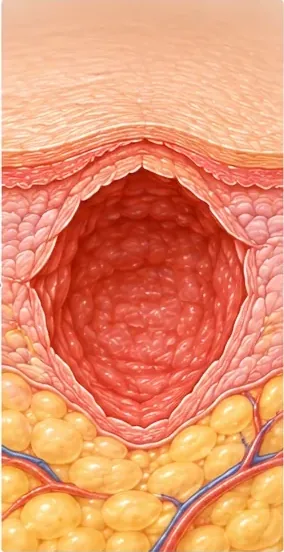
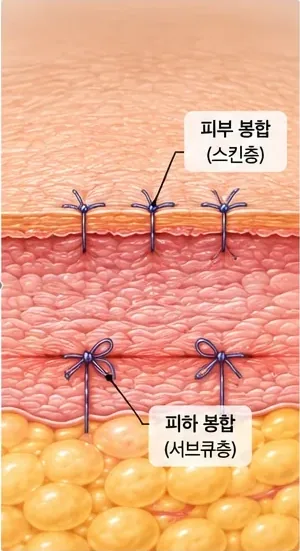
Epidermal cysts and lipomas are treated under local anesthesia as same-day surgery with same-day discharge, taking about 15 to 60 minutes. A small incision is made, the wound is closed in two layers, and a biopsy is performed after surgery. For a cyst, not only the contents but also the cyst wall is removed; for a lipoma, the fatty tissue is separated from the surrounding normal tissue and then removed.
- 1Before surgery
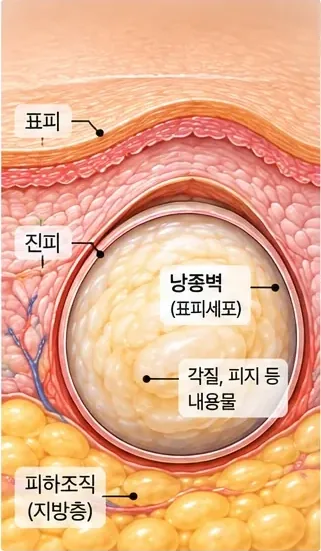
- 2Cyst dissection and removal
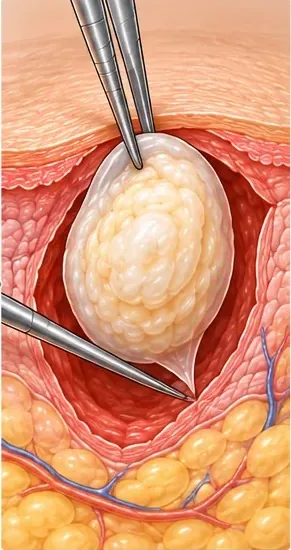
- 3After removal
- 4Two-layer closure
Wound & Laceration Repair
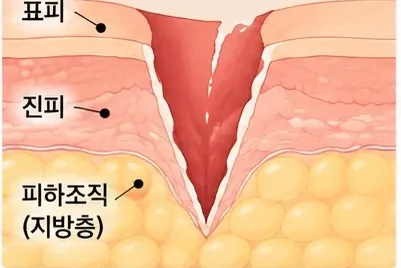
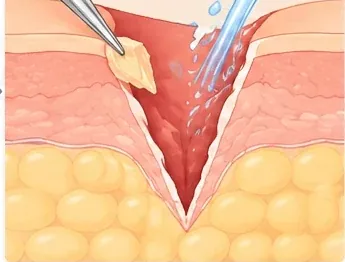
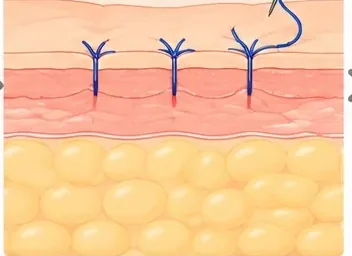
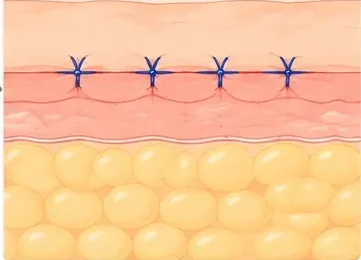
We assess the depth and direction of the wound and the extent of tissue damage and contamination. After irrigation, debridement, and removal of foreign material, the necessary tissue layers are closed step by step. We then check how the wound is healing, remove the stitches at the appropriate time, and continue with scar care when needed.
- 1Before surgery
- 2Irrigation and debridement
- 3Skin layer closure
- 4Closure complete
Scar Revision
Scar revision is a surgery that excises wide or irregular scars, as well as depressed or widened scars, within an appropriate range and then closes the skin again with precision, taking skin tension and direction into account. Rather than erasing a scar completely, the goal is to turn it into a scar that is less noticeable and blends more naturally with the surrounding skin.
- 1Scar analysis and design
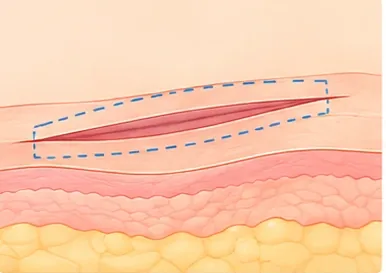
- 2Excision of the existing scar
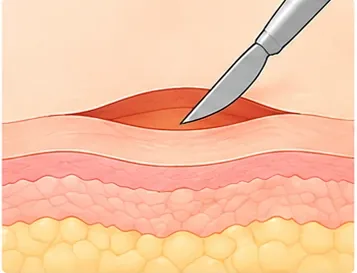
- 3Adhesion release and tension adjustment
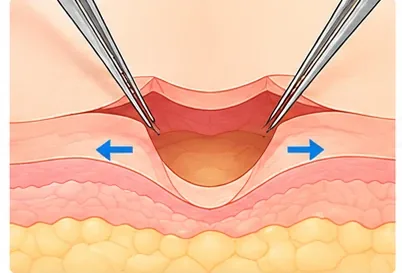
- 4Post-operative scar care
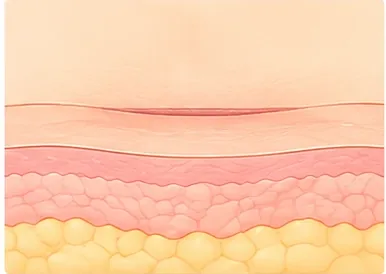
From wounds to scars, treatment is connected
Wound care does not end with simply suturing the skin. It is important to treat the wound with the position and depth of the wound, the extent of tissue damage, and the tension and direction of the skin in mind, and then to watch how the scar changes during recovery.
Even when a benign skin tumor is removed, it is important to consider not only removing the lesion but also the incision position, the suturing method, and the scar that will remain afterward.
ImageUp Plastic Surgery considers the whole course of treatment together, from wound care and suturing to benign tumor removal, scar management after recovery, and scar revision.
From wound care to scar management
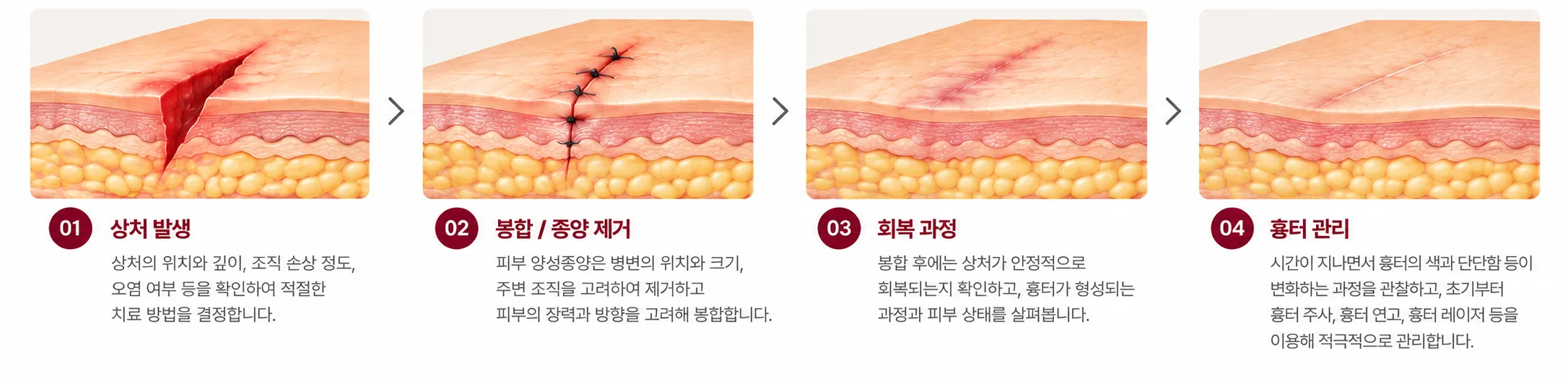
- 01
We check the condition of the wound
We check the position and depth of the wound, the extent of tissue damage, and whether it is contaminated, and then decide on a suitable treatment method.
- 02
Suturing matters as much as removal
A benign skin tumor is removed with the position and size of the lesion and the surrounding tissue in mind, and the wound is sutured with the tension and direction of the skin in mind.
- 03
We follow the recovery process together
After suturing, we check that the wound is healing steadily and look at how the scar is forming and at the condition of the skin.
- 04
Scars that remain can also be treated
For a scar that has already formed, we check its shape and color, how raised or sunken it is, and when it formed, and then choose a suitable treatment such as scar ointment, scar injections, or a laser.
A scar changes over time
The final result of a scar is not decided by how it looks right after the wound closes. In the early period it may look red, firm, and raised, and over time its color and firmness change and it gradually settles.
That is why it is important to judge the timing of treatment based on the condition of the scar and when it formed: whether to wait and observe, start scar management, or whether a laser or scar revision is needed.
ImageUp Plastic Surgery thinks about the scar too
In wound suturing and surgery for benign skin tumors, it is important to consider not only the lesion to be treated but also the position and direction of the scar that will remain after surgery.
We look at care as one continuous process, from the first stage of treating the wound to scar management after recovery, and for scars that have already remained, we work with you to find a treatment that fits the current condition.
Wounds, Scars, Tumors — KakaoTalk 1:1 Consultation
You can make a preliminary KakaoTalk inquiry with photos of scars, wounds, or lumps before consultation.
If I have scar removal surgery, will the scar disappear completely?
Scar removal surgery does not erase a scar. The goal is to remove a wide, depressed, or poorly oriented existing scar and re-suture the skin precisely to make it less noticeable than before; a new surgical scar will always remain after surgery.
A lipoma is a benign tumor made up of fat cells, not a collection of normal body fat, and it does not disappear with dieting alone. If its size increases rapidly or it is fixed and firm—features that differ from typical patterns—additional tests such as ultrasound or MRI are considered.
Frequently Asked Questions
What exactly is a hypertrophic scar?
A hypertrophic scar refers to a firm, raised scar that forms after a wound. The commonly known type of scar is precisely termed a hypertrophic scar in medical terminology.
It’s day 4 after earlobe scar surgery and water got into my ear—will that be okay?
Question details: It is day 4 after earlobe scar removal excision surgery. I was told not to let water get into my ear, so I lay face down, put on an ear cap, and washed my hair, but water got into my ear. I was told to dry it thoroughly, so I dried it with a hair dryer.
Please observe the progress, and if it gets worse or lasts a long time, visit us to have it checked. If it wasn’t exposed for a long time, there shouldn’t be a big problem. Take the prescribed medication, and if you were prescribed a topical antibiotic ointment, disinfect well and then apply it.
I have a large raised scar on my face from 10 years ago. Even after this much time, is treatment possible?
Yes, it can be done. Especially for raised hypertrophic scars, considering the scar’s location, size, and shape, and if scar removal surgery can be performed, the scar can be reduced compared to now.
Are depressed facial scars also treatable?
Depending on the width or size, depressed scars can be made less noticeable with laser or surgical methods. With laser treatment, the depth and area of the depression can be reduced. Depending on the area and the scar’s shape, improving a depressed scar with filler is also possible.
I have a depressed acne scar in the glabella area; is it okay to get a filler procedure?
Yes, you may. Depressed scars can, depending on the area, be filled with filler.
For a raised postoperative scar, can removal surgery make it not raised and make the color look skin-toned?
Scar removal surgery is, as you said, a surgery to make the scar less than the current scar. In particular, raised scars can be reduced with scar removal surgery. However, depending on the area, timing, and size, the treatment method and course may differ somewhat.
I am 14 years old; can I receive laser treatment for a leg scar as well?
Question details: I have two small black scars on my leg about the size of a pinky nail. I’m also wondering if there is an age limit for laser treatment.
For scars, the time, location, and area where the scar occurred are important. If the current color is dark, it is likely about 2–3 months since the scar formed. If you visit a plastic surgery clinic, they will recommend a laser or wound treatment suited to the current state. There is no particular age limit, but as a minor you will need a guardian’s consent for the procedure.
What is the reason for not applying ointment for a week after stitch removal?
Question details: My lip was torn and I had suturing, and I had the stitches removed two days ago. The hospital said they would do laser surgery in a week and told me not to apply ointment in the meantime, which I don’t understand. Since the lips move a lot, I’m also worried the wound may stretch.
1. After stitch removal, if the wound has healed, there is no need to apply an antibiotic ointment. Because once sutured, the wound is not open and has healed well, there is no need to apply an antibiotic ointment. 2. Scar ointments (as opposed to antibiotic wound-care ointments) are also started 1–2 weeks after stitch removal, not immediately. 3. Starting laser treatment shortens the time for the scar to stabilize.
A hairline-like stitch mark remains under the ear—what laser is used to treat this?
Question details: I tore the area under my ear and had it stitched, but a hairline-like stitch mark remains. I want to remove it with laser treatment, and I know I should go to a plastic surgery clinic, but I want to know in detail which laser treatment I should receive.
Improvement can be expected with scar laser treatment. For scar lasers, MLA laser or UltraClear laser can be helpful, and the effect varies from person to person. If the scar is raised and hard or has itching symptoms, scar injections also help. Please visit the hospital to accurately diagnose the current scar and proceed with treatment accordingly.
There is pigmentation at a breast surgery site; is it okay to receive laser toning?
Question details: I had breast surgery with BellaGel 2 years ago. I developed pigmentation from metal allergy on the chest area, and I wonder if it is okay to receive a procedure like laser toning on the area where I had the breast surgery.
If there is pigmentation that is currently dark or red, procedures such as toning can improve tone and color.
If a wound occurs, will a scar always remain?
Very superficial injuries that only damage the most superficial layer of the skin may heal without a trace, but injuries that damage the dermis often heal while leaving some degree of scarring. How noticeable a scar is depends on factors such as the wound’s depth and location, presence of infection, skin characteristics, and the tension applied to the wound.
I cut my face—do I have to get it sutured?
Question details: I’m wondering whether I can just leave it to stick together, and whether stitching will prevent scarring.
Not all wounds must be sutured. However, if the wound is deep or gaping and the tissues beneath the skin are damaged, accurately approximating and suturing can help control bleeding, stabilize the wound, and reduce scarring. The decision to suture is made after checking the depth, degree of contamination, and location.
Do wounds need to be stitched within a few hours after injury?
Question details: Today is Sunday and no clinics are open. I’m wondering if suturing cannot be done after a day has passed.
It is best to have a wound assessed without too much delay if possible, but suturing is not impossible solely because several hours have passed. In addition to time since injury, location and degree of contamination, risk of infection, and extent of tissue damage are also considered. Even if much time has passed, do not give up and get examined.
I can feel a round lump in the skin—is this a cyst or a lipoma?
A palpable lump under the skin can be various types of benign tumors, including an epidermal cyst and a lipoma. Epidermal cysts are located relatively close to the skin surface and may have a small central opening or recurrent inflammation, while lipomas are often felt as soft, mobile masses a little deeper. However, it can be difficult to distinguish accurately by palpation alone, so it is best to confirm through an examination.
Are sebaceous cysts and epidermal cysts the same thing?
Question details: There is something on my back that hasn’t gone away, and I’m wondering if this is what is called a sebaceous cyst.
What commonly occurs on the skin and is often called a “sebaceous cyst” is, medically, more accurately termed an epidermal cyst (epidermal cyst). The cyst does not contain sebum but mainly accumulates keratin, the skin’s keratin component. It is distinguished from cysts that actually arise from sebaceous glands.
There is a small black hole in the skin of my chest area; when I squeeze it, white foul-smelling stuff comes out—is this sebum?
An epidermal cyst mainly accumulates keratin and skin keratinous components inside. As these break down, they can have a characteristic odor and feel like sebum. Squeezing out the contents may temporarily shrink the lump, but if the cyst wall remains, it can refill.
Doesn’t a sebaceous cyst just go away if I squeeze it out?
If you express only the cyst contents, the size can temporarily decrease, but if the cyst wall remains under the skin, it can recur as contents reaccumulate. Repeated pressure or squeezing can cause inflammation and adhesion to surrounding tissue, making later removal more difficult.
Why do sebaceous cysts occur?
Question details: I’m wondering whether they form because of poor hygiene or because of aging.
Epidermal cysts are often formed when epidermal cells in the skin proliferate beneath the skin and keratin accumulates. They do not occur simply because you did not wash your skin cleanly. Therefore, good hygiene management does not mean that all cysts can be prevented.
Do cysts always need to be removed?
Question details: I wonder if I can just leave it alone if it doesn’t hurt.
If it is small, has no particular symptoms, and is judged to be a benign lesion, it does not necessarily have to be removed. However, if it is gradually enlarging, has recurrent inflammation, causes pain or discomfort, or if the diagnosis is uncertain, removal can be considered.
I think I have a sebaceous cyst on my face. It suddenly became red, swollen, and painful 3 days ago—can I have surgery right away?
When a cyst becomes inflamed, it can suddenly swell, turn red, and become very painful. If inflammation is severe or pus has formed, incision and drainage or anti-inflammatory treatment may first be necessary, and after the inflammation subsides, removal of the remaining cyst wall may be considered. Depending on the condition, it may be possible to remove it at once, so a direct examination is needed.
I have something like a sebaceous cyst—will it go away with antibiotics alone?
If inflammation is present, antibiotics may be needed, but antibiotics do not eliminate the cyst wall itself. Even if the inflammation improves, if the cyst remains, it can enlarge again or the inflammation may recur. Therefore, treatment of inflammation and treatment of the cyst itself should be considered separately.
On YouTube they say you must remove the cyst sac when removing a sebaceous cyst—can’t I just squeeze it?
To reduce the chance of recurrence, it is important to remove not only the contents but also the cyst wall as completely as possible. In particular, cysts that have had multiple episodes of inflammation may have cyst walls adhered to surrounding tissue, making removal more difficult.
Depending on the individual, side effects such as bleeding, infection, swelling, asymmetry, and scarring may occur, and the degree may vary. Please make your decision after sufficient consultation with a specialist.
For consultations on wounds, scars, and tumors, you can first ask via KakaoTalk.