

Temporal Lift
Corrects sagging in the temple area
The approach method differs depending on the degree of sagging and the desired improvement range, so it is guided after direct confirmation during consultation.
What is a Temporal Lift?
A Temporal Lift is a surgery that moves upward and fixes the outer part of the eyebrow and the tissue around the eye area that has dropped along with sagging of the temple area.
As the skin and soft tissue of the temple area sag downward with age, the outer part of the eyebrow may lower and the skin at the outer part of the eyelid may overlap, making the eye area look heavy and droopy.
A Temporal Lift aims not simply to pull the skin but to reposition the sagging tissue of the temple area in an appropriate direction and tidy the line from the lateral brow to the eye area.
How does it change when the temple area sags?
Principle of Temporal Lift
A surgery that repositions the sagging skin, subcutaneous tissue, and muscle layer of the temple area upward and outward to refine the lines around the lateral brow and eye area more naturally and smoothly.
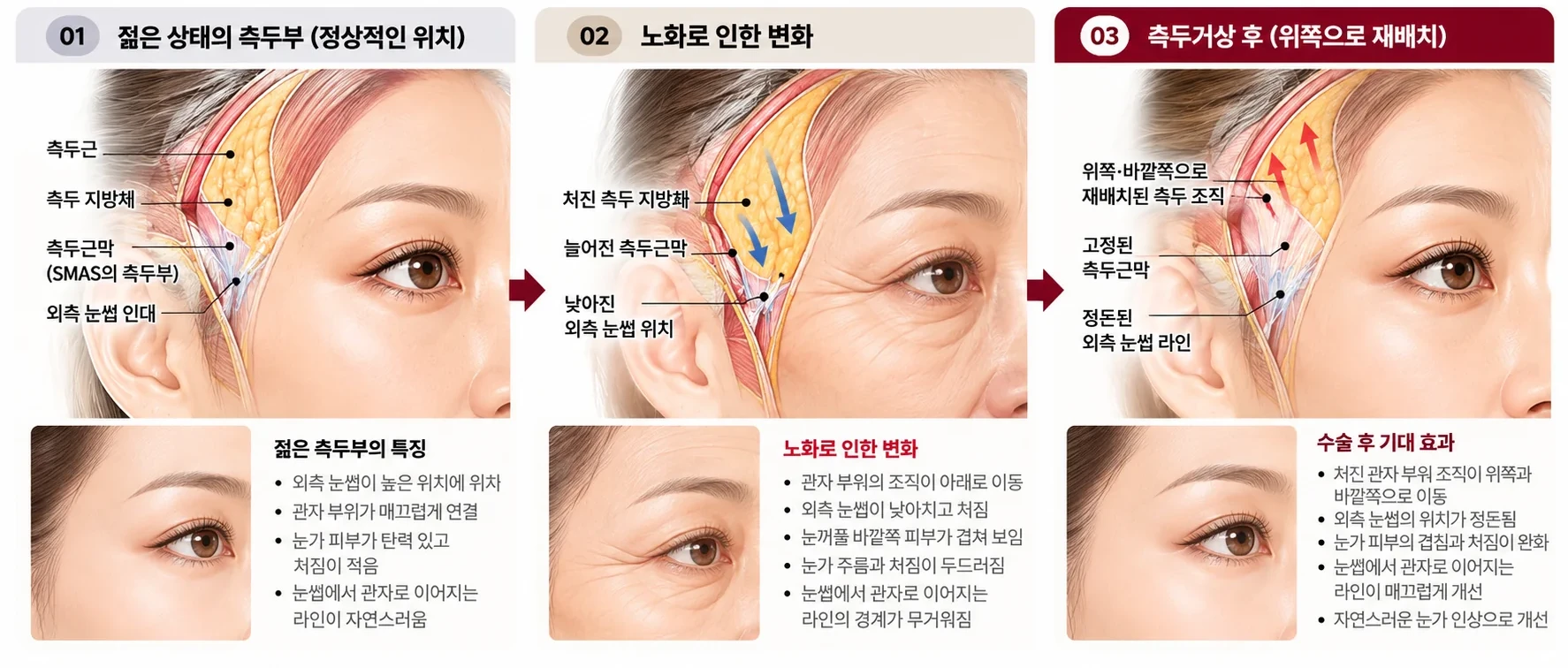
In a young face, the tissue of the outer part of the eyebrow and the temple area stays at a relatively high position, so the eye area connects naturally and smoothly.
As aging progresses and the tissue of the temple area moves downward, the lateral brow lowers, the skin at the outer part of the eyelid overlaps, and wrinkles and sagging around the outer corner of the eye may become more noticeable.
A Temporal Lift improves the balance around the eyebrows and the eye area by repositioning this tissue upward and outward.
How is a Temporal Lift performed?
Temporal Lift surgical process
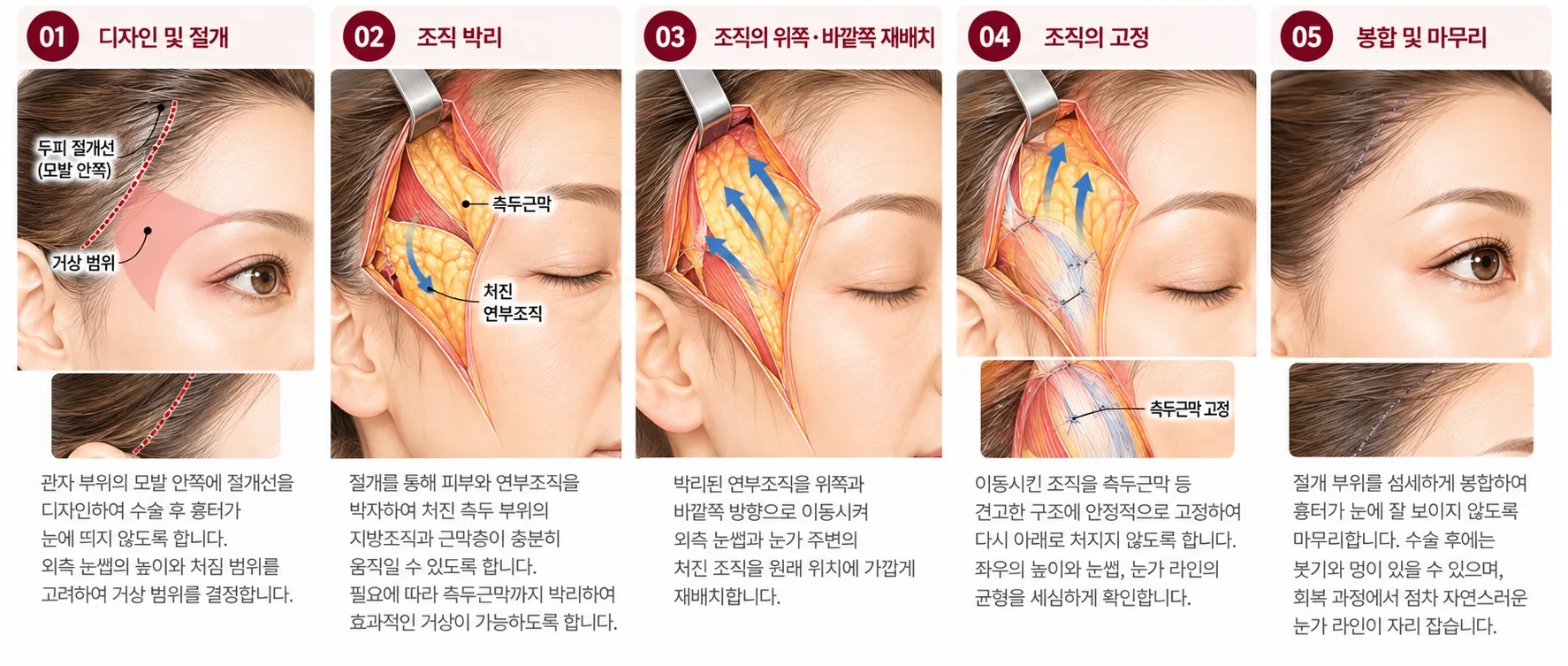
The surgical method may differ depending on each person's anatomy and degree of sagging, and the figure below is an example to help in understanding the general surgical process.
-
01
The location and direction of the sagging are analyzed
The height of the lateral brow and left-right differences, sagging of the temple area, and the degree of overlapping skin at the outer part of the eyelid are checked.
-
02
The incision is made inside the scalp
The incision line is designed inside the hair of the temple area. This places the scar within the hairline, and the degree of scarring may vary from person to person.
-
03
The sagging tissue is dissected
The tissue is dissected according to the planned layer and range so that the sagging tissue around the temple and the lateral brow can move sufficiently.
-
04
The tissue is repositioned upward and fixed
The sagging tissue is moved in a direction that takes the shape of the face and the position of the eyebrows into account, and is fixed securely.
-
05
We close the incision
After the balance of the left and right eyebrows and eye areas is checked, the incision site in the scalp is sutured and finished.
It is not a surgery that only pulls the skin strongly
Sagging of the temporal region does not occur just because the skin stretches; it appears as the soft tissue beneath the skin and the structures supporting it move downward together.
Therefore, rather than pulling and fixing the skin tightly, it is important to dissect the sagging tissue so that it can move sufficiently and then reposition it in an appropriate direction.
Because pulling too much can make the shape of the eyebrows or the eyes look unnatural, the direction and degree of lifting are decided by considering the original shape of the eyebrows and the proportions of the face.
How is it different from a Forehead Lift?
A Forehead Lift focuses on improving sagging of the whole forehead and eyebrows and adjusting the position of the eyebrows.
In contrast, a Temporal Lift is a surgery that mainly corrects sagging around the lateral brow, temple, and eye area.
The appropriate surgical method may differ depending on whether the whole eyebrow has dropped or mainly the outer part is sagging.
How is it different from a Sub-brow Lift?
A Sub-brow Lift is a surgery that directly removes the loose skin just below the eyebrow to improve skin sagging of the upper eyelid.
A Temporal Lift differs in that it approaches from the temple area and repositions the lateral brow and surrounding tissue upward.
Therefore, the surgical method is chosen after checking whether the main problem is sagging of the eyelid skin itself or descent of the lateral brow and temple tissue.
What changes can be expected after a Temporal Lift?
As the sagging tissue of the lateral brow and temple area moves upward, an effect of tidying the heavily drooping eye area and improving the line from the lateral brow to the temple can be expected.
The overlapping of skin at the outer part of the eyelid and wrinkles around the eyes may look partially eased, but it is not a surgery that removes all wrinkles around the eyes.
Rather than raising the eyebrows excessively or artificially changing the shape of the eyes themselves, it is important to reposition the sagging tissue close to its original position to create a natural eye area.
Where do scars remain after a Temporal Lift?
The incision is generally designed to be located inside the scalp of the temple area.
In the early period, the incision site may look red or feel firm, and depending on the person, temporary changes in sensation or changes in the hair around the incision may appear.
The incision location and range may differ depending on the hairline, hair density, and the necessary range of lifting.
How is recovery after a Temporal Lift?
After surgery, swelling, bruising, and a pulling sensation may appear around the temple and the eye area, and in the early period the left and right sides may look different.
During the recovery period, strong pressure or irritation on the incision site is avoided, and the wound and swelling are managed as guided by the medical staff.
Rather than right after surgery, the lines of the eyebrows and eye area gradually settle naturally as swelling decreases and the repositioned tissue stabilizes.
At a Glance
Temporal lift is a localized lifting procedure targeting sagging in the temple area. The appropriate correction range requires individual evaluation through consultation. Guidance is based on a surgery time of 1 hour under sedation anesthesia.
Temporal Lift, What Should Be Considered?
Which areas are treated?
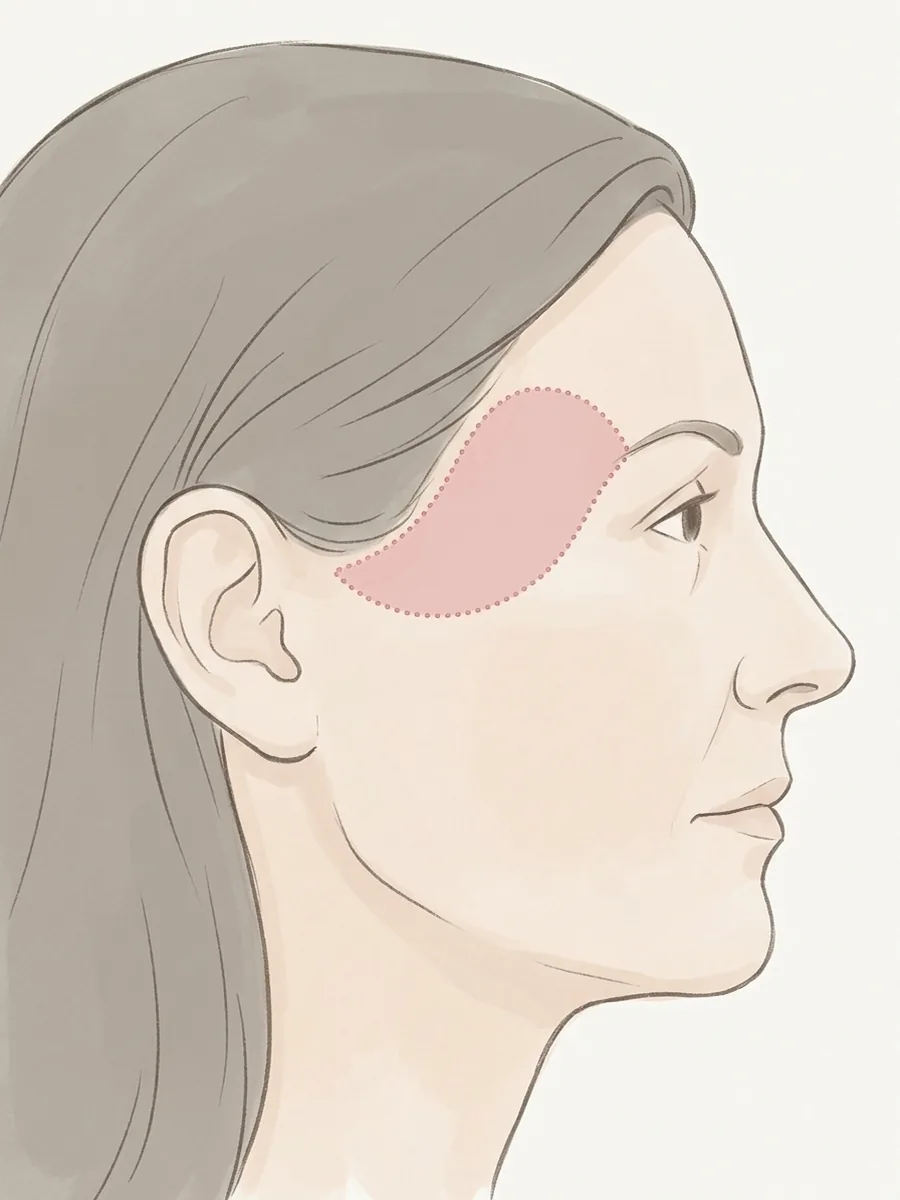
The illustration is for explanatory purposes to aid understanding, and surgical results vary by individual. The actual method is determined individually during consultation.
Temporal Lift FAQ
When is a temporal lift considered?
It is considered when the skin and soft tissue of the temple area sag, lowering the outer eyebrows and making the outer eyelid skin overlap so that the eye area looks heavy and droopy. Because the approach differs depending on the degree of sagging and the range of improvement you want, it is checked directly at the consultation.
How is a forehead lift different from a temporal lift?
A forehead lift focuses on improving sagging of the whole forehead and eyebrows and adjusting the eyebrow position, while a temporal lift mainly corrects sagging around the outer eyebrows, temples, and eye area. The forehead lift is the main surgery, and a temporal lift is performed when the outer corners of the eyes droop severely.
How is it different from a sub-brow lift?
A sub-brow lift directly removes the stretched skin just below the eyebrow to improve sagging skin of the upper eyelid, while a temporal lift approaches from the temple area and repositions the outer eyebrow and surrounding tissue upward. The surgical method is chosen after checking whether the main problem is sagging of the eyelid skin itself or descent of the outer eyebrow and temple tissue.
Is it surgery that only pulls the skin?
Sagging in the temple area does not occur because only the skin stretches; it appears as the soft tissue under the skin and the structures supporting it move downward together. So rather than pulling the skin tight and fixing it, the sagging tissue is released so it can move sufficiently and then repositioned in an appropriate direction.
Where is the incision made?
The incision line is designed inside the hair of the temple area, within the scalp. The position and range of the incision can vary depending on the hairline, hair density, and the range of lifting needed.
What are the steps of a temporal lift?
After checking the height and left-right difference of the outer eyebrows, the sagging of the temple area, and the degree of overlap of the outer eyelid skin, an incision is made inside the scalp. The sagging tissue is released, repositioned upward, and fixed, and then the balance of both eyebrows and eye areas is checked before suturing.
What anesthesia is used, and how long does the surgery take?
We explain it based on a surgery time of 1 hour under sedation. The exact surgical plan is decided after the consultation.
Will the wrinkles around my eyes disappear too?
The overlapping of skin at the outer part of the eyelid and wrinkles around the eyes may look partially eased, but it is not a surgery that removes all wrinkles around the eyes.
Does lifting the eyebrows more look better?
Pulling too much can make the shape of the eyebrows or the eyes look unnatural. The direction and degree of lifting are decided considering your original eyebrow shape and facial proportions.
What changes can I expect after surgery?
As the sagging tissue of the outer eyebrows and temple area moves upward, you can expect the heavily drooping eye area to be refined and the line from the outer eyebrow to the temple to improve. The degree of change varies from person to person.
What about scarring or my hair?
At first the incision area may look red or feel firm, and depending on the individual, temporary changes in sensation or changes in the hair around the incision may appear.
What about swelling and bruising after surgery?
After surgery, swelling, bruising, and a pulling sensation may appear around the temple and the eye area, and in the early period the left and right sides may look different.
What should I be careful about during recovery?
During recovery, avoid strong pressure or stimulation on the incision area, and manage the wound and swelling as instructed by the medical team. As the swelling decreases and the repositioned tissue stabilizes, the lines of the eyebrows and eye area gradually settle.
Why do the outer corners of the eyes look droopy with age?
In a young face, the tissue of the outer eyebrows and temple area stays in a relatively high position, so the eye area connects smoothly. As the temple tissue moves downward with aging, the outer eyebrows lower, the outer eyelid skin overlaps, and wrinkles and sagging around the outer corners of the eyes may look more noticeable.
What side effects are possible?
Depending on the individual, side effects such as bleeding, infection, swelling, asymmetry, and scarring may occur, and their degree varies. The possibility of side effects and complications is explained during the consultation.
Can I consult before surgery?
Because the suitable method differs with the degree and range of sagging, you can ask in advance through a KakaoTalk 1:1 consultation before your visit. The exact surgical plan is decided after the consultation.
If you are curious about Temporal Lift — KakaoTalk 1:1 consultation
The appropriate method varies depending on the degree and extent of sagging, so you can make a preliminary inquiry via KakaoTalk before treatment.
※ Surgical method, recovery period, and results vary individually depending on the degree of sagging, skin condition, tissue condition, etc., and the exact surgical plan is determined after consultation. The possibility of side effects and complications will be explained together during the consultation.
For additional inquiries, contact us via KakaoTalk
1:1 KakaoTalk pre-inquiry — Mon–Thu 10:00 - 19:00 · Fri 10:00 - 21:00 · Sat 10:00 - 16:00.