

Body Filler
Leg Filler
A non-surgical procedure that fills indented areas in legs that appear bowed, refining the leg line to look straighter. It does not correct the curvature of the bones themselves.
At a Glance
Leg filler is a non-surgical procedure that uses hyaluronic acid (HA) body filler to fill visibly indented areas in legs that appear bowed, such as with bow legs (genu varum), to make the line look straighter. Dr. Kwak Yeojin explains that visual correction can be expected when the axes of the femur and tibia are not severely curved, and recommends lifestyle correction and stretching together. Results may vary by individual.
On which areas is the leg filler procedure performed?
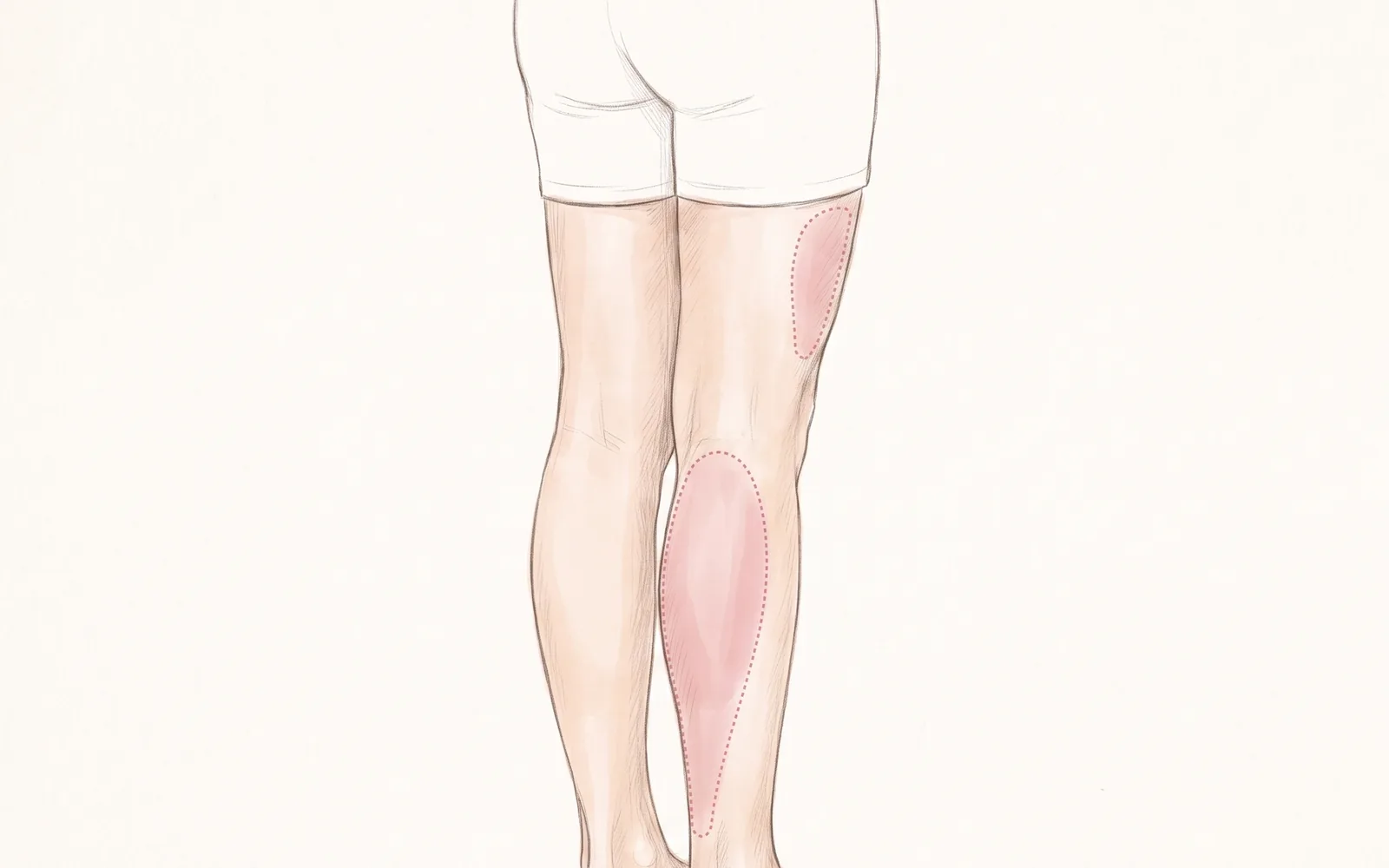
The illustration is an explanatory illustration to aid understanding, and procedure results vary by individual. The actual method is determined individually during consultation.
Points to consider before a leg filler procedure
Leg Filler — KakaoTalk 1:1 Consultation
Area condition and prior procedure history — You can make a preliminary inquiry via KakaoTalk before your visit.
With leg filler, what changes can I expect?
In some cases, the difference in line shows more from the back of the calves than from the front. The degree of change varies by individual.
Filler changes the line that “looks” curved. The doctor recommends first correcting habits and consistently doing corrective exercises, then using filler to address what remains.
How does the procedure proceed?
While standing with both feet together, we check the gap between the legs and any sunken areas, then design where to place filler after reviewing medications, allergies, and past procedure history.
In the cases on Kwak Yeojin’s blog, slightly over 25cc and slightly over 30cc were used. The wider the area to fill, the greater the amount may be. Swelling and bruising after the procedure vary by individual.
What is used to improve bowlegs?
Kwak Yeojin divides the order of bowleg correction into habits, exercise, and filler. Filler is a way to complement what remains even after consistently doing the first two.
| Method | What it does | Goal |
|---|---|---|
| Fixing habits | Avoid crossing your legs, sitting cross-legged on the floor, and leaning on one leg | Reduce the causes of misalignment as the muscles and ligaments around the hip joint and knee become stretched |
| Exercise and stretching | Strengthen the inner thighs and gluteal muscles and build balance | Help alignment through muscle strengthening and posture correction; consistency is important |
| Leg Filler | Fill noticeably sunken areas with filler | Visually compensate for the remaining curved-looking line |
If the bony axis is markedly curved, filler alone may not achieve the expected change, so we first check the condition of the legs during consultation.
How are the tissues under the skin structured?
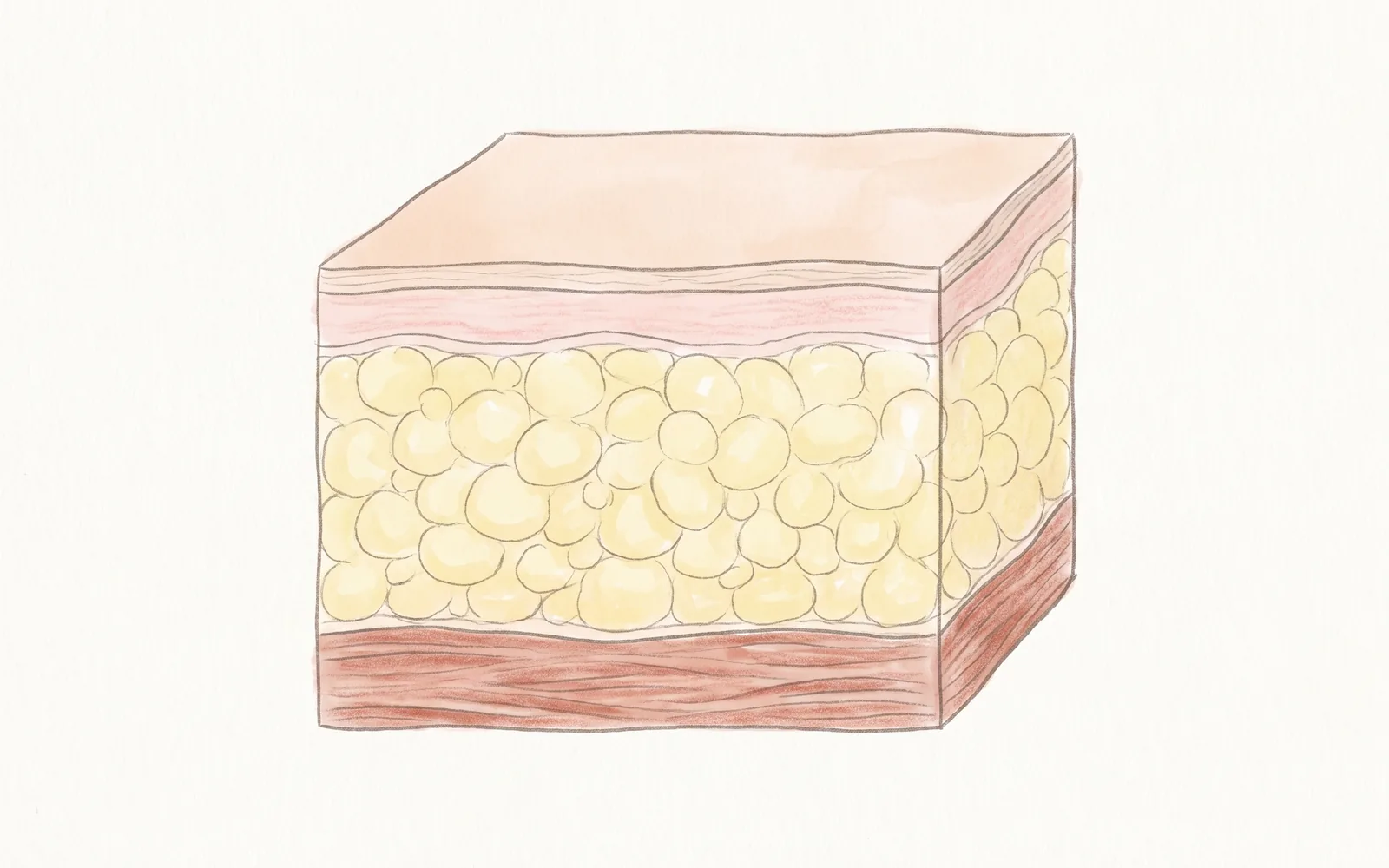
The illustration is an explanatory illustration to aid understanding, and procedure results vary by individual. The actual method is determined individually during consultation.
Leg filler frequently asked questions
The results and duration of leg filler vary depending on leg condition, injection volume, and product characteristics, and a precise evaluation through consultation is necessary.
What products are used for leg filler?
ImageUp Plastic Surgery uses body filler products such as e.p.t.q. eve s plus (Eptiq eve s plus)·SketchFill according to the area and purpose. The products used are explained during consultation.
How do I check if I have bowlegs?
Assess by how far the knees are apart when standing straight with both feet together. A knee gap of 2.5cm or less is normal, and 5cm or more is considered severe bowlegs. It is also called genu varum, with the legs bowing around the knees.
Why do bowlegs occur?
Some cases are congenital, but acquired cases most commonly result from the habit of crossing the legs or sitting cross-legged on the floor. These postures stretch the muscles and ligaments around the knee and hip, the femur rotates inward, and the alignment of the femur, tibia, and ankle bones is disrupted.
Can bowlegs be corrected with filler?
It does not straighten the bone; it visually corrects the curved-looking line in mild bowlegs. Director Kwak Yeojin explains that filling the most sunken area of the leg with Filler can provide more visual correction than expected.
What kinds of legs are difficult to improve with filler?
If the axes of the femur and tibia are markedly curved, filler alone may not achieve the expected change. The cases introduced on Kwak Yeojin’s blog were not cases with a markedly curved bony axis, but cases where the inner knee looked prominent and the legs appeared bowed.
How many cc of leg filler are used?
It varies by leg condition and the area to be filled. In the cases on Kwak Yeojin’s blog, slightly over 25cc and slightly over 30cc were used. The wider the area, the greater the amount may be.
Where is filler placed in the legs?
When standing with the legs together, we locate the area that looks most obviously sunken and fill it naturally. Kwak Yeojin says that to achieve results with the minimum amount, designing to find this spot is most important.
If I get leg filler, can I skip exercise?
No. Kwak Yeojin emphasizes that first you should consistently correct habits by not crossing your legs or sitting cross-legged, and do bowleg-correction exercises and stretching. Filler is then used to complement what still remains.
Does the front or the back view change more?
It depends on leg shape. In some cases, the difference in the line shows more in the back view of the calves than in the front. The degree varies by individual.
Can leg filler also make legs look longer?
If a curved-looking line appears straighter, the legs may also look longer. The degree varies by individual.
How long does leg filler last?
Duration varies depending on the type of filler, injection site, injected volume, and individual tissue characteristics.
Are there any side effects?
Immediately after the procedure, swelling and bleeding from injections may occur. In the early period, the area may feel firm or uneven due to swelling.
However, if a distinct lump persists over time or redness, warmth, or pain accompanies it, you should consider not only simple filler clumping but also possibilities such as inflammation or nodules. A delayed inflammatory reaction may occur long after the filler procedure, with swelling, redness, or firm nodules appearing at the injection site. Because various causes such as infection or immune reactions may be involved, it is important to confirm the cause through medical evaluation rather than assuming it is simply filler clumping and massaging or self-treating.
If filler enters a blood vessel or compresses it and obstructs blood supply, vascular occlusion can occur and lead to serious complications such as skin damage. If severe pain persists right after the filler procedure, the skin turns white, or mottled color changes appear, you should check for the possibility of circulatory compromise rather than simple swelling or bruising. Because vascular occlusion requires rapid judgment and management, if these symptoms appear, do not wait—contact the clinic that performed the procedure immediately and receive care.
During the pre-procedure consultation, we review personal risk factors such as medications, allergies, and past procedure history. Depending on the individual, side effects such as bleeding, infection, swelling, asymmetry, and scarring may occur and vary in degree, so please decide after sufficient consultation with a specialist.
Are there any post-procedure precautions?
Right after the procedure, it is best to avoid heavy drinking, strenuous exercise, and saunas, which can increase bruising and swelling. Also, unless specifically instructed by medical staff, do not press hard or massage the injection area on your own to “shape” the filler. Care methods may vary depending on the treated area and the product used.
I’ve had filler in another area before—should I mention it during consultation?
Yes. If you know the location, timing, and type of your existing filler, please share it during consultation. It will be taken into account in the treatment plan.
Can I get it during pregnancy or while breastfeeding?
If you have pregnancy or breastfeeding plans, please inform us during the prior consultation. We will adjust the procedure timing together depending on individual circumstances.
How do I book a leg filler consultation?
You can receive guidance to book a consultation via KakaoTalk 1:1 or by phone (+82-2-555-1550).
Depending on the individual, side effects such as bleeding, infection, swelling, asymmetry, and scarring may occur, and the degree may vary. Please make your decision after sufficient consultation with a specialist.
Check other body filler areas as well
For additional inquiries, contact us via KakaoTalk
1:1 KakaoTalk pre-inquiry — Mon–Thu 10:00 - 19:00 · Fri 10:00 - 21:00 · Sat 10:00 - 16:00.