

Medial Epicanthoplasty
What is Medial Epicanthoplasty surgery?
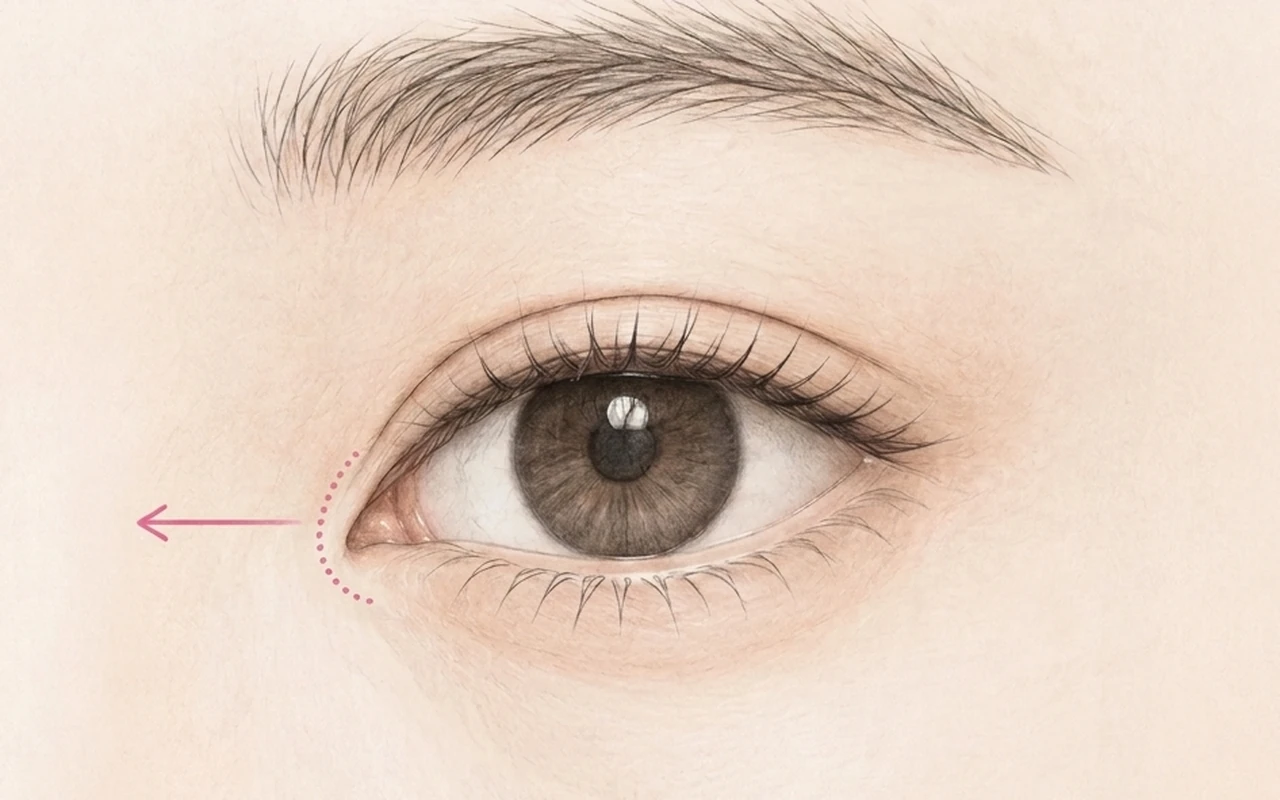
Medial Epicanthoplasty is a surgery that corrects the Mongolian fold covering the front of the eye according to the individual's eye shape to improve the horizontal length of the eye and the shape of the inner corner.
It is important to create a natural eye shape that is not excessive by comprehensively considering the distance between the eyes, the degree of the Mongolian fold, the connection with the double eyelid line, and the shape of the inner eye corner, rather than simply making the eyes larger.
At a Glance
If the distance between the eyes is already close, excessive opening can make the eyes appear clustered, so only the necessary range is corrected. After Medial Epicanthoplasty, the red conjunctiva or caruncle at the front of the eye may be more visible than before surgery, and the incision site may feel red or firm for the first few weeks to several months, with the scar often fading gradually as it matures.
Medial Epicanthoplasty Surgery Process
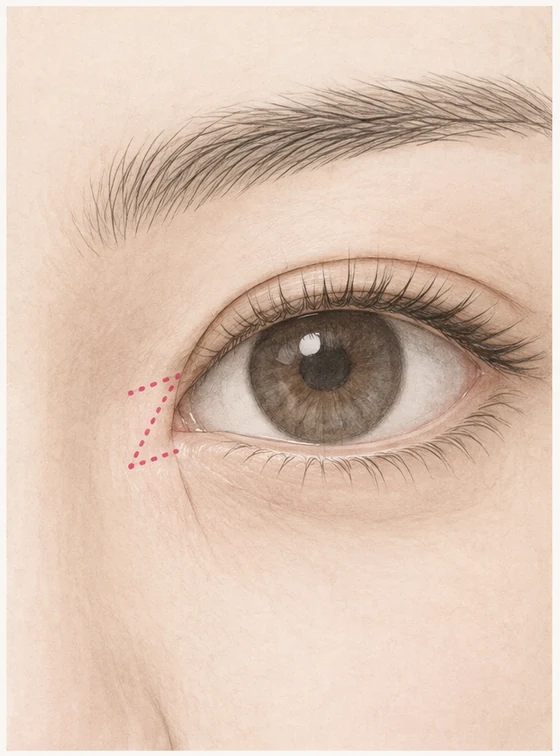
- 1Preoperative designThe range and direction of Medial Epicanthoplasty are designed by checking the eye shape, the degree of the Mongolian fold, and the distance between the eyes.
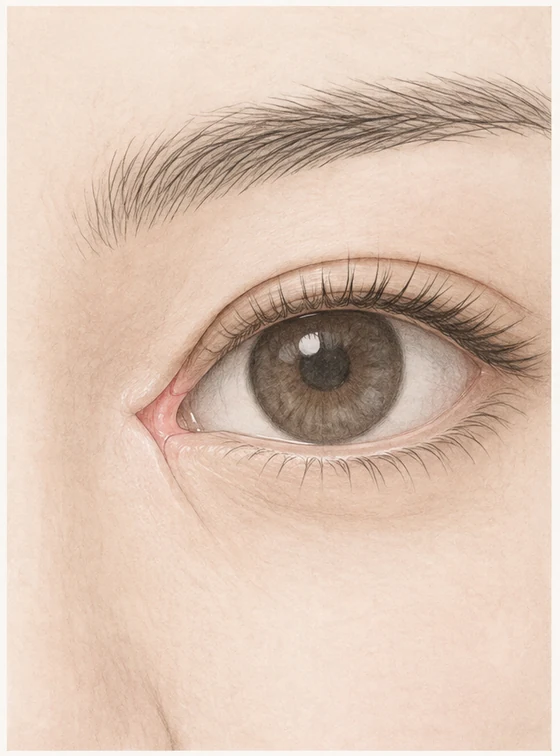
- 2Mongolian fold correctionAccording to the design, the skin is incised and the Mongolian fold covering the inner eye corner is appropriately released.
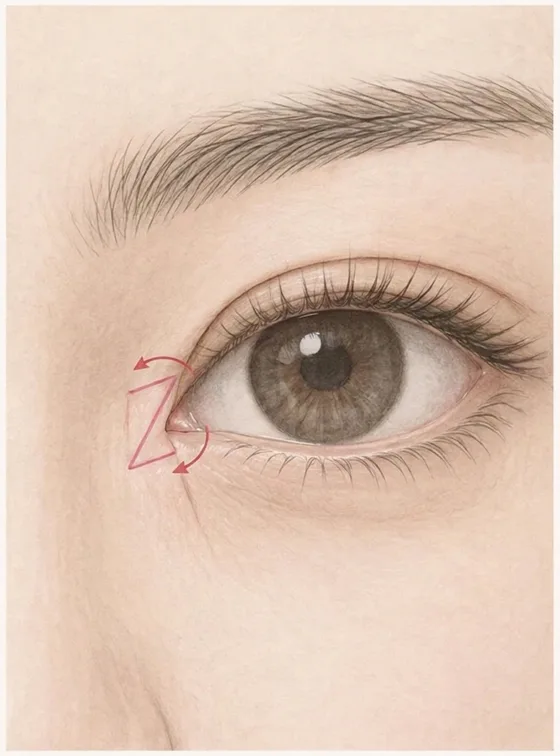
- 3Skin repositioningThe tissue is naturally repositioned while avoiding excessive skin excision to create the shape of the inner eye corner.
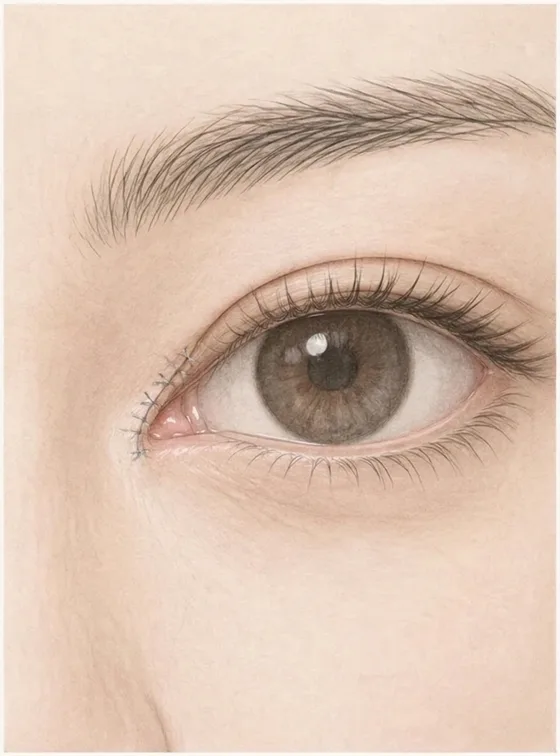
- 4Suturing and finishingAfter confirming the inner eye corner shape, left-right balance, and connection with the double eyelid line, fine suturing is performed.
Medial Epicanthoplasty Key Points
Medial Epicanthoplasty, KakaoTalk 1:1 Consultation
Medial Epicanthoplasty anesthesia method and recovery schedule can be inquired in advance via KakaoTalk before consultation.
What does medial epicanthoplasty correct?
Adjusts the Mongolian fold at the inner corner of the eye to correct the distance between the eyes and the shape of the inner corner. If the distance between the eyes is already close, excessive opening may make the eyes appear crowded, so only the necessary range is corrected.
Recommended for
- When the Mongolian fold covers a large part of the inner corner of the eye
- When the eyes appear short or stuffy
- When the distance between the eyes appears relatively wide
- When the front line of the double eyelid is covered by the Mongolian fold
- When you want to improve the overall balance of the eye shape together with double eyelid surgery
- When you want a refreshed eye shape without excess
Postoperative precautions
In the early stage of surgery, swelling, bruising, and redness may appear and will gradually subside during the recovery process. Avoid rubbing the eyes hard or applying strong stimulation to the surgical site, and it is recommended to avoid drinking, smoking, sauna, and strenuous exercise for a certain period.
The timing of suture removal, face washing, makeup, and lens wearing follows the guidance of the medical staff, and the scar at the medial epicanthoplasty site may vary in the recovery process depending on individual skin characteristics and the extent of surgery.
Medial Epicanthoplasty Frequently Asked Questions
If I have medial epicanthoplasty, won't my eyes look too close together?
Medial epicanthoplasty is not simply a surgery that opens the inner corner of the eye a lot, but must be performed considering the degree of Mongolian fold, the distance between the two eyes, the length of the eyes, and the overall proportion. If the space between the eyes is already close, excessive medial epicanthoplasty can make the eyes look close together, so it is important to correct only the necessary degree.
After medial epicanthoplasty, won't the red caruncle show too much and make me look fierce?
After medial epicanthoplasty, the red conjunctiva or caruncle on the front of the eye may be more visible than before surgery. The degree of exposure that looks natural differs depending on the existing eye shape and the degree of Mongolian fold. If too much is exposed, the impression can look strong, so it is important to create a natural inner eye corner shape rather than simply opening it a lot.
Is the scar from medial epicanthoplasty very visible?
Medial epicanthoplasty involves an incision in the skin of the inner eye corner, so initially a red line or firm feeling may be visible. In most cases, it gradually fades over time, but depending on skin characteristics or surgical method, there is also a possibility that the scar remains noticeably. In particular, since the inner eye corner is a highly visible area, it is important not to overdo the surgery beyond the necessary range.
At 3 weeks after medial epicanthoplasty, the scar at the inner eye corner is red and raised. Is this okay?
The incision site for medial epicanthoplasty may feel red, firm, and slightly raised for the first few weeks to several months. Afterward, as the scar matures, it often becomes gradually softer and lighter. However, if redness or protrusion persists severely, it is possible to consider necessary treatment by checking the scar condition.
3 months after medial epicanthoplasty restoration, I opened my eyes wide to put in lenses. Will it be okay?
You need to be careful for about one month after surgery, and after that major problems usually do not occur. If you feel any discomfort, please have it checked at a consultation.
Among the lateral canthoplasty and lower eyelid canthoplasty I received at another hospital, the lower eyelid canthoplasty seems excessive. Can it be restored to original?
If the shape is unnatural or excessively open after medial epicanthoplasty or lateral canthoplasty, revision surgery can be considered depending on the condition. However, completely returning to the pre-surgery anatomical structure may be difficult, and the possible correction range varies depending on the remaining tissue and degree of scarring.
What should I do if my eyes still look small even after double eyelid and ptosis correction?
Changes in eye size after surgery depend most importantly on the anatomical structure of the eyes you have. If you had incisional ptosis correction, it is also good to consider medial epicanthoplasty, lateral canthoplasty, lower eyelid canthoplasty, etc.
If you are not satisfied with the epicanthoplasty surgery results, when can you have surgery again?
Right after surgery, the eye shape continues to change due to swelling and scar contraction, so it is better not to decide on revision surgery too early. Unless there is a problem that requires early correction, the tissue and scar are allowed to stabilize sufficiently before evaluating the current condition to determine the timing and method of revision surgery.
What kind of surgery is Medial Epicanthoplasty?
It is a surgery that corrects the epicanthal fold covering the inner part of the eye to suit the individual eye shape, improving the horizontal length of the eye and the shape of the inner corner. It is important to correct it without overdoing it, considering together the distance between the eyes, the degree of the epicanthal fold, the connection with the double eyelid line, and the shape of the inner corner.
In what order is Medial Epicanthoplasty performed?
The scope and direction of Medial Epicanthoplasty are designed after checking the eye shape, the degree of the epicanthal fold, and the distance between the eyes. Following the design, the skin is incised to release the epicanthal fold covering the inner corner, and the tissue is rearranged while avoiding excessive skin removal to form the shape of the inner corner. Finally, the shape of the inner corner, left-right balance, and the connection with the double eyelid line are checked before suturing.
For which eyes is Medial Epicanthoplasty considered?
It is considered when the epicanthal fold covers much of the inner corner, when the eyes look short or stuffy, or when the distance between the eyes looks relatively wide. It also applies when the front part of the double eyelid line is hidden by the epicanthal fold, or when you want open-looking eyes without overdoing it.
If double eyelid surgery and Medial Epicanthoplasty are done together, can the line be made to connect?
When performed together with double eyelid surgery, it is designed so that the line at the inner corner connects naturally. It is considered together when the front part of the double eyelid line is hidden by the epicanthal fold, and results vary by individual.
What is the difference between Medial Epicanthoplasty and Upper Eyelid Canthoplasty?
Medial Epicanthoplasty mainly improves the horizontal length of the eye and the exposure of the inner corner, while Upper Eyelid Canthoplasty focuses on correcting the stuffy line above the inner corner so that the front line of the double eyelid connects naturally. Which one is needed, and whether to do both, is decided by looking at the structure of the inner corner.
Will the inner corners look pointy or artificial after Medial Epicanthoplasty?
The inner corners are designed to suit the individual eye structure so that they are not excessively pointy or artificial. Rather than simply opening a lot, the correction considers the distance between the eyes and the overall proportions of the face.
What should I be careful about after Medial Epicanthoplasty?
In the early period after surgery, swelling, bruising, and redness may appear and gradually ease during recovery. The recovery of the scar at the Medial Epicanthoplasty site may differ depending on individual skin characteristics and the extent of surgery. Follow the medical team's guidance on the timing of stitch removal, face washing, makeup, and wearing lenses, and in the meantime avoid rubbing your eyes, drinking, smoking, saunas, and strenuous exercise.
Depending on the individual, side effects such as bleeding, infection, swelling, asymmetry, and scarring may occur, and the degree may vary. Please make your decision after sufficient consultation with a specialist.
View by Canthoplasty Type
Please review the medial epicanthoplasty, upper eyelid canthoplasty, lateral canthoplasty, lower eyelid canthoplasty, and the overall canthoplasty guide together.
Medial epicanthoplasty, upper eyelid canthoplasty, lateral canthoplasty, and lower eyelid canthoplasty are viewed together on one page.
EYE Upper Eyelid CanthoplastyIt is a canthoplasty that treats the inner part of the upper eyelid.
EYE Lateral CanthoplastyRelocates the outer structure of the eye corner to increase the horizontal length of the eye.
EYE Lower Eyelid CanthoplastyAdjusts the outer part of the lower eyelid to change the vertical width of the eye and the angle of the eye corner.
For additional inquiries, contact us via KakaoTalk
1:1 KakaoTalk pre-inquiry — Mon–Thu 10:00 - 19:00 · Fri 10:00 - 21:00 · Sat 10:00 - 16:00.