

Middle-aged Eye Surgery
Middle-aged eye surgery considering both aesthetics and function
Stuffy vision, aged-looking impression, sagging eye area, wrinkles around the eyes. Middle-aged eye surgery must consider both aesthetics and function. The cause of the problem is examined, and the surgical method is decided with the aim of a comfortable eye shape.
Improving age-related changes in sagging eyelids and the under-eye area
The thin skin around the eyes shows signs of aging quickly. Sagging skin and thinned skin are diagnosed, and surgery suited to each individual's condition is planned.
At a Glance
Middle-aged eye surgery examines the drooping eyelids and the under-eye area together and corrects only as much as needed. You go home the same day, and recovery time varies from person to person and is explained through consultation when needed.
Types of Middle-aged Eye Surgery
Depending on the individual, side effects such as bleeding, infection, swelling, asymmetry, and scarring may occur, and the degree may vary. Please make your decision after sufficient consultation with a specialist.
Middle-aged Eye Surgery, KakaoTalk 1:1 Consultation
The anesthesia method and recovery schedule for Middle-aged Eye Surgery can be inquired in advance via KakaoTalk before the consultation.
How Does the Eye Change in Middle Age?
Aging around the eyes does not simply mean wrinkles forming in the skin.
Over time, the eyebrows may sit lower, the upper and lower eyelid skin may loosen, eyelid fat may protrude or look hollow, and changes in under-eye fat and the tear trough may appear together.
As these changes appear in combination, the eyes may look smaller or heavier, creating a tired or older-looking impression.
Therefore, in middle-aged eye surgery, it is important to examine the aging of the entire area around the eyes together — eyebrow, upper eyelid, lower eyelid, and under-eye — rather than looking at only one area.
Typical Changes Seen in the Middle-aged Eye
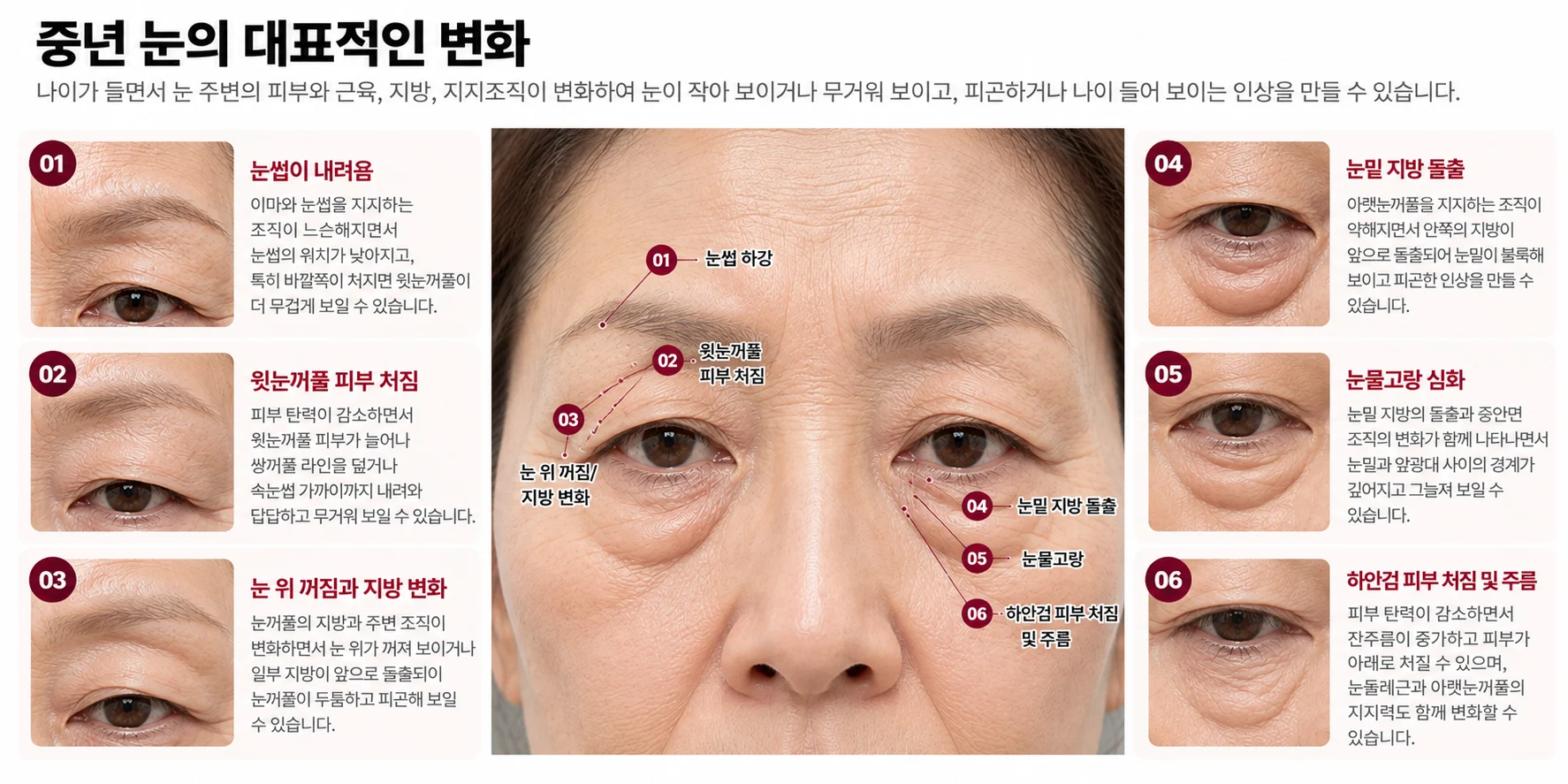
- 01
The Eyebrows Drop
As the tissue supporting the forehead and eyebrows loosens, the position of the eyebrows may drop. In particular, when the outer part of the eyebrow sags, the upper eyelid skin may look even more folded over.
- 02
The Upper Eyelid Skin Sags
As skin elasticity decreases, the upper eyelid skin may cover the double eyelid line or sag down close to the eyelashes. In severe cases, the field of vision may feel obstructed.
- 03
The Area Above the Eye May Look Hollow or Fat May Protrude
As eyelid fat and the surrounding tissue change, the area above the eye may look hollow, or some fat may protrude forward and make the eyelid look thick.
- 04
Under-eye Fat Becomes Bulgy
As the tissue supporting the lower eyelid weakens, the fat inside may protrude forward and make the under-eye area look bulgy.
- 05
The Tear Trough and the Boundary Under the Eye Deepen
When under-eye fat protrusion and changes in the midface tissue appear together, the boundary between the under-eye area and the anterior cheekbone may deepen and look shadowed.
- 06
The Lower Eyelid Skin and Wrinkles Loosen
As skin elasticity decreases, fine lines increase and the skin may sag downward. The orbicularis oculi muscle and the support of the lower eyelid may also change together.
The Cause May Differ Even for the Same Droopy Eyes
Not everyone whose eyelids droop after middle age has the same surgery.
The appropriate surgical method may differ depending on whether the eyebrow itself has dropped, the upper eyelid skin is loose, or both changes are present together.
The treatment also differs between under-eye skin that is simply loose and cases in which fat protrusion, a tear trough, and changes in eyelid support occur together.
Therefore, the process of accurately distinguishing where the sagging began and the condition of the tissue around the eyes needs to come first, rather than simply removing the skin that is visible now.
What Kind of Surgery Does My Eye Need?
Upper Blepharoplasty
This may be considered when the upper eyelid skin itself is quite loose, covering the double eyelid or making the eye area look heavy. Loose skin and necessary tissue are adjusted, with correction that takes the existing eye shape and a natural eyelid line into account.
- 1Before surgery
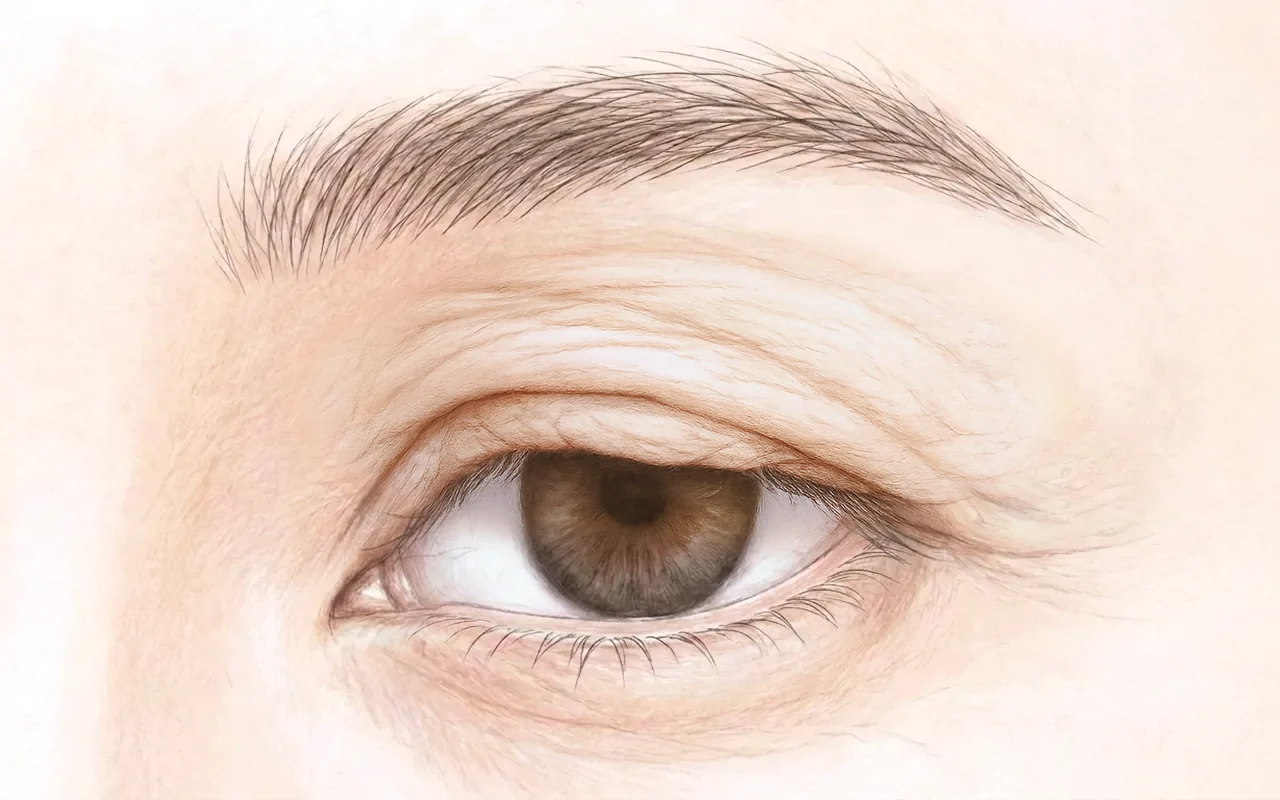
- 2Suturing and finishing
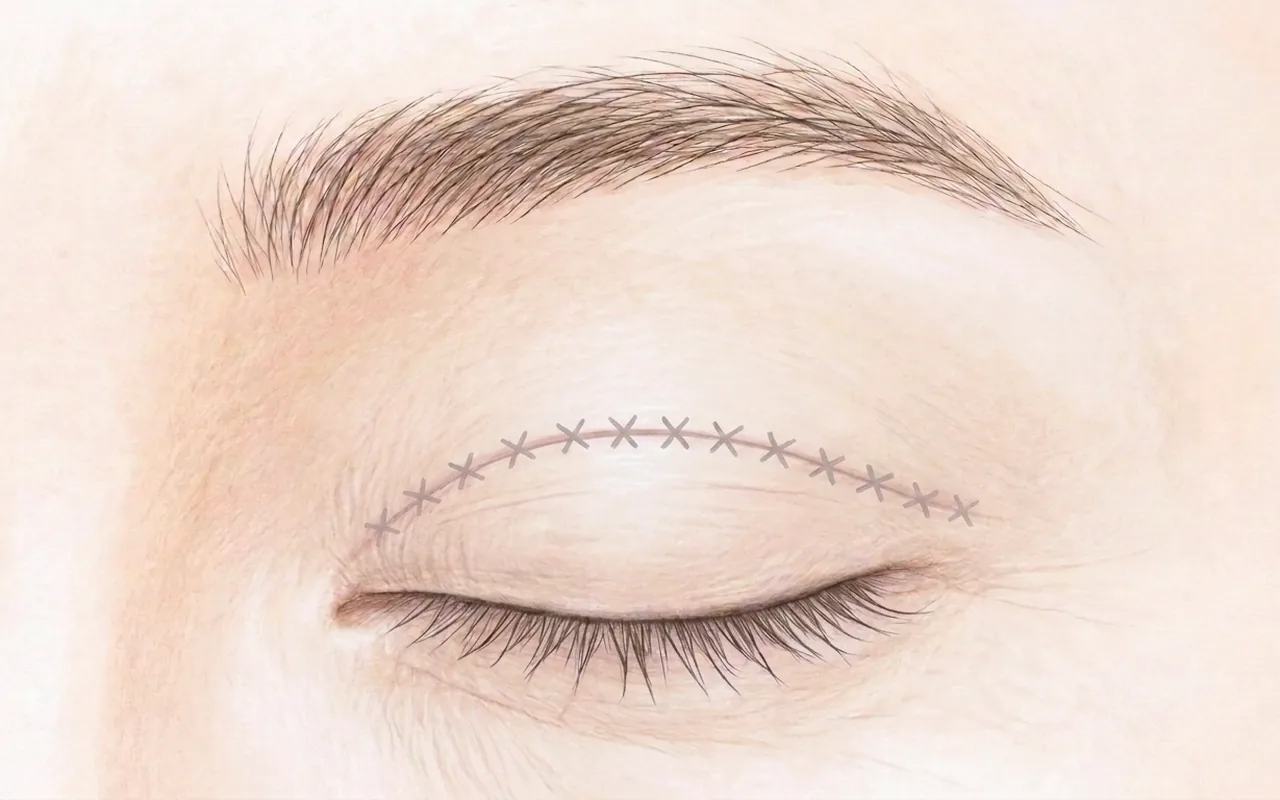
- 1Before surgery
Sub-brow Lift Surgery
This method removes skin below the eyebrow to improve a drooping upper eyelid. It may be considered when you want to improve skin sagging mainly on the outer side while minimizing changes to the existing double eyelid line.
- 1Preoperative design
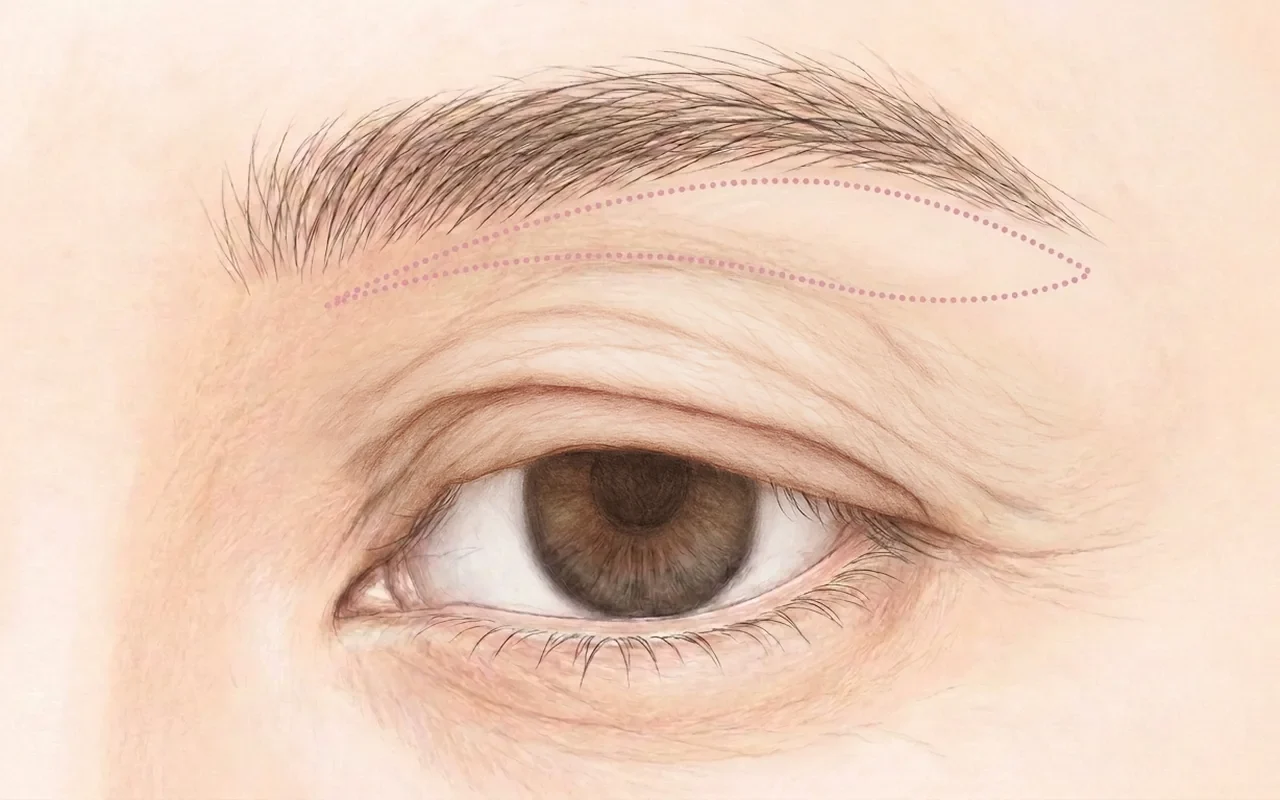
- 2Skin arrangement and suturing
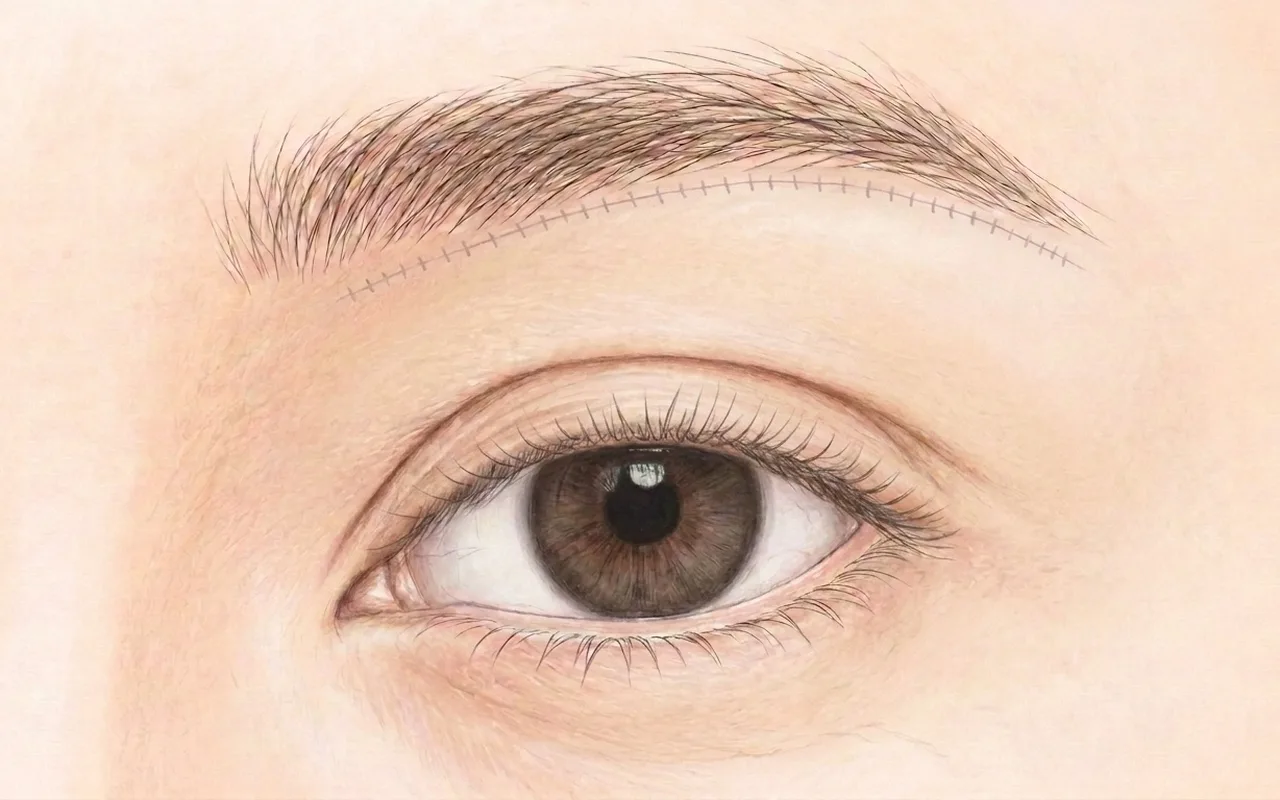
- 1Preoperative design
Lower Blepharoplasty
This is considered when the under-eye skin is loose, the fat is bulging, or the tear trough has also deepened. Unnecessary skin is adjusted, and the under-eye fat and surrounding tissue are tidied together to improve the under-eye line.
- 1Incision Line Design and Skin Incision
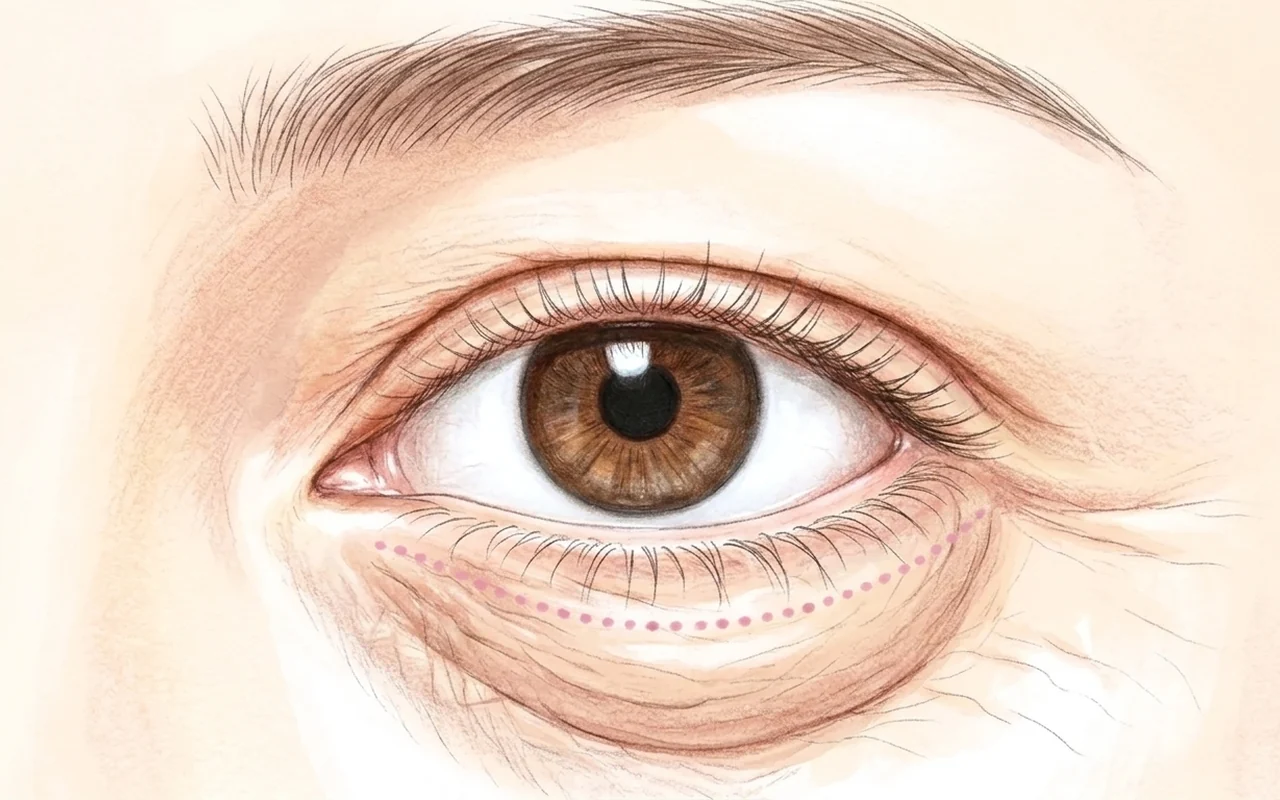
- 2Precise Suturing
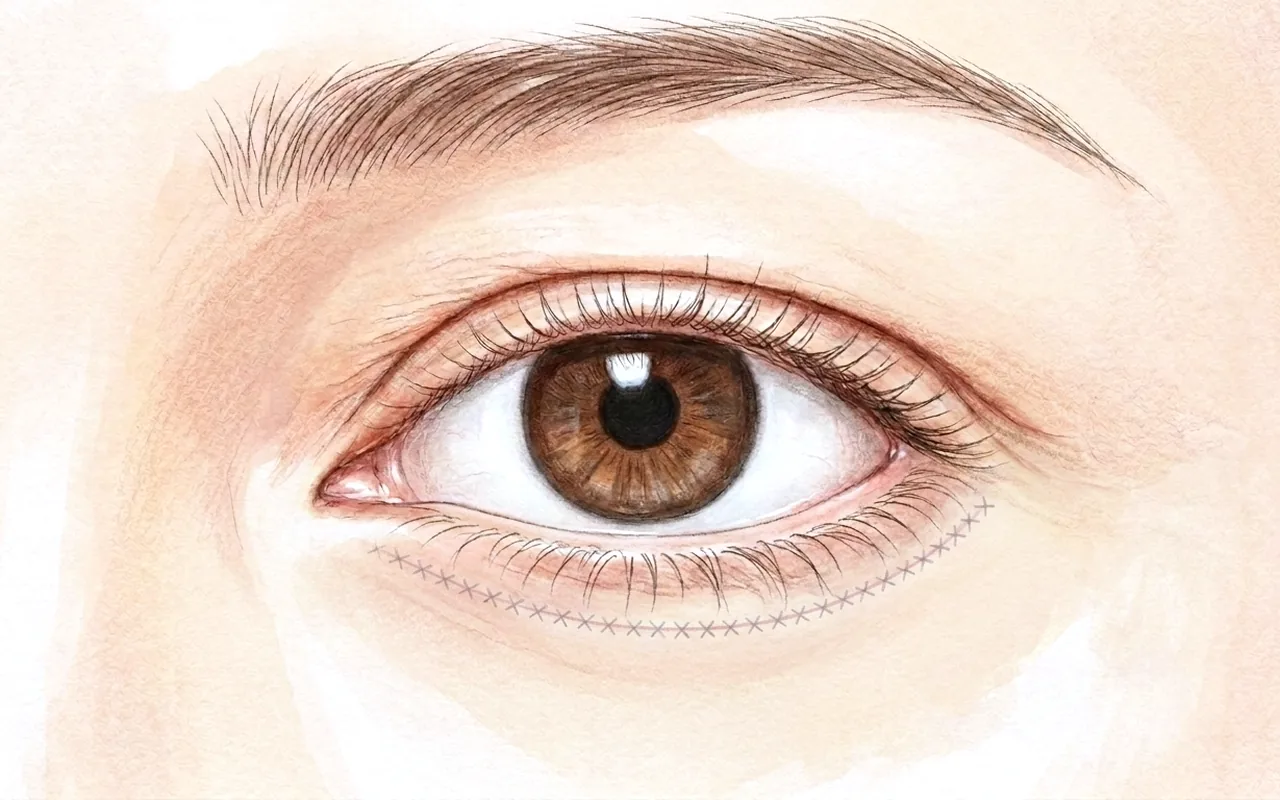
- 1Incision Line Design and Skin Incision
Under-eye Fat Repositioning
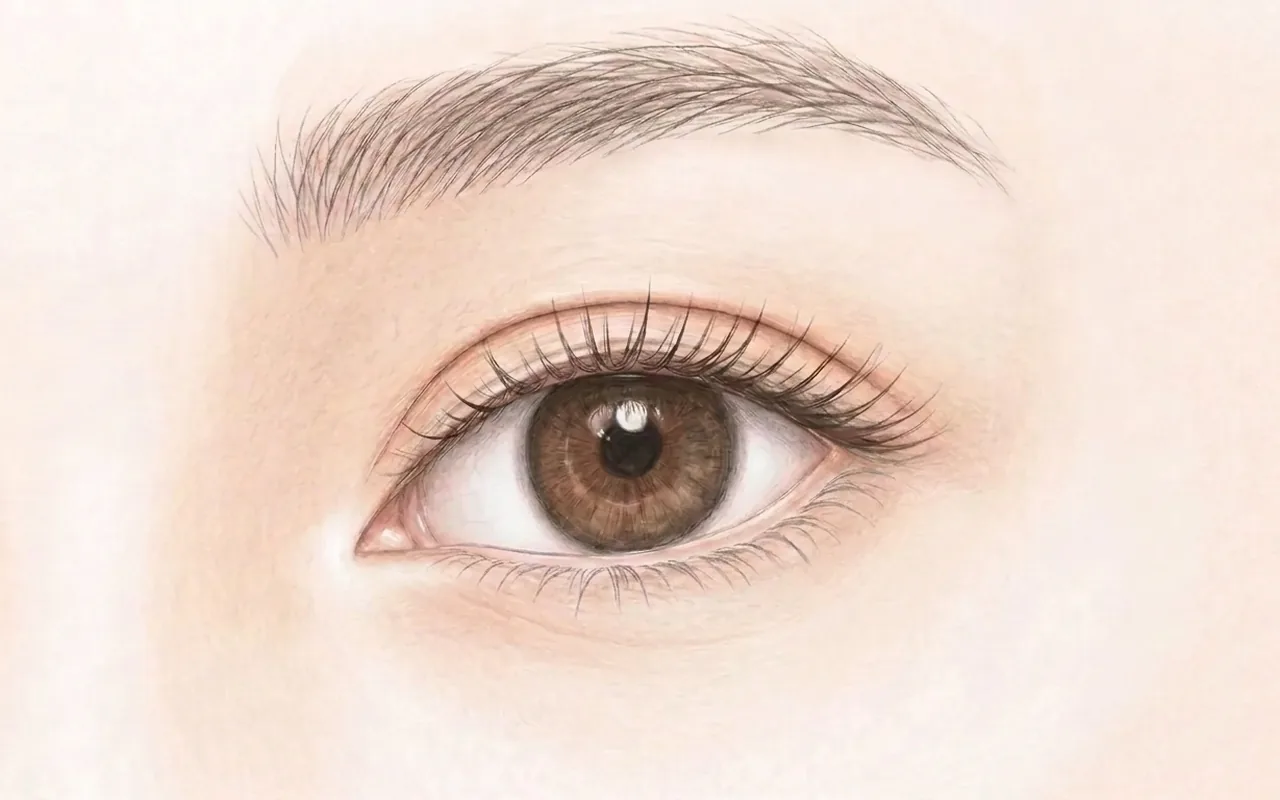
This may be considered when there is not much skin sagging but the under-eye fat is bulging and the tear trough is prominent. The protruding under-eye fat is moved and repositioned into the hollow area to ease the difference in height under the eye.
- 1Before surgery
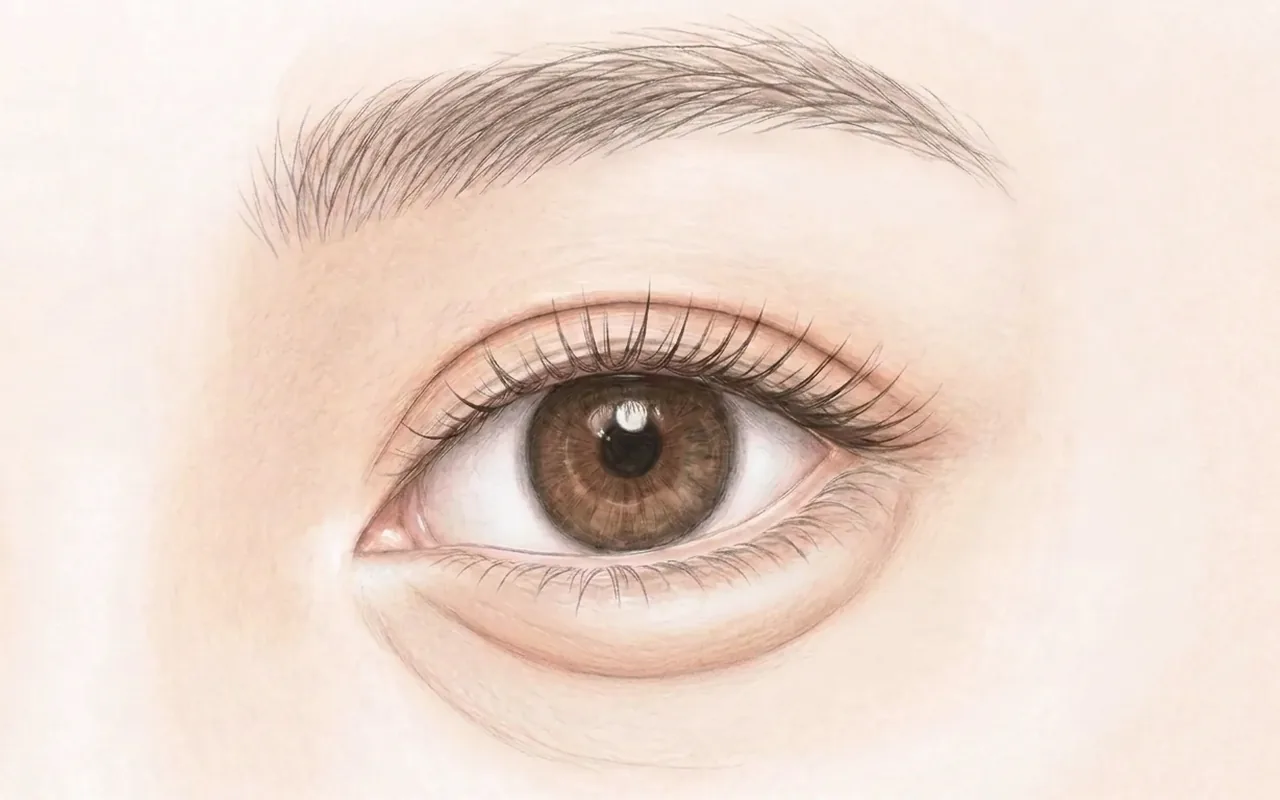
- 2After surgery
- 1Before surgery
Where needed, fat repositioning is performed together.
Middle-aged Eye Surgery: Removing a Lot Is Not What Matters
In middle-aged eye surgery, removing as much loose skin and bulging fat as possible does not necessarily lead to a good result.
Excessive removal of upper eyelid skin or fat may make the eyes look sunken or change your impression, and excessive skin removal from the lower eyelid may also affect the shape and function of the eyelid.
Therefore, the aim is to maintain the current shape of the eye while correcting only the parts that have changed with aging, as much as needed.
It Should Look Younger While Still Looking Like "My Eyes"
The goal of middle-aged eye surgery is not simply to remove wrinkles or make the eyes bigger.
Because each person's eyes and expression have an impression formed over a long time, we value keeping the original eye shape while naturally tidying the parts that have sagged and become heavy, rather than changing it excessively.
The surgical plan takes into account not only the shape of the eyelids but also the function of opening and closing the eyes, left-right balance, and the position of the eyebrows.
Middle-aged Eye Surgery FAQ
My drooping eyelids make my vision feel blocked. What surgery can I consider?
When the eyelids droop severely with aging, they can block the field of vision, and the habit of raising the eyes can even cause forehead wrinkles. In such cases, upper blepharoplasty, which removes the sagging eyelid skin, can be considered.
Can I correct only the sagging while keeping my double eyelid line?
If you want to correct drooping eyelids while keeping the shape of your eyes, a sub-brow lift, which removes skin below the eyebrow, can be considered. It improves skin sagging mainly on the outer side while minimizing changes to the existing double eyelid line.
Is a lowered eyebrow different from a drooping eyelid?
The appropriate surgery can differ depending on whether the eyebrow itself has come down, the upper eyelid skin has stretched, or both changes are present. So rather than just removing the visible skin, the location where the sagging starts is identified first.
The area under my eyes looks puffy and shadowed.
Lower blepharoplasty is considered when the skin under the eyes has stretched and the fat bulges, or when the tear trough has deepened as well. Unneeded skin is adjusted, and the under-eye fat and surrounding tissue are rearranged together to improve the under-eye line.
My skin isn't very saggy, but the fat under my eyes bulges.
When skin sagging is minimal but the under-eye fat bulges and the tear trough stands out, under-eye fat repositioning can be considered. The protruding under-eye fat is moved and repositioned into the hollow area to soften the height difference under the eyes.
Do the upper and lower eyelids need to be done together?
In middle-aged eye surgery, rather than looking at one area alone, the aging of the whole eye area from the eyebrows and upper eyelids to the lower eyelids and under-eye area is reviewed together. Which areas to correct together is decided after checking your condition in the consultation.
Is fat repositioning sometimes done at the same time?
When needed, fat repositioning is performed together. The decision is made after checking how much the under-eye fat protrudes or is hollow in the consultation.
Is it better to remove more of the sagging skin?
Removing as much sagging skin and bulging fat as possible does not necessarily lead to a good result. Removing too much skin or fat from the upper eyelid can make the eyes look hollow or change your impression, and excessive skin removal from the lower eyelid can affect the shape and function of the eyelid.
Will surgery change my impression a lot?
Rather than drastically changing eyes and expressions formed over a long time, we consider it important to tidy up the sagging, heavy areas while keeping your original eye shape. The surgical plan considers not only the eyelid shape but also the function of opening and closing the eyes, left-right balance, and the position of the eyebrows.
What kind of anesthesia is used for middle-aged eye surgery?
The anesthesia method for middle-aged eye surgery depends on the type and range of surgery and is explained during the consultation. Before your visit, you can ask in advance through a KakaoTalk 1:1 consultation.
Do I need to be hospitalized?
With middle-aged eye surgery, you go home the same day. The recovery period varies from person to person and is explained through a consultation when needed.
What about swelling and bruising after surgery?
Swelling and bruising can occur after surgery, and their degree and duration vary from person to person. The recovery schedule depends on the type and range of surgery and is explained in the consultation.
Will the incision scar be visible?
In a sub-brow lift, the incision follows the shape of the eyebrow, and in Upper Blepharoplasty and Lower Blepharoplasty, the stretched skin is adjusted and then sutured. A scar may form at the incision site, and its degree varies from person to person.
What are the possible side effects of middle-aged eye surgery?
Depending on the individual, side effects such as bleeding, infection, swelling, asymmetry, and scarring may occur, and their degree varies. Please decide after a thorough consultation with a specialist.
What is looked at in the consultation to decide which surgery my eyes need?
The condition of the tissue around the eyes is assessed separately, including eyebrow position, upper eyelid skin, eyelid fat, under-eye fat and tear trough, and the support of the lower eyelid. Before your visit, you can ask in advance through a KakaoTalk 1:1 consultation.
Eye surgery pages worth viewing together
Please also look at Under-eye Fat Repositioning and Ptosis Correction.
For additional inquiries, contact us via KakaoTalk
1:1 KakaoTalk pre-inquiry — Mon–Thu 10:00 - 19:00 · Fri 10:00 - 21:00 · Sat 10:00 - 16:00.