

Lower Eyelid Canthoplasty
What is lower eyelid canthoplasty surgery?
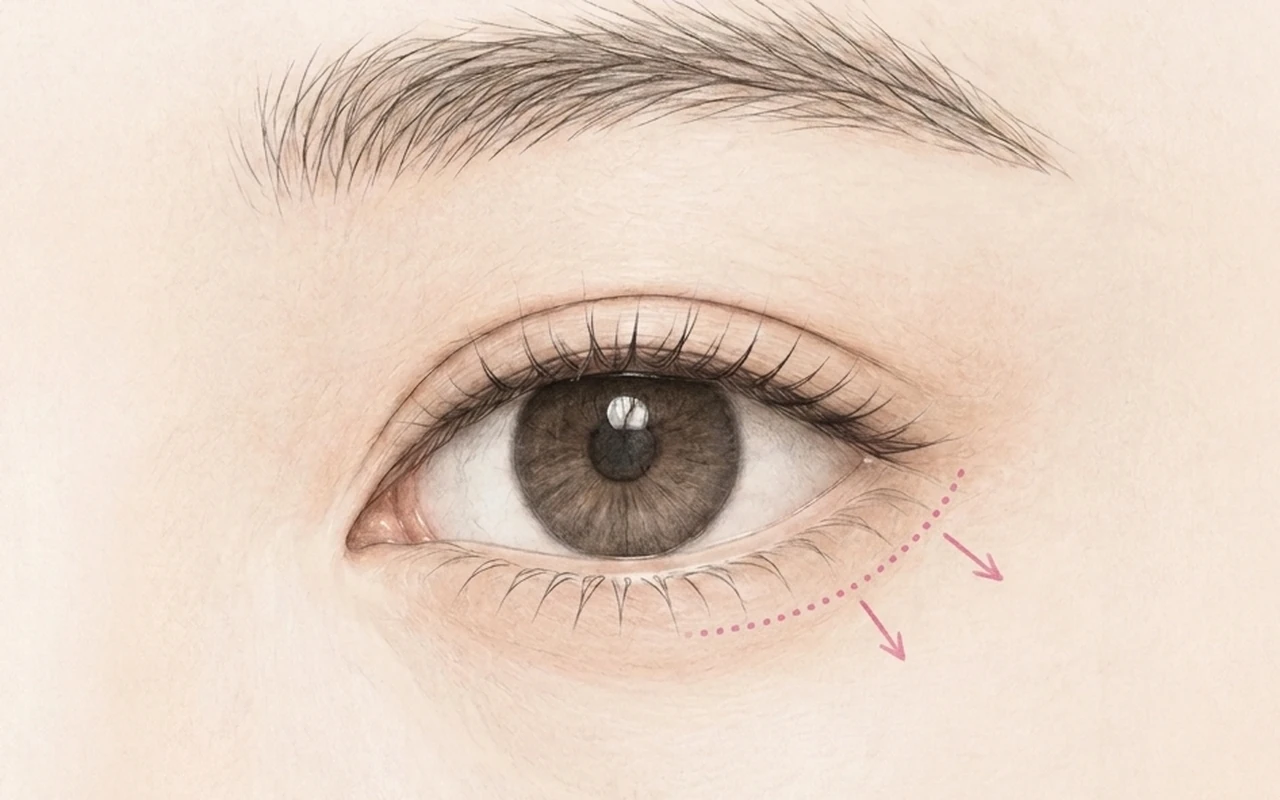
Lower eyelid canthoplasty is a surgery that naturally expands the area under the eyes and below the outer eye corner by adjusting the position and tension of the lower eyelid, creating a softer eye shape.
It is important not to simply make the eyes larger downward, but to comprehensively consider the shape of the lower eyelid, the outer eye corner angle, the horizontal and vertical eye ratio, the degree of scleral show, etc., and determine the direction and correction range suited to the individual's eye structure.
At a Glance
Lowering the lower eyelid excessively can cause scleral show or lower eyelid ectropion, so correction must be done within an appropriate range, considering the elasticity and support of the lower eyelid and the position of the eyeball. After surgery, the corrected area gradually stabilizes as tissue healing and adhesion progress, and the recovery course and degree of maintenance vary by individual.
Lower Eyelid Canthoplasty Surgery Process
- 1Preoperative designCheck the vertical width of the outer eye, the outer eye corner angle, the position of the lower eyelid, and the degree of scleral show, then design the range and direction to adjust downward.
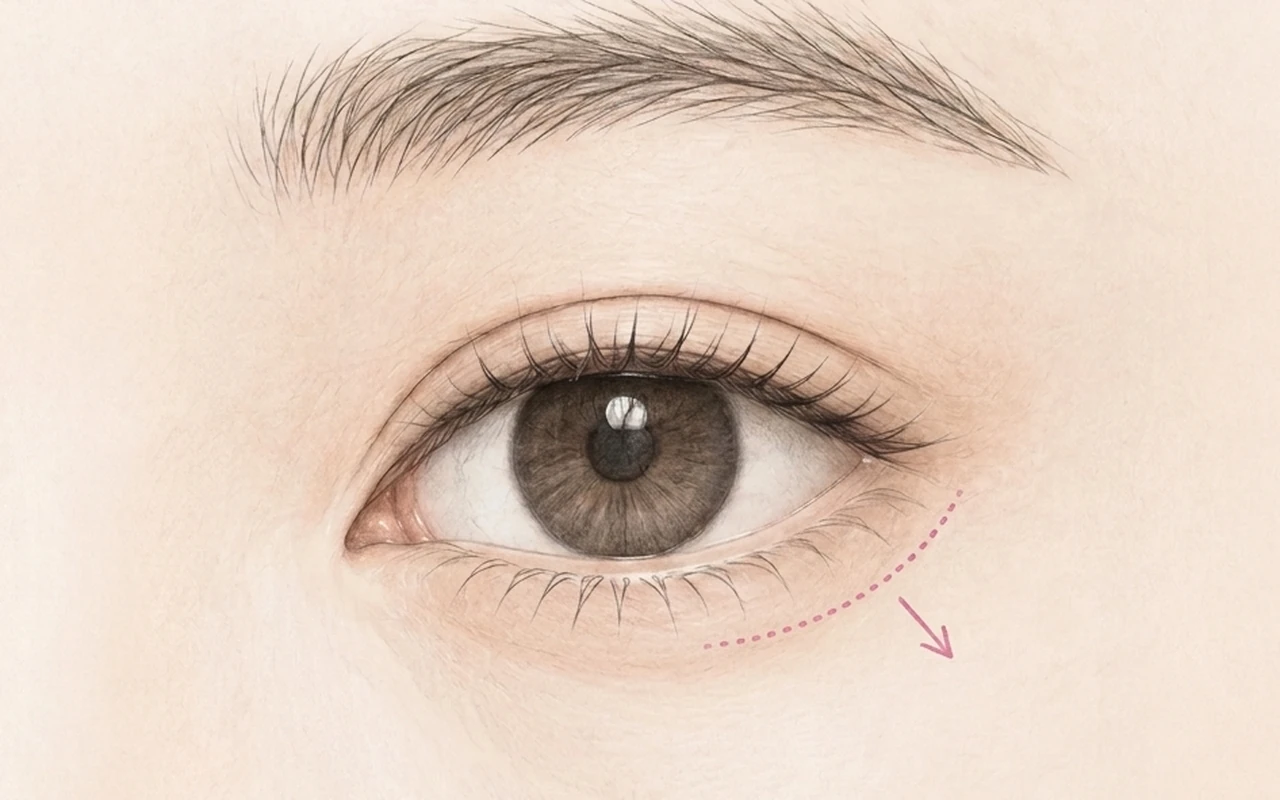
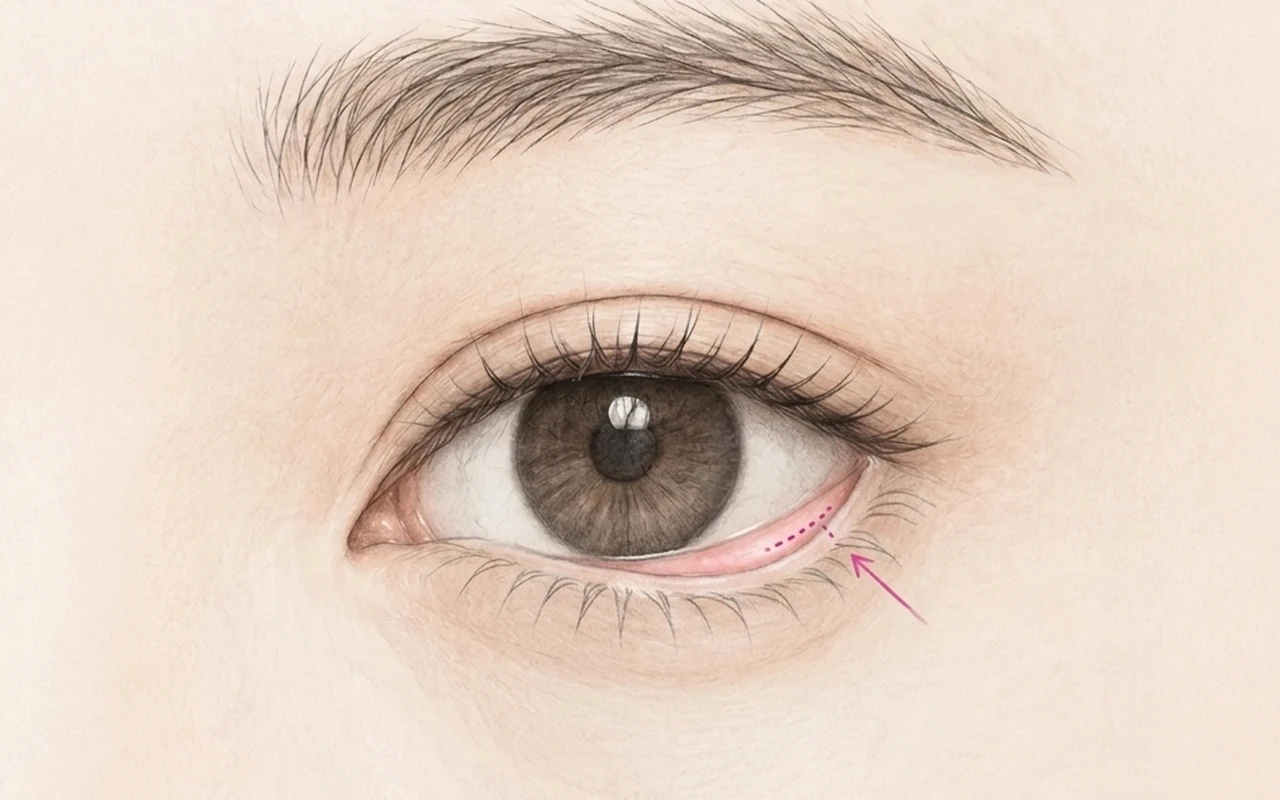
- 2Incision and Tissue AccessThe lower eyelid tissue is accessed through the conjunctiva to create space for adjusting the position of the lower eyelid.
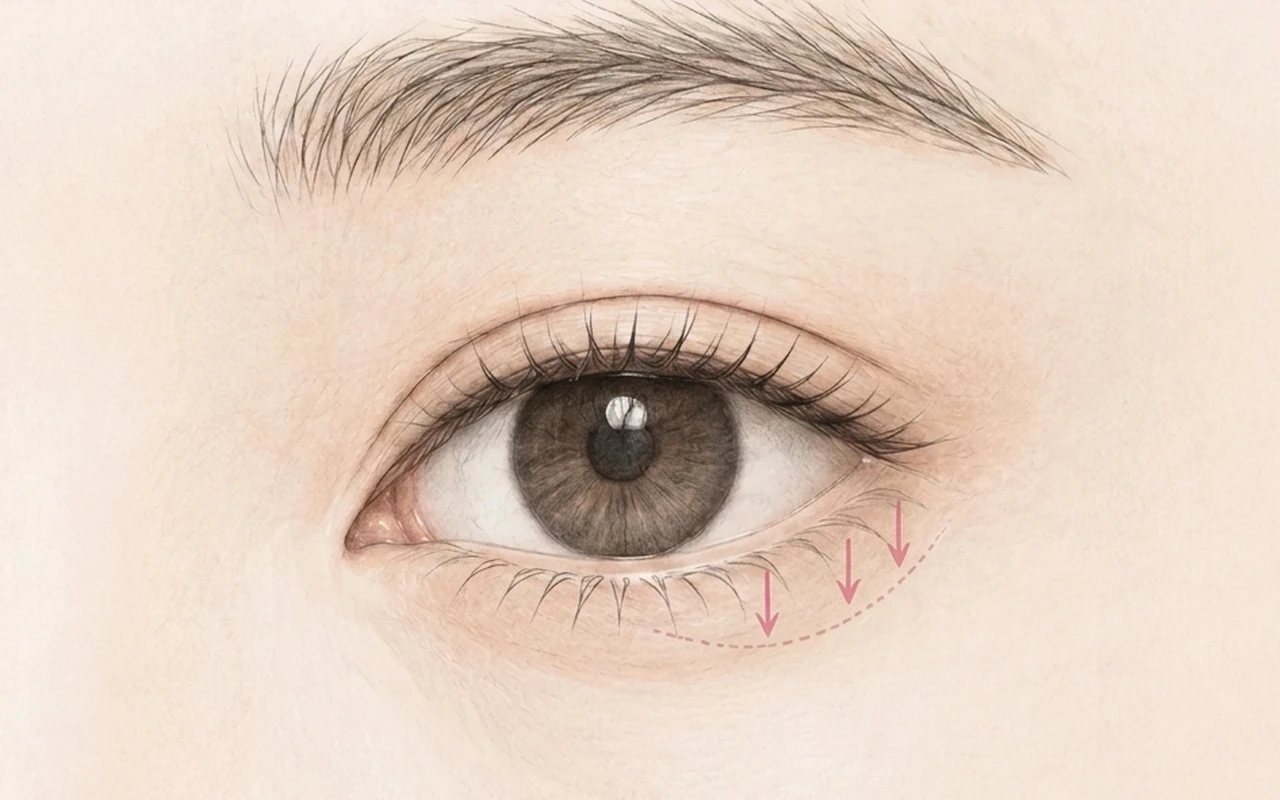
- 3Downward Adjustment and FixationLower and laterally adjust the lower eyelid's inferior and lateral tissues in an appropriate direction suited to the individual's eye structure and fix them stably in the desired position.
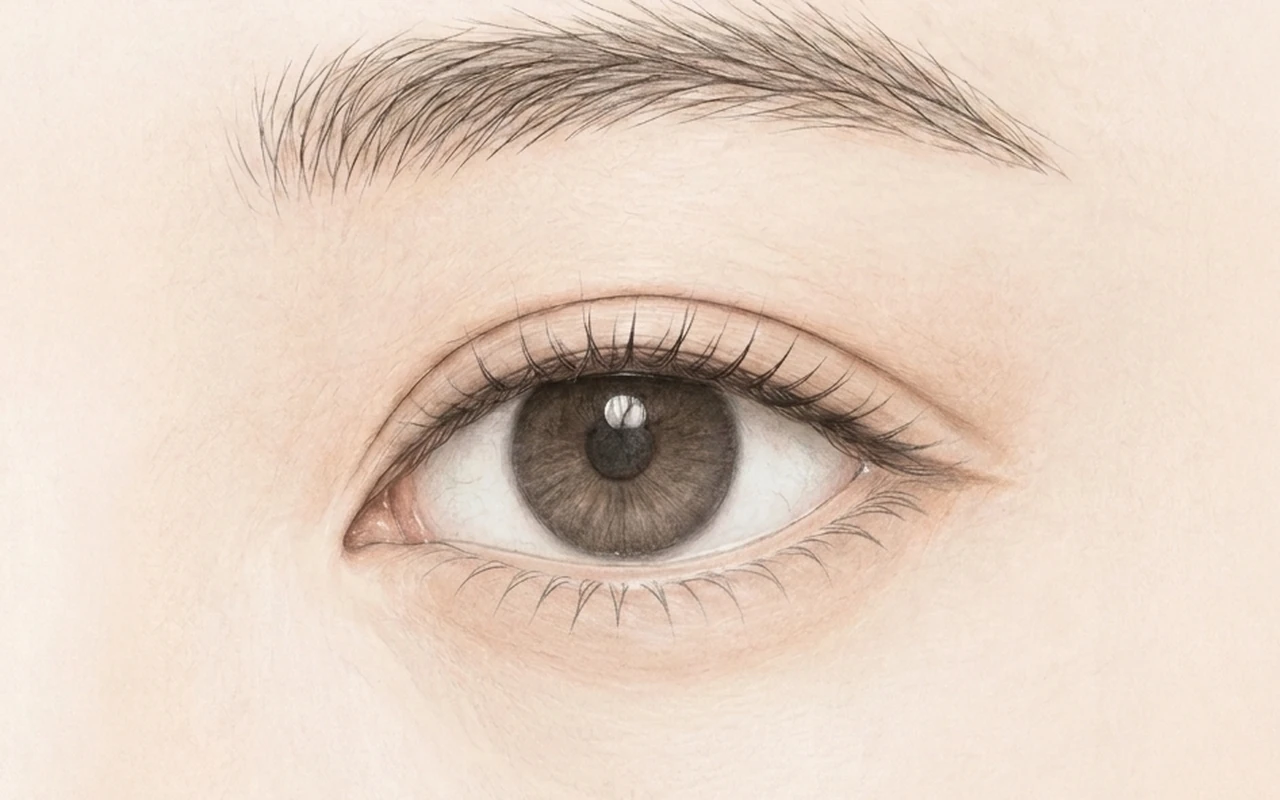
- 4Post-surgery Check and FinishingCheck the position and curve of the lower eyelid, the vertical width of the eye, the degree of scleral show, and left-right balance, then finish to achieve a natural eye shape.
Effects of Lower Eyelid Canthoplasty
Lower Eyelid Canthoplasty, KakaoTalk 1:1 Consultation
For Lower Eyelid Canthoplasty, anesthesia method and recovery schedule can be inquired in advance via KakaoTalk before the consultation.
What does Lower Eyelid Canthoplasty correct?
Adjusts the outer part of the lower eyelid downward to change the vertical width of the eye and the angle of the eye corner. Lowering it more than necessary may cause excessive scleral show, so correction must be performed within a safe range considering the elasticity of the lower eyelid and the position of the eyeball.
Recommended for
- When the eye corner appears raised and gives a sharp impression
- When the vertical width on the outer side of the eye is narrow and appears stuffy
- When desiring larger and softer eye shape
- When wanting to naturally improve the curve of the lower eyelid
- When wanting to improve the outer side of the eye to appear more refreshed in combination with Lateral Canthoplasty
- When wanting to create harmonious horizontal and vertical proportions of the eye shape
Postoperative precautions
In the early stages of surgery, swelling, bruising, redness, and a pulling sensation may appear and gradually subside during the recovery process. Avoid rubbing the eyes hard or applying strong stimulation to the surgical site, and it is recommended to avoid drinking, smoking, sauna, and strenuous exercise for a certain period.
Suture removal, washing the face, makeup, and lens wear timing follow the medical staff's guidance. Lower Eyelid Canthoplasty has different possible correction ranges depending on individual anatomical conditions such as the position and support of the lower eyelid and the degree of scleral show, so it is important not to pull it down excessively.
Frequently Asked Questions about Lower Eyelid Canthoplasty
Is lower eyelid canthoplasty a surgery that lowers the eye downward?
Lower eyelid canthoplasty is a surgery that adjusts the outer part of the lower eyelid downward to change the vertical width of the eye and the angle of the eye tail. In cases where the eye tail is raised a lot and gives a sharp impression, an effect of appearing as a softer impression can be expected. However, it is not possible to lower it a lot in all eyes.
If lower eyelid canthoplasty is done too much, won't a lot of the white of the eye show or the eye look everted?
If the lower eyelid is lowered more than necessary, excessive exposure of the lower white of the eye or an unnatural appearance such as the lower eyelid appearing detached from the eyeball can occur. Therefore, correction must be done within a safe range by considering not only the desired eye shape but also the elasticity of the lower eyelid and the position of the eyeball.
Do lateral canthoplasty and lower eyelid canthoplasty have to be done together?
It is not necessary to do them together. If the horizontal length of the eye is insufficient, lateral canthoplasty may be more necessary, and if the eye tail is raised a lot, lower eyelid canthoplasty may be more helpful. In cases where both issues are present, lateral canthoplasty and lower eyelid canthoplasty are sometimes performed together to correct both the length and direction of the eye tail. The important thing is to first evaluate the current eye structure and select only the necessary surgeries.
If the incisional lower eyelid canthoplasty sutures break, does it return to its original state?
About 6 months after Lower Eyelid Canthoplasty, the operated area is maintained not by the strength of the sutures but by adhesion. However, this applies when the operating surgeon understood the anatomical structure well and performed the surgery precisely. An Incisional Method lower canthoplasty is known to be maintained by tissue adhesion over time, but the degree and duration vary from person to person. The role of the sutures lasts about 6 months, and if the sutures do not come loose early after surgery, the operated area is often maintained by the adhesion of the tied tissues regardless of the strength of the thread. Conversely, if you had a non-incisional lower canthoplasty, it usually goes back when the sutures come loose.
Does Lower Eyelid Canthoplasty revision surgery only release the adhesion, or does it also restore damaged tissue?
How the previous surgery was performed is important. If the surgery was done while preserving normal anatomical structures, adhesions can be released and other tissues can be returned to their original positions.
After lower eyelid canthoplasty, my eyes feel stinging and tears keep coming. Is it okay?
In the early post-surgery period, due to swelling and changes in eyelid position, the eyes may feel drier than usual, sting, or produce a lot of tears. It usually improves with recovery, but if symptoms are severe or persist, it is good to check for irritation of the cornea or conjunctiva.
After Lower Eyelid Canthoplasty, my eyes feel like they don't close well. Is that okay?
Due to initial swelling and tissue pulling, the sensation of closing the eyes may differ from usual. However, if the state where the eyes do not close completely persists, it can cause eye dryness and corneal irritation, so it is advisable to have it checked at the hospital.
After Lateral Canthoplasty and Lower Eyelid Canthoplasty, the outer eye corner looks too drooped. Will it rise a little over time?
Right after surgery, the outer eye corner may appear more drooped than expected due to swelling and fixed tissues. It is only that the outer eye corner appears lowered; the surgery does not forcibly lower the outer eye corner. As swelling subsides and tissues settle during the recovery process, the shape may become more natural, so it is difficult to judge the final result based only on the initial appearance.
When can I start face washing, eye makeup, and wearing lenses after Lateral Canthoplasty and Lower Eyelid Canthoplasty?
Before the sutures and incision sites stabilize, be careful not to rub the eyes or let cosmetics touch the wound directly. Contact lenses also pull on the eyelids during insertion, so it is better to avoid them initially. For the timing to start face washing, makeup, and lens wear, follow the hospital's guidance according to the surgical method and wound condition. Usually, wearing lenses is recommended starting about 4 weeks after surgery.
Among the lateral canthoplasty and lower eyelid canthoplasty I received at another hospital, the lower eyelid canthoplasty seems excessive. Can it be restored to original?
If the shape is unnatural or excessively open after medial epicanthoplasty or lateral canthoplasty, revision surgery can be considered depending on the condition. However, completely returning to the pre-surgery anatomical structure may be difficult, and the possible correction range varies depending on the remaining tissue and degree of scarring.
What should I do if my eyes still look small even after double eyelid and ptosis correction?
Changes in eye size after surgery depend most importantly on the anatomical structure of the eyes you have. If you had incisional ptosis correction, it is also good to consider medial epicanthoplasty, lateral canthoplasty, lower eyelid canthoplasty, etc.
If you are not satisfied with the epicanthoplasty surgery results, when can you have surgery again?
Right after surgery, the eye shape continues to change due to swelling and scar contraction, so it is better not to decide on revision surgery too early. Unless there is a problem that requires early correction, the tissue and scar are allowed to stabilize sufficiently before evaluating the current condition to determine the timing and method of revision surgery.
What should I be careful about during recovery after Lower Eyelid Canthoplasty?
In the early stages of surgery, swelling, bruising, redness, and a pulling sensation may appear and gradually subside during the recovery process. Avoid rubbing the eyes hard or applying strong stimulation to the surgical site, and it is recommended to avoid drinking, smoking, sauna, and strenuous exercise for a certain period.
In what order is Lower Eyelid Canthoplasty performed?
The range and direction of adjustment are designed after checking the vertical width of the outer eye, the angle of the outer corner, the position of the lower eyelid, and how much of the white of the eye is exposed. The lower eyelid tissue is approached through the conjunctiva, the lower and outer tissues of the lower eyelid are lowered to suit the eye structure and fixed, and the procedure is finished after checking the position and curve of the lower eyelid, the vertical width, the exposure of the white of the eye, and left-right balance.
For which eyes is Lower Eyelid Canthoplasty considered?
It is considered when the outer corners are raised and give a sharp impression, when the vertical width of the outer eye is narrow and looks stuffy, or when you want to naturally improve the curve of the lower eyelid. It also applies when you want to improve the outer part of the eye together with Lateral Canthoplasty. Because the possible range of correction differs depending on the position and support of the lower eyelid and how much of the white of the eye is exposed, it is important not to lower it excessively.
Depending on the individual, side effects such as bleeding, infection, swelling, asymmetry, and scarring may occur, and the degree may vary. Please make your decision after sufficient consultation with a specialist.
View by Canthoplasty Type
Please review the medial epicanthoplasty, upper eyelid canthoplasty, lateral canthoplasty, lower eyelid canthoplasty, and the overall canthoplasty guide together.
Medial epicanthoplasty, upper eyelid canthoplasty, lateral canthoplasty, and lower eyelid canthoplasty are viewed together on one page.
EYE Medial EpicanthoplastyAdjusts the Mongolian fold at the inner corner of the eye to correct the distance between the eyes and the shape of the inner corner.
EYE Upper Eyelid CanthoplastyIt is a canthoplasty that treats the inner part of the upper eyelid.
EYE Lateral CanthoplastyRelocates the outer structure of the eye corner to increase the horizontal length of the eye.
For additional inquiries, contact us via KakaoTalk
1:1 KakaoTalk pre-inquiry — Mon–Thu 10:00 - 19:00 · Fri 10:00 - 21:00 · Sat 10:00 - 16:00.