

Skin Analyzer (Mark-Vu)
What kind of device is Mark-Vu (Mark-Vu)?
It is a precision skin analysis device that captures ultra-high-definition images and uses 4 types of light sources. Because it can precisely analyze various skin conditions that cannot be seen with the naked eye, it helps in choosing procedures suited to my skin condition. Precise comparison is possible through pre- and post-procedure photographs.
At a Glance
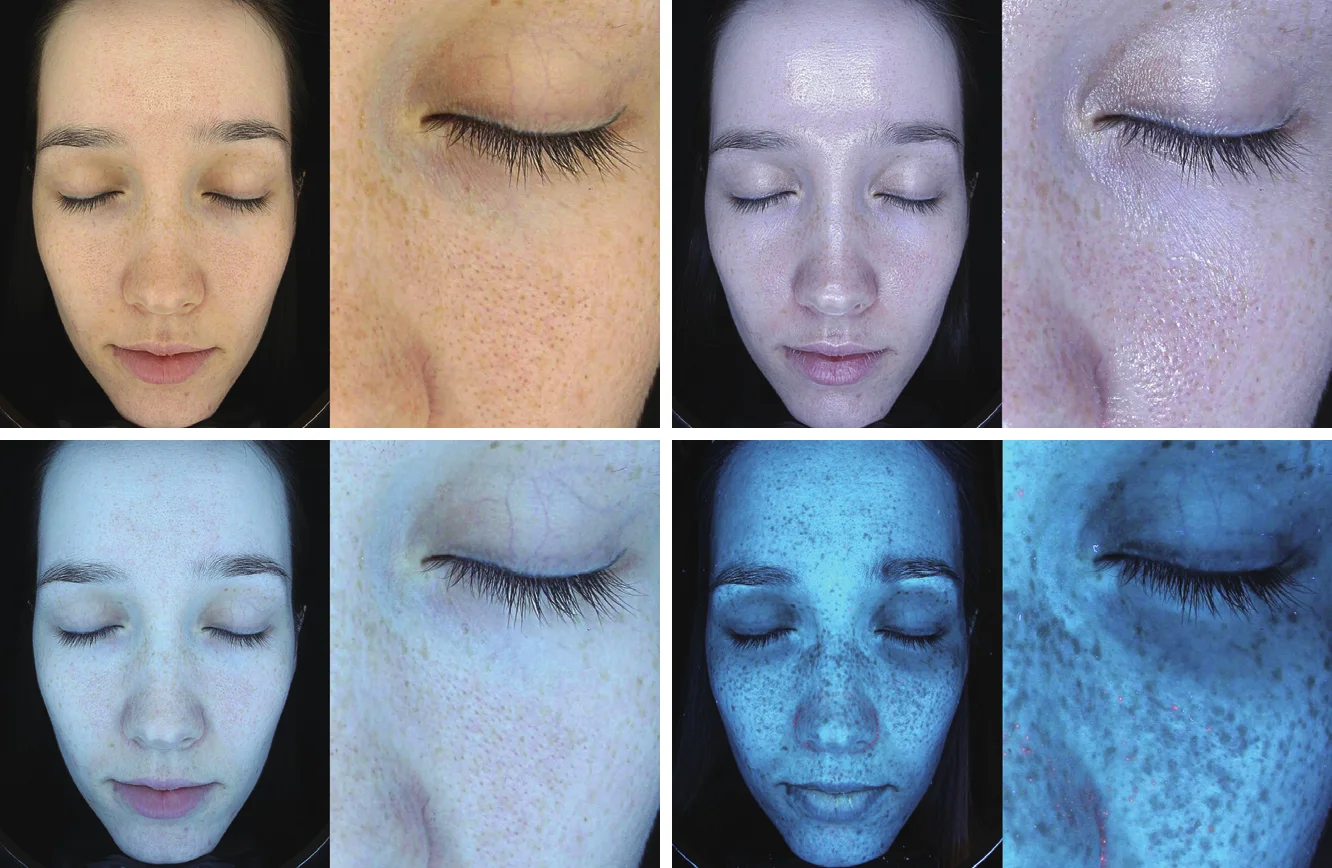
Mark-Vu (Mark-Vu) is a skin analysis device that photographs the face with 4 types of light sources—general light, polarized light, cross-polarized light, and ultraviolet light—to observe skin conditions that are difficult to confirm with the naked eye. The analysis results do not replace a medical professional’s diagnosis and are used as reference material to understand skin condition and determine treatment direction.
What can you see with the 4 types of light sources?
- General light
- Wrinkles, skin tone, dark circles
- Polarized light
- Future wrinkles, radiance, pores
- Cross-polarized light
- Pigmentation, redness, melasma, freckles
- Ultraviolet light
- Acne, melanin pigment, sebum
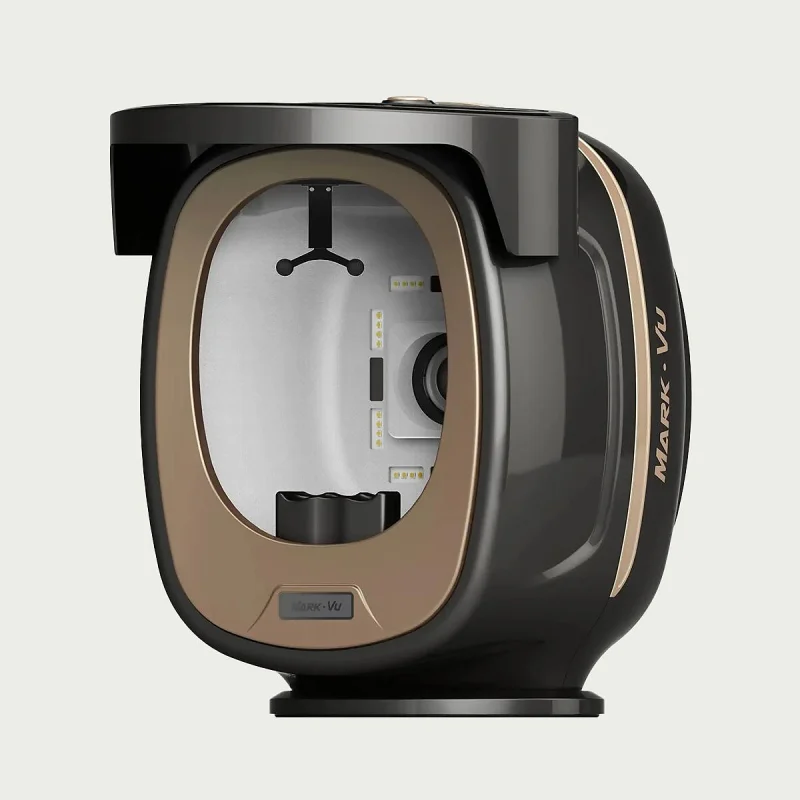
Mark-Vu Features
- 1800 million-pixel DSLR camera applied
- Consistent image acquisition possible by blocking surrounding light
- Front, left, and right views allow three-dimensional stereoscopic comparison
- Distinguishes and compares brown and red pigments
- Predicts aging age using wrinkles, pigments, redness, etc.
- Sequential observation of treatment videos by time period is possible
Frequently Asked Questions
What kind of examination is Mark-Vu?
Mark-Vu is a skin analysis device that captures the face under various light sources to help observe skin conditions in greater detail, including those difficult to see with the naked eye. It can be used to objectively check the current skin condition such as pigments, redness, pores, and sebum and to establish a treatment plan.
What is the difference from simply taking a face photo?
While regular photos mainly show the surface appearance of the skin, Mark-Vu captures images using different light sources such as normal light, polarized light, and UV light. Even for the same face, different skin features such as pigments, redness, and sebum can be observed depending on the light source.
What skin problems can be seen with Mark-Vu?
It can be used to check various skin conditions including pores, wrinkles, pigments, melanin, redness, brown spots, sebum, skin tone, and radiance. Multiple capture and analysis modes help observe the distribution and severity of skin problems.
Can melasma or freckles also be seen with Mark-Vu?
Yes. It has capture and analysis functions that emphasize pigments and melanin, which helps observe not only currently visible pigments but also pigment conditions that are difficult to distinguish with the naked eye. However, melasma or other pigment disorders are not confirmed by Mark-Vu images alone; they are determined together with the medical staff's examination.
Can pigments that are not yet clearly visible on the face be checked?
Using different light sources such as UV or polarized light can sometimes make pigments that do not show clearly in regular photos appear more distinct. This can be used as a reference to check the degree of pigment distribution in the current skin and to establish a treatment plan.
Can redness or facial flushing also be checked?
Yes. Because it can emphasize and observe the red areas of the skin, it helps confirm the distribution of redness across the entire face. However, since the causes of flushing are diverse, it is necessary to check the skin condition and symptoms together rather than determining the cause from the photo alone.
Can the severity of pores also be seen?
Yes. High-resolution imaging allows confirmation of areas and distribution where pores are prominent. Capturing under the same conditions before and after treatment can also be used to compare how the pore condition has changed.
Does Mark-Vu show areas with a lot of sebum?
Yes. Mark-Vu can observe skin conditions related to sebum. In particular, it helps identify which areas of the face show more sebum-related changes rather than just seeing the degree of skin oiliness with the naked eye.
Is Mark-Vu examination also helpful for acne-prone skin?
It is important for the medical staff to directly examine the skin to diagnose acne itself, but using Mark-Vu allows observation of surrounding skin conditions such as sebum, redness, and residual pigments after acne. Therefore, it can be utilized as supplementary material for establishing an acne treatment plan or comparing changes before and after treatment.
Can dull skin also be examined?
Because skin tone and pigment distribution can be observed together, the feeling of dull skin can be examined more specifically. It helps distinguish skin conditions such as whether pigments are the main issue or if redness is mixed in.
If I only do the Mark-Vu examination, can I know the laser that suits my skin?
Mark-Vu results can serve as useful reference material when deciding on laser or skin treatments, but treatment is not determined based on examination results alone. The medical staff checks the skin type, type of pigment, skin thickness, and past treatment responses together to determine the treatment method and intensity.
If a lot of pigment shows on Mark-Vu, do I need to do a lot of laser?
Not necessarily. Even if a lot of pigment appears in the photo, the treatment method may vary depending on the type and depth of the pigment and the skin type. Rather, repeating excessively strong laser treatments can stimulate the skin or cause pigment deposition, so it is important to establish a treatment plan by considering both the examination results and the skin condition.
What is the reason for taking Mark-Vu images before receiving skin laser treatment?
Recording the skin condition before treatment makes it easier to identify which problems are most prominent and helps determine the treatment direction. In addition, recapturing under the same conditions after treatment allows confirmation of how the skin has changed compared to the initial photo.
Can improvement after laser treatment also be confirmed with Mark-Vu?
Yes. Comparing before-and-after photos allows more objective confirmation of skin changes that are difficult to remember with the naked eye. In particular, for skin problems that change gradually such as pigments or redness, comparing photos captured under the same conditions is helpful.
If the Mark-Vu results are good, does it mean the skin is healthy?
Not necessarily. Mark-Vu is a device that visually analyzes various features of the captured skin and is not a comprehensive test that examines all skin diseases. If there is itching, inflammation, or skin disease, a medical staff examination is necessary regardless of the Mark-Vu results.
Is Mark-Vu a machine that diagnoses skin diseases?
Mark-Vu is a useful device for closely observing and consulting on skin conditions, but the machine's analysis results do not replace the medical staff's diagnosis. The analysis results are used as reference material to understand the skin condition and determine the treatment direction.
Does it hurt or cause skin irritation during the examination?
It is not a test that irradiates the skin with laser or uses needles; it is a method of capturing the face under various light sources. During capture, please maintain your face position according to the instructions.
Is it okay to have makeup on when taking Mark-Vu images?
To accurately check the skin condition, it is better to capture the images with makeup or color cosmetics removed if possible. Foundation, sunscreen, or cosmetics remaining on the skin can affect observation of pigments or skin tone.
It uses UV light during the examination; is it not harmful to the skin?
Mark-Vu is a device that captures for a short time using various light sources including a UV light source for skin observation. Its purpose and method differ from laser procedures that irradiate strong energy to treat the skin.
Is it enough to do the Mark-Vu examination only once, or is it better to take it periodically?
At first, we take photographs to assess the current skin condition, and if laser or skin treatments are performed, we can take photographs again after a certain period to compare before-and-after changes. It is not a test that all patients must repeat at fixed intervals; the timing of photography can be determined according to the type of treatment and skin condition.
Depending on the individual, side effects such as bleeding, infection, swelling, asymmetry, and scarring may occur, and the degree may vary. Please make your decision after sufficient consultation with a specialist.
For additional inquiries, contact us via KakaoTalk
1:1 KakaoTalk pre-inquiry — Mon–Thu 10:00 - 19:00 · Fri 10:00 - 21:00 · Sat 10:00 - 16:00.