

Scar Revision
Not surgery that erases scars, but surgery that turns them into better scars
Scar Revision is surgery in which existing wide or irregular scars, or depressed or gaping scars, are excised to an appropriate extent and then sutured again precisely in consideration of skin tension and direction.
The goal is not to erase the scar completely but to improve it into a scar that is less noticeable and blends more naturally with the surrounding skin.
At ImageUp Plastic Surgery, we check the cause, location, direction, width, and depth of the scar, the skin condition, and the tension of the surrounding tissue to plan a treatment method suited to each person's scar.
What kinds of scars can be considered for Scar Revision?
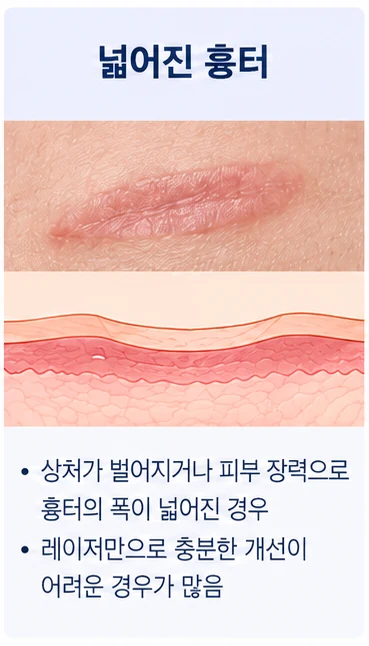
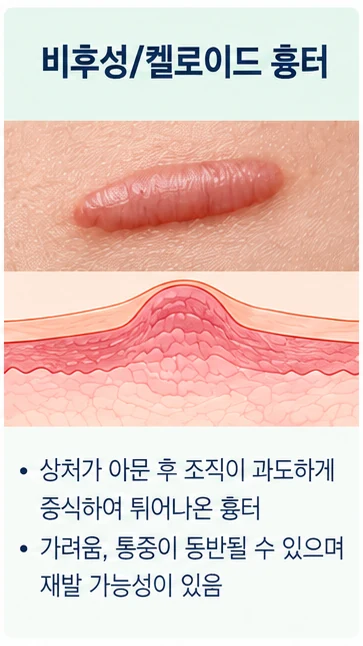
Widely stretched scars
This is when the scar has become wider after surgery or injury due to factors such as skin tension. Excising the existing scar and suturing it again while distributing skin tension may be considered.
Depressed or tethered scars
This is when the scar is sunken below the surrounding skin or adheres to deeper tissue so that the skin looks pulled. The adhered tissue is sufficiently released, and the skin layers are then repositioned to improve the height difference.
Irregular or poorly oriented scars
This is when the scar's direction does not match the skin creases or its shape is irregular, making it conspicuous. Depending on the scar's location and direction, excision and repositioning may be considered.
Scars with prominent suture marks
When suture marks or an irregular scar remain after previous suturing, the existing scar can be revised and sutured again more precisely.
Scar Revision surgery process
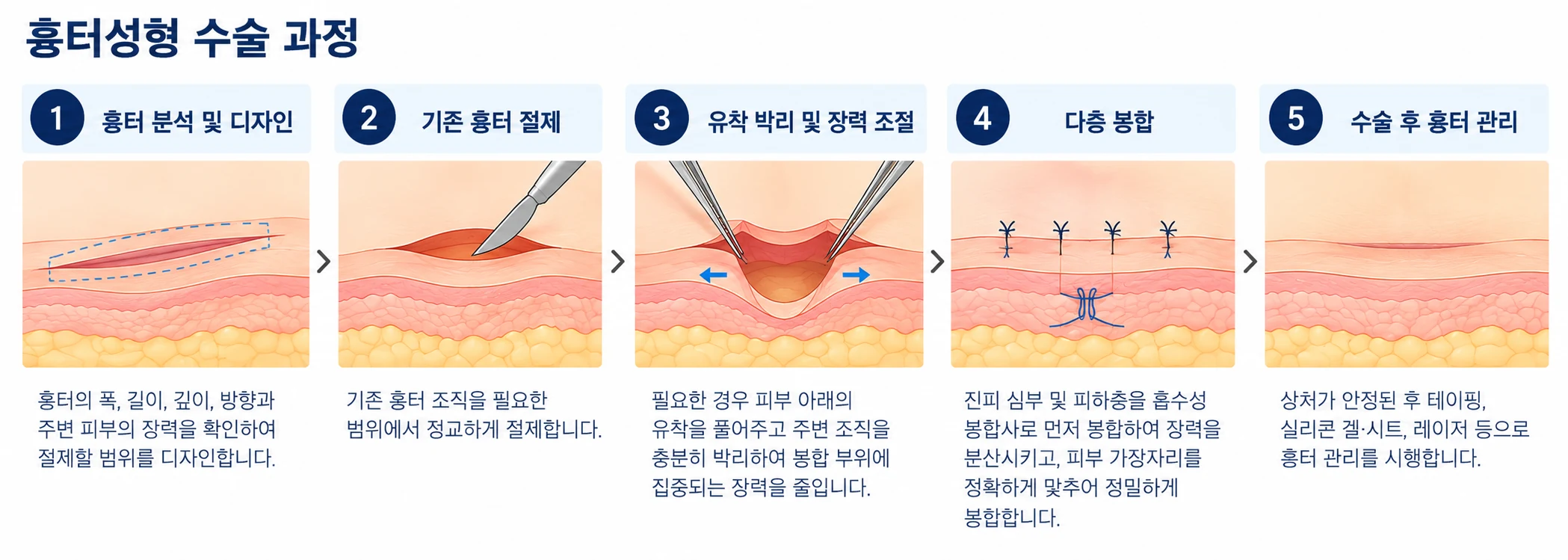
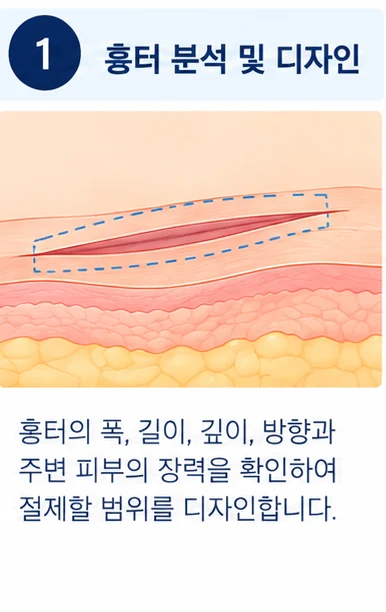
- 01
Scar analysis and design
The width, length, depth, and direction of the scar and the laxity and tension of the surrounding skin are checked to design the area to be removed.
- 02
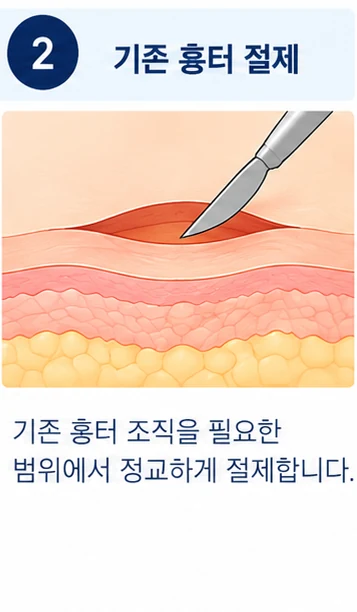
Excision of the existing scar
Conspicuous existing scar tissue is precisely excised to the extent necessary.
- 03
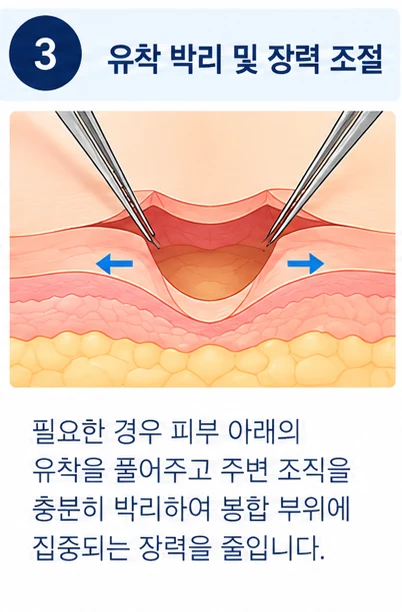
Adhesion release and tension adjustment
When needed, adhesions beneath the skin are released and the surrounding tissue is sufficiently dissected to reduce the tension concentrated on the suture site.
- 04
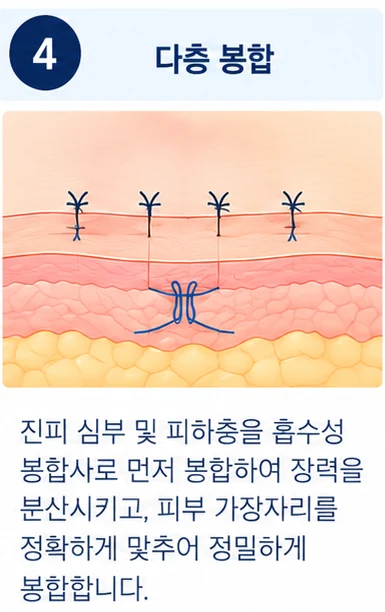
Layered closure
The deep dermis and subcutaneous layer are sutured first with absorbable sutures to distribute tension, and the skin edges are then aligned accurately and sutured precisely.
- 05
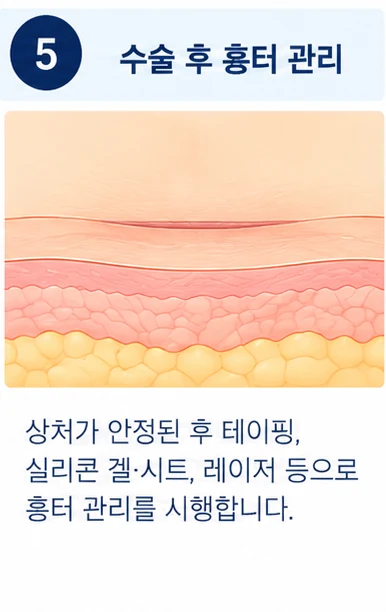
Post-operative scar care
After the wound has stabilized, scar care such as taping, silicone gel or sheets, and lasers can be combined depending on its condition.
Key points of Scar Revision
Scar Revision — KakaoTalk 1:1 consultation
You can inquire in advance via KakaoTalk with photos of the scar’s location and size and when it formed.
Scar Treatment
Different types of scars call for different treatment methods
Scars do not all look the same. They can take various forms depending not only on the extent of the injury or surgery but also on the location and direction of the wound, skin tension, the degree of inflammation, each person's skin characteristics, and the healing process.
Therefore, rather than applying a single method uniformly, scar treatment should begin with an accurate assessment of the scar's color, thickness, width, depth, firmness, and whether it is depressed or raised.
Treatment by scar type
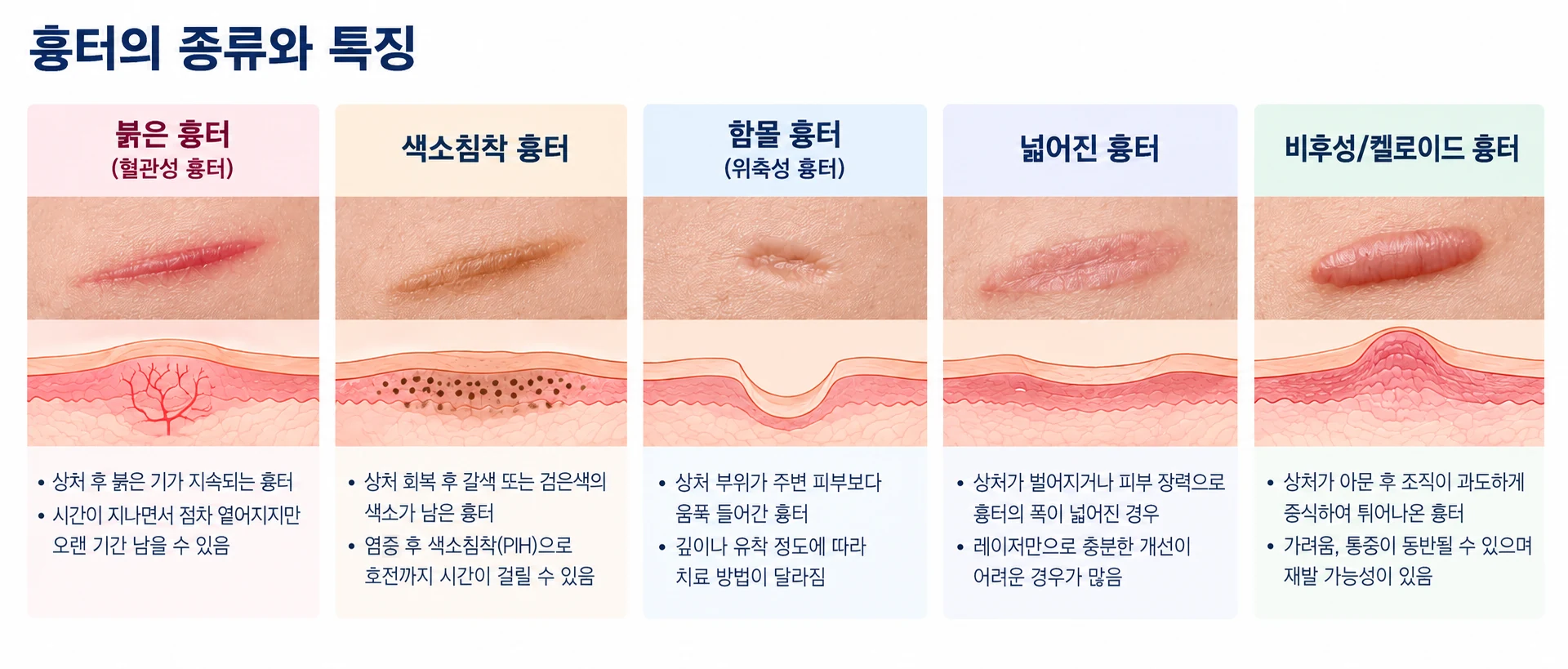
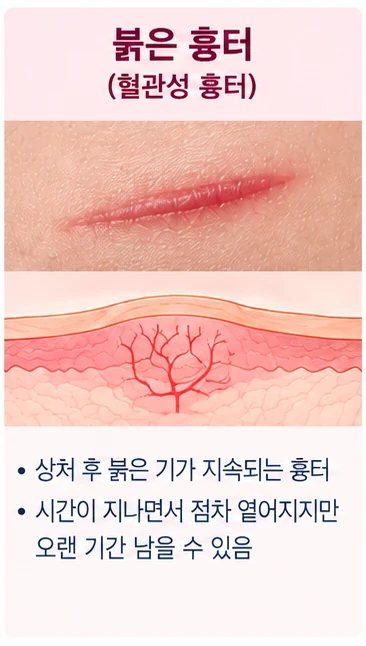
Red scars
Improvement of redness and vascular reactions is considered using vascular lasers and similar treatments.
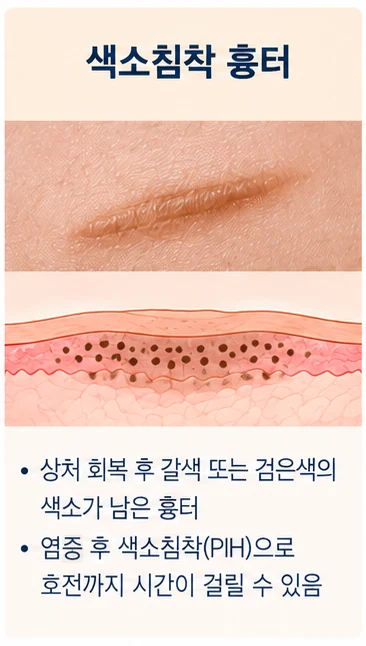
Brown / hyperpigmented scars
Pigment treatments, lasers, and other options can be chosen depending on the depth of the pigment and the skin condition.
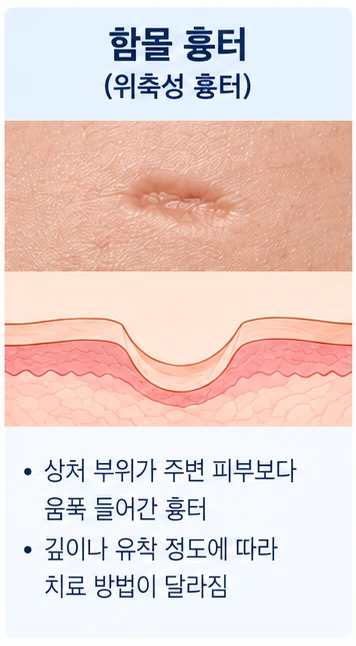
Depressed scars
Treatment methods such as Ultra Clear and MLA laser are chosen according to the depth of the scar and the degree of adhesion.
Raised hypertrophic scars
Injections, lasers, compression and silicone treatments, and others can be combined depending on the condition.
Wide or gaping scars
When laser treatment alone cannot achieve sufficient improvement, Scar Revision surgery may be considered.
Scar laser
The right laser also depends on the scar's color and texture
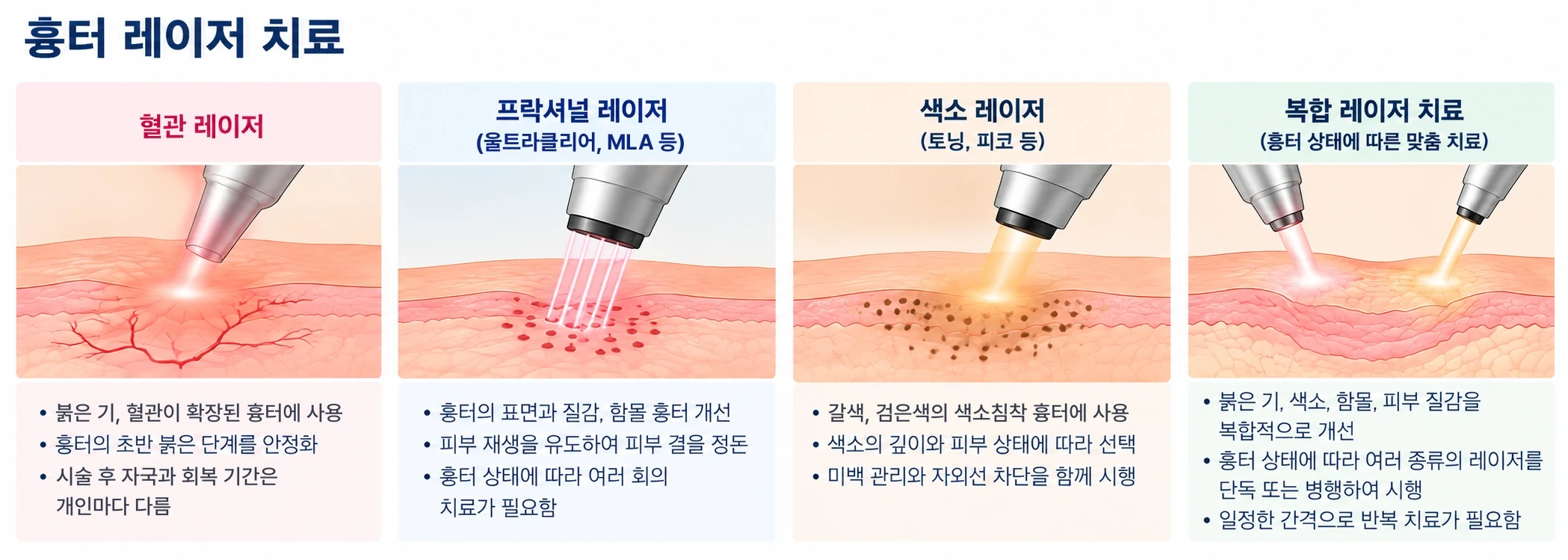
Scar laser does not refer to one specific device; it is treatment that selects lasers suited to the scar's condition to improve its redness, pigmentation, surface irregularities, and skin texture.
Depending on the scar's condition, several types of lasers can be used alone or in combination, and in many cases repeated treatments at regular intervals are needed rather than a single session.
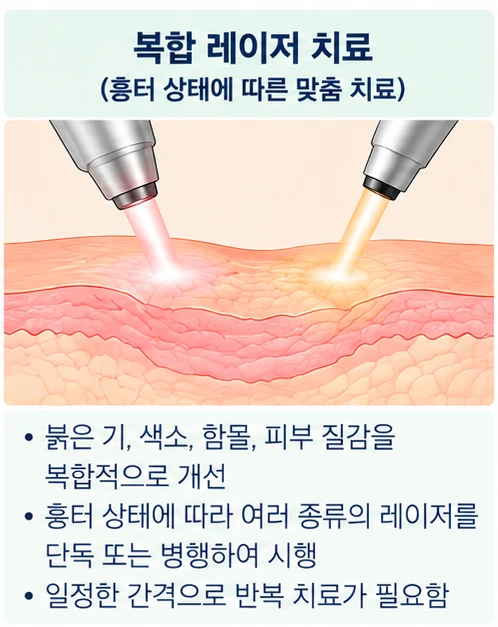
Vascular laser
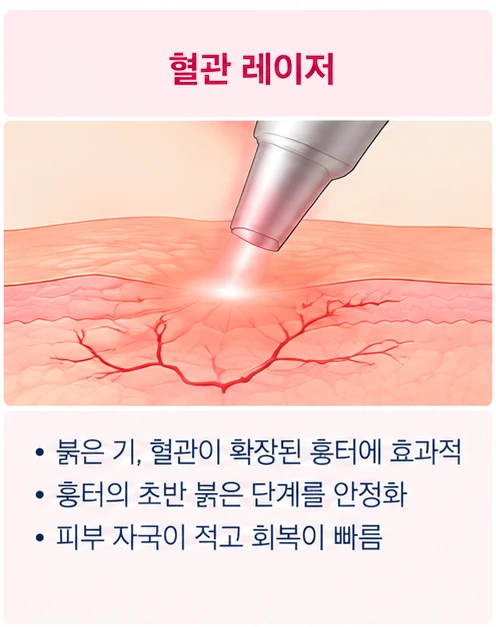
Used to treat the vascular component of scars with persistent redness.
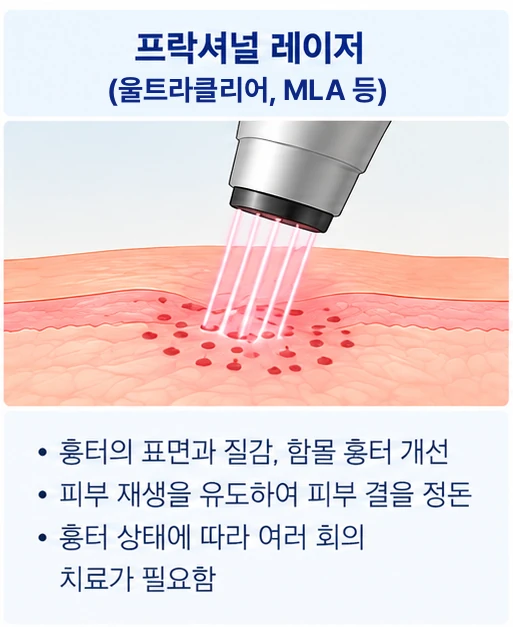
Fractional laser
Ultra Clear and MLA lasers create microscopic treatment zones to stimulate skin regeneration and are used to improve the scar's surface and texture, as well as some depressed scars.
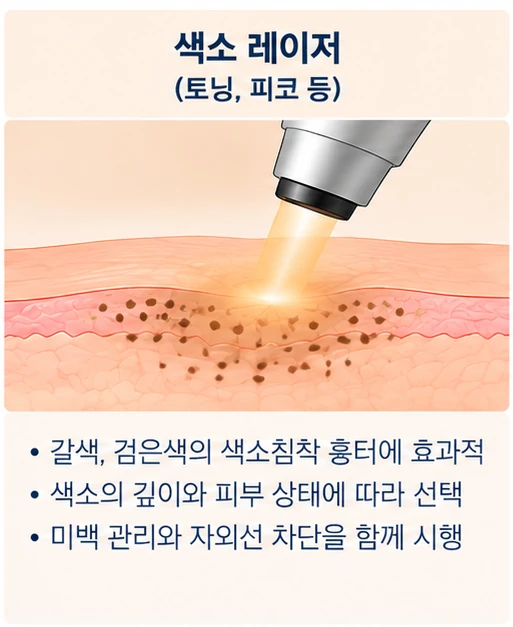
Pigment laser
Performed when brown or black post-inflammatory hyperpigmentation (PIH) remaining after the wound heals is a concern, taking into account the skin condition and the depth of the pigment.
When does scar treatment start?
Scar treatment does not always have to wait until the scar is fully mature.
Once the wound has healed stably, scar care can begin at an appropriate time depending on the scar's maturation stage and condition. Scar Revision surgery, on the other hand, is generally performed after the existing scar has sufficiently stabilized, but the timing of treatment may vary depending on the scar's condition and location.
What kind of scar laser do I receive?
For scar laser, MLA laser or UltraClear laser is helpful. If the scar is raised and hard or has itchy symptoms, scar injections are also helpful. You visit so the current scar can be accurately diagnosed and treatment appropriate to it is performed.
For depressed scars, depending on the width or size, laser or surgical methods can make the scar less visible. Laser treatment can reduce the depth and area of the depression, and depending on the site and the shape of the scar, it is also possible to improve depressed scars with Filler.
At-a-glance comparison
| Method | For which scars | How it is done |
|---|---|---|
| Simple excision | Existing scars | A method of cutting out the existing scar site and suturing it finely again to remove it. |
| Staged excision | Wide-area scars | A method of continuously excising and suturing the scar site to reduce it. |
| Z-plasty | Relatively small scars | The name comes from the fact that the incision line is Z-shaped; it is a method of making a Z-shaped incision and repositioning the surrounding tissue. After the incision, each triangular piece of flesh is lifted, alternated in position, and then sutured. |
| W-Plasty | Large scar | The name comes from the fact that the suture line is W-shaped; it disperses the tension on the skin caused by the scar, excises in a sawtooth shape, and then sutures by alternately inserting small triangular flaps on each side. |
| Category | Keloid | Hypertrophic Scar |
|---|---|---|
| After 6–18 months | The size does not decrease and the tissue gradually grows larger. | The tissue gradually decreases and subsides. |
| Appearance·Symptoms | The scarred area rises and gradually darkens to brown. | There are symptoms of itching and hardness. |
| Scar boundary | It grows beyond the boundary of the original wound into the surrounding area. | It does not become larger than the range of the incision or trauma. |
How do the incision and suture line shapes differ by method?
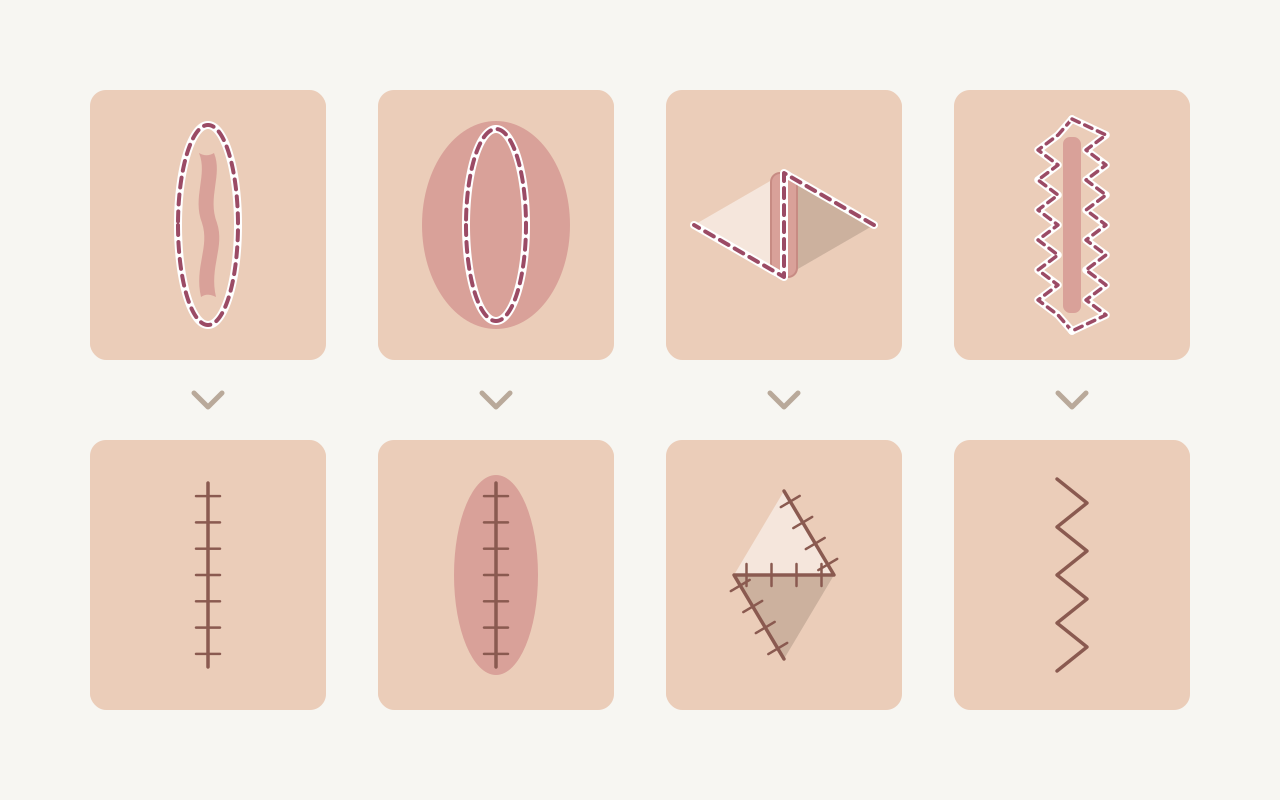
The illustration is for explanatory purposes to aid understanding, and surgical results vary by individual. The actual method is determined individually during consultation.
Frequently Asked Questions
What exactly is a hypertrophic scar?
A hypertrophic scar refers to a firm, raised scar that forms after a wound. The commonly known type of scar is precisely termed a hypertrophic scar in medical terminology.
I have a large raised scar on my face from 10 years ago. Even after this much time, is treatment possible?
Yes, it can be done. Especially for raised hypertrophic scars, considering the scar’s location, size, and shape, and if scar removal surgery can be performed, the scar can be reduced compared to now.
Are depressed facial scars also treatable?
Depending on the width or size, depressed scars can be made less noticeable with laser or surgical methods. With laser treatment, the depth and area of the depression can be reduced. Depending on the area and the scar’s shape, improving a depressed scar with filler is also possible.
I have a depressed acne scar in the glabella area; is it okay to get a filler procedure?
Yes, you may. Depressed scars can, depending on the area, be filled with filler.
For a raised postoperative scar, can removal surgery make it not raised and make the color look skin-toned?
Scar removal surgery is, as you said, a surgery to make the scar less than the current scar. In particular, raised scars can be reduced with scar removal surgery. However, depending on the area, timing, and size, the treatment method and course may differ somewhat.
I am 14 years old; can I receive laser treatment for a leg scar as well?
Question details: I have two small black scars on my leg about the size of a pinky nail. I’m also wondering if there is an age limit for laser treatment.
For scars, the time, location, and area where the scar occurred are important. If the current color is dark, it is likely about 2–3 months since the scar formed. If you visit a plastic surgery clinic, they will recommend a laser or wound treatment suited to the current state. There is no particular age limit, but as a minor you will need a guardian’s consent for the procedure.
There is pigmentation at a breast surgery site; is it okay to receive laser toning?
Question details: I had breast surgery with BellaGel 2 years ago. I developed pigmentation from metal allergy on the chest area, and I wonder if it is okay to receive a procedure like laser toning on the area where I had the breast surgery.
If there is pigmentation that is currently dark or red, procedures such as toning can improve tone and color.
Will scars disappear on their own over time?
Question details: I am curious whether they disappear only after laser treatment.
Scars may become less noticeable over time as the red color fades and hardness decreases, but they do not completely return to normal skin. Scar maturation can take several months to over a year and varies by individual and area.
The scar was pink but is turning brown or black—is this inflammation?
Question details: The scar was initially pink but has suddenly turned brown or black. I wonder if it will stay like this and whether this is also a scar.
After wound healing, post-inflammatory hyperpigmentation may occur due to increased skin pigment from inflammation, making the area appear brown or black. The actual scar thickness or shape and pigmentation are separate issues, so the treatment method differs depending on which change is the main problem.
If I have scar removal surgery, will the scar disappear completely?
Scar revision surgery is not surgery that erases scars. The purpose is to remove a wide, indented, or poorly oriented existing scar and then precisely resuture the skin to change it into a less noticeable scar than before. Surgery will always leave a new surgical scar.
But scar revision surgery involves cutting out the old surgical scar and stitching it again, so wouldn’t the same scar just form again?
The outcome varies depending on the cause and location of the widened existing scar. After removing the scar, suturing in multiple layers from under the skin to reduce tension on the skin and adjusting the scar direction can result in a thinner and more stable scar than before. However, if the individual constitution or site tension remains the same, there is also a possibility it may widen again.
There is a surgical mark on the abdomen from 10 years ago; can scar revision surgery be performed on old scars as well?
Even old scars can be surgically corrected depending on their shape and location. In many cases, surgery is considered after the scar has sufficiently matured and redness and hardness have stabilized. However, not all old scars are suitable for surgery, so it must be judged together whether other treatments such as laser would be better.
I am unhappy with the scar from fracture surgery; can it be cut out again immediately?
Question details: I had arm fracture surgery at an orthopedic clinic, and the scar is from not long ago.
Early scars can appear red, hard, wider, and more severe than they actually are, so it is best not to judge the final result too early. Unless there are special problems, in many cases the decision on whether to perform scar revision surgery is made after fully observing the scar maturation process.
Can a long scar on the face be removed all at once?
Question details: There is a scar about 10 cm long from an injury in childhood.
More important than the scar length itself is how much laxity the surrounding skin has and how much tension will occur upon suturing. In some cases a long scar can be corrected in one session, but if there is insufficient skin laxity or the scar location is unfavorable, it may be divided into multiple stages or other methods may be considered.
Will a deeply pitted scar on the cheek improve if it is cut out and resutured?
Question details: I fell in childhood and have a deeply pitted mark on my cheek that remains severely.
There are scars such as wide and deeply pitted linear scars for which surgical removal followed by resuturing is advantageous. On the other hand, in cases of multiple small depressions such as acne scars, other treatments may be more suitable than excising each one individually. The treatment method differs according to the scar shape.
I went for a consultation because of a scar, but they said the scar direction differs from the skin wrinkle direction so the result would not be great even with surgery—does that mean surgery is not possible?
The tension applied to the scar and the skin’s natural wrinkle direction affect how noticeable the scar is. For certain scars, rather than simply cutting out and resuturing in the same direction, methods that change the scar direction or divide it into several small lines are also used.
What is Z-plasty?
Question details: I received a surgical consultation for a facial tattoo and was told it could be removed with Z-plasty. I am curious whether it means making the scar zigzag.
Z-plasty is a method of designing a Z-shaped skin incision to change the scar direction or lengthen a contracted scar. It can be used for scars that pull, such as around joints, or scars that do not match natural skin lines. It is not surgery that makes all scars zigzag and is used selectively when necessary.
Can a keloid scar be cut out and removed?
Question details: I have keloids, so even scratched marks protrude prominently and become hard.
Keloids can regrow or recur larger than before if only excised. Therefore, depending on the location and size of the keloid and past treatment history, additional treatments such as injection therapy, compression therapy, and radiation therapy may be considered along with surgery. The approach differs from general scar removal surgery.
What kind of laser or scar care is needed after scar removal surgery?
Creating a thinner scar through surgery does not mean the treatment is complete. Because the new incision line may become red or thick during the recovery process, silicone care, UV protection, laser, or injection therapy may be used in parallel depending on the condition. It is good to think of surgery and post-surgical scar care as one process.
Depending on the individual, side effects such as bleeding, infection, swelling, asymmetry, and scarring may occur, and the degree may vary. Please make your decision after sufficient consultation with a specialist.
You can first inquire about scar revision consultation via KakaoTalk.