

Long-curve square jaw reduction
Resected in a long curve from below the ear to the chin
Long-curve Square Jaw is a method of resecting the lower jaw line in a long curve from the mandibular angle below the ear toward the chin. Square jaw or chin tip surgery mainly uses intraoral incisions, so visible external scarring tends to be limited. The degree of scarring may vary from person to person.
At a Glance
Simply cutting off the protruding mandibular angle is not all there is. You need to consider the width of the lower jaw as seen from the front, the jawline as seen from the side, and the line continuing to the chin tip together. Because the shape of the lower jaw differs from person to person, the range and method of resection can also vary. Surgery is performed under general anesthesia.
An inpatient ward is in operation, and contouring surgery is performed with a 1-day hospital stay. Recovery takes about 2 weeks, though it may vary from person to person. A specialist anesthesiologist is on site during contouring surgery.
Why Does a Square Jaw Look Wide?
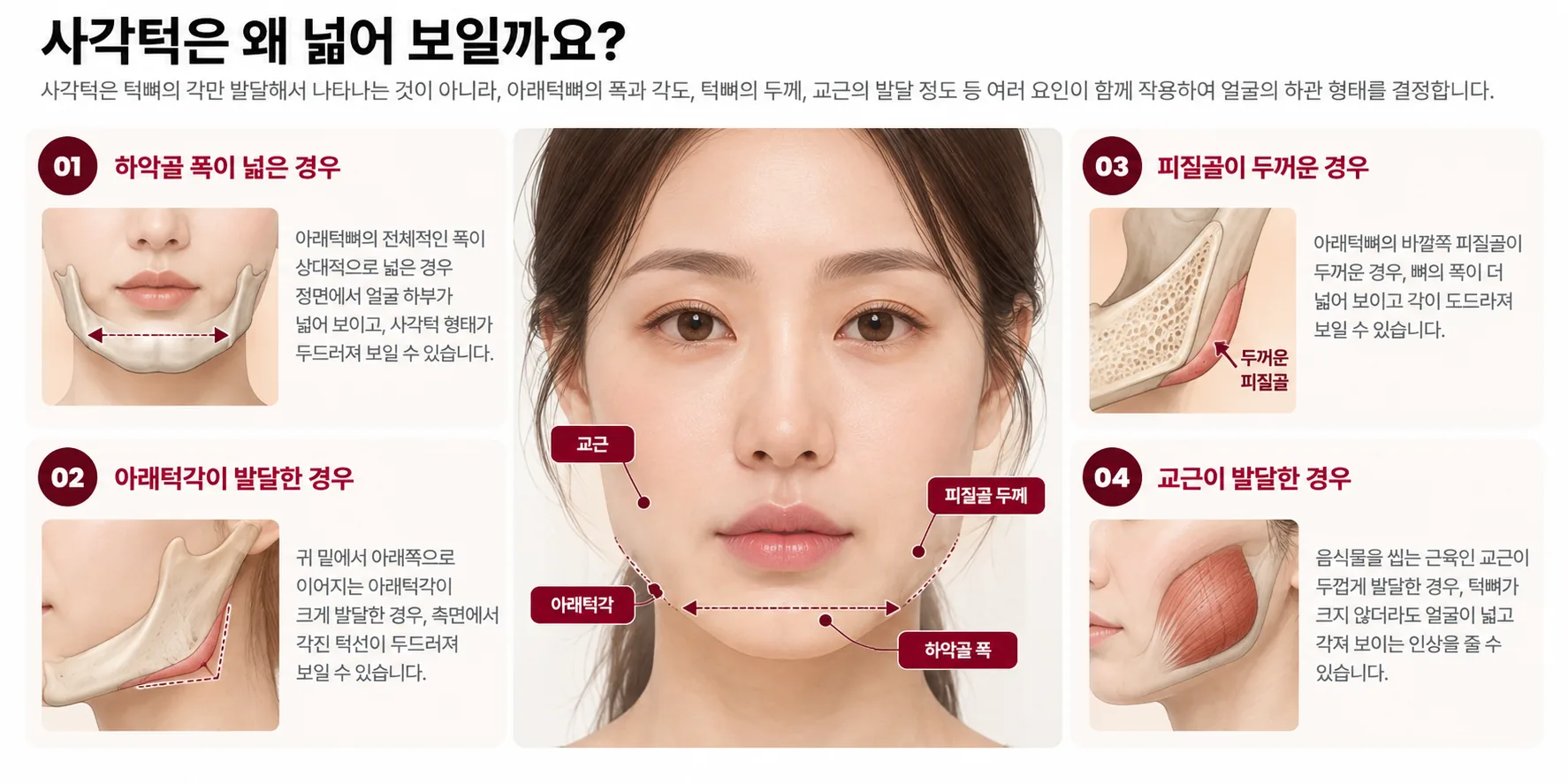
A square jaw does not appear simply because the angle of the jawbone is developed.
The width and angle of the lower jawbone, the thickness of the jawbone, the degree of masseter muscle development, and the thickness of subcutaneous fat and soft tissue together determine the shape of the lower face.
Therefore, even jaws that look equally square may have different causes, such as a wide outer bone, a jaw angle that has developed long downward, or a thick masseter muscle, and the surgical method needed differs accordingly.
What Is Long-curve Square Jaw Surgery?
Long-curve Square Jaw surgery does not just resect the protruding jaw angle below the ear in a short stretch; it shapes the lower jawline running from below the ear toward the front of the chin into a long, smooth curve.
If only the angle below the ear is removed excessively, the jaw angle may become smaller from the side, but a secondary angle may form where it connects to the front jawline, or the jawline may look unnatural.
Long-curve Resection aims to create a natural, smooth mandibular line by considering the connection from the jaw angle to the front jawline.
Both the Front and the Side Are Considered
Square Jaw surgery is not surgery that reduces only the jaw angle seen from the side.
From the side, the protruding jaw angle below the ear and the lower jawline are smoothly tidied, and from the front, the width and thickness of the lower jawbone are evaluated together to identify why the lower face looks wide.
When necessary, together with Long-curve Resection, the balance of changes from the front and the side is planned in consideration of cortical bone resection or the degree of masseter muscle development.
How Does Long-curve Resection Differ from Cortical Bone Resection?
Long-curve Resection
This method trims the lower contour of the mandible, which extends from the jaw angle below the ear to the front jawline, along a long curve.
The main aim is to reduce the jaw angle that stands out mainly from the side and smoothly connect the lower jawline.
Cortical Bone Resection
This method reduces part of the hard cortical bone on the outer side of the lower jawbone to adjust the width of the mandible and the thickness of the bone as seen from the front.
It is not necessary in every case, and whether to apply it and to what extent is decided after checking the thickness of the bone and the shape of the face.
Angle Resection
When the jaw angle below the ear is especially developed downward or outward, this method adjusts the area centered on the protruding jaw angle.
Rather than being performed alone, it is important to decide the resection range with the connection to the front jawline in mind.
How Is Long-curve Square Jaw Surgery Performed?
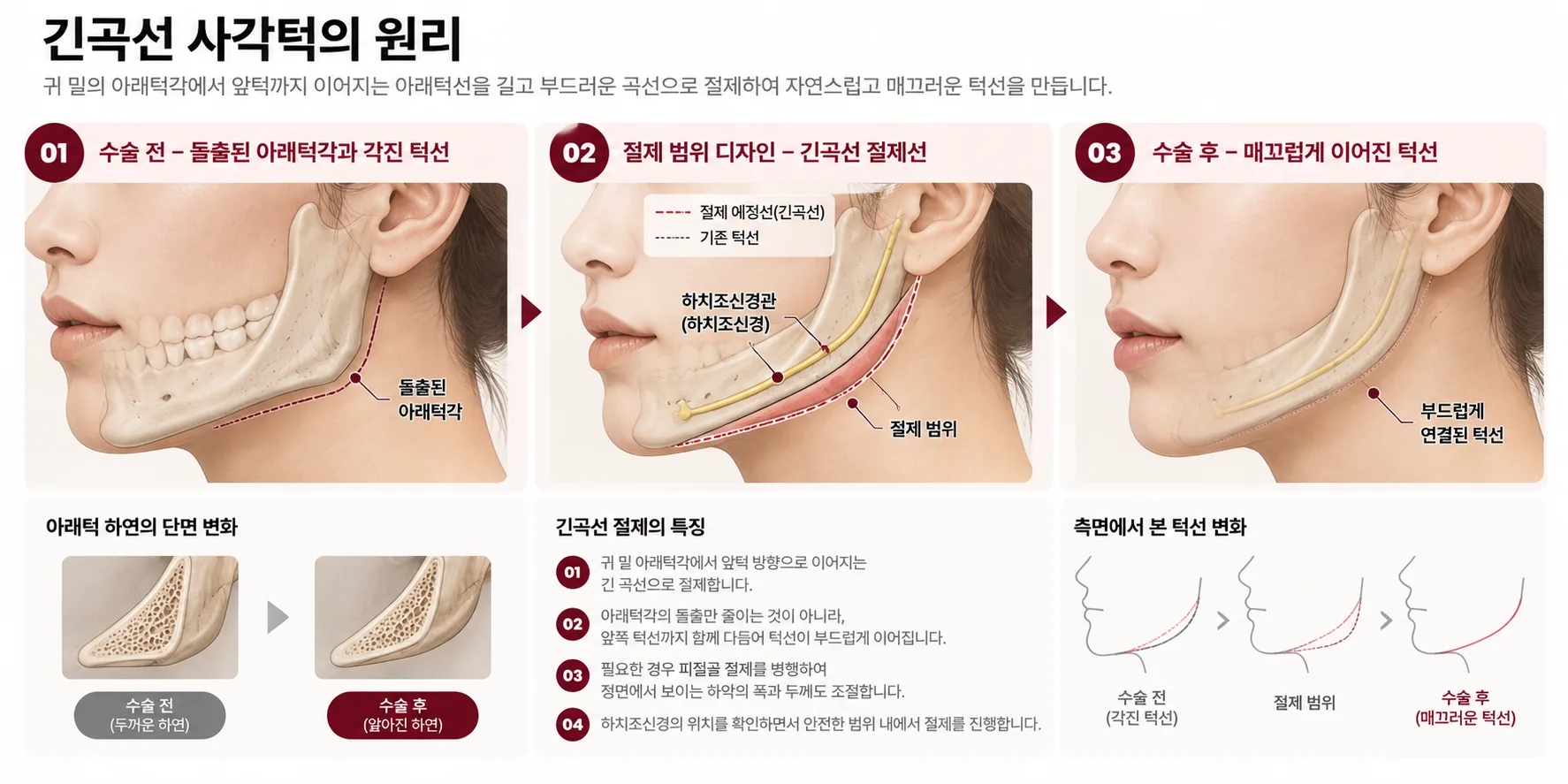
- 01
The Face Shape and Mandible Are Analyzed
The face shape seen from the front and the side, the position and size of the jaw angle, the width and thickness of the mandible, and left-right asymmetry are checked.
- 02
The Resection Range and Curve Are Designed
The range to be adjusted, from the jaw angle below the ear to the front jawline, is decided, and a curve that connects naturally is planned.
- 03
Approached from Inside the Mouth
In most cases, the lower jawbone is approached through an incision inside the mouth, so the facial skin itself is not incised.
- 04
The Jawbone Is Adjusted Along a Planned Curve
While checking the position of the nerve, the lower jawbone is resected within the planned range, and the thickness of the cortical bone is also adjusted when necessary.
- 05
The Jawline Connection and Left-Right Balance Are Checked
The boundary of the resected bone is smoothed, and the jawline continuing to the front of the chin and the left-right balance are checked to complete the procedure.
Creating a Natural Jawline Matters More Than Shaving a Lot
Square Jaw surgery is not surgery in which removing more jawbone makes the face smaller.
Excessive resection may cause the jawline to bend unnaturally or left-right asymmetry to become more noticeable, and the change you expect may differ from the actual change depending on your skeletal structure and soft-tissue condition.
In particular, because the inferior alveolar nerve runs along the inside of the lower jawbone, it is important to plan the surgery while checking the position of the nerve and the safe resection range.
Therefore, the aim is to first check where the cause of the wide appearance of the current face lies, and to adjust only the necessary areas to create a jawline that connects naturally from the front and the side.
How Does the Facial Line Change After Square Jaw Surgery?
Right after surgery, the lower face may actually look wider or uneven from side to side because of swelling.
As the initial swelling subsides, the jawline gradually emerges, and the tissue needs time to stabilize.
In addition, the final contour of the face is influenced not only by changes in the bone but also by the thickness of the masseter muscle and the condition of soft tissue such as skin and fat, so it is important to evaluate these together before surgery.
Square Jaw Surgery: Points to Consider
If only the width of the lower jaw is reduced and the length or projection of the chin does not match the overall facial proportions, the desired contour may not be achieved. In such cases, it is advisable to evaluate the length and position of the chin together to make a surgical plan.
Nerves responsible for sensation run near the surgical area, so after surgery, the lips, chin, or cheeks may feel dull or different from usual. Many cases recover over time, but depending on the degree of nerve injury, sensory changes may persist for a long time.
In general, swelling can feel more severe around 2–3 days after surgery than immediately afterward.
Depending on the individual, side effects such as bleeding, infection, swelling, asymmetry, and scarring may occur, and the degree may vary. Please make your decision after sufficient consultation with a specialist.
Q&A on square jaw surgery and recovery Facial Contouring FAQsYou can view it there.
Long-curve Square Jaw Reduction FAQ
My square jaw bothers me, but I don't know if it's due to bone or muscle.
The shape of the lower face is determined by the width and angle of the mandible, the thickness of the jawbone, how developed the masseter muscle is, and the thickness of subcutaneous fat and soft tissue together. Even if it looks like the same square jaw, the cause can differ, so it is checked first in the consultation.
Does long-curve square jaw surgery only cut the jaw angle?
Rather than only resecting a short segment of the protruding jaw angle below the ear, it refines the lower jawline running from below the ear toward the front of the chin into a long, smooth curve. The connection to the front jawline is considered as well.
Why can reducing only the jaw angle look unnatural?
If only the angle below the ear is removed excessively, the jaw angle may shrink in profile, but a secondary angle can form where it meets the front jawline, or the jawline may look unnatural. That is why the connection from the jaw angle to the front jawline is planned together.
Can the lower face that looks wide from the front also be reduced?
From the front, the width and thickness of the mandible are evaluated to find why the lower face looks wide. When needed, cortical bone resection or the development of the masseter muscle is considered along with long-curve resection, and changes from the front and side are planned together.
Is cortical bone resection always done together?
Cortical bone resection reduces part of the hard cortical bone on the outer side of the mandible to adjust the width of the jaw and bone thickness seen from the front. It is not needed in every case, and whether to apply it and its range are decided after checking the bone thickness and face shape.
When is angle resection done?
It is a method that adjusts mainly the protruding jaw angle when the angle below the ear is especially developed downward or outward. Rather than doing it alone, the resection range is decided considering the connection with the front jawline.
What is analyzed before square jaw surgery?
The face shape from the front and side, the position and size of the jaw angle, the width and thickness of the mandible, and left-right asymmetry are checked. Based on the results, the range to adjust from below the ear to the front of the chin is decided and the connecting curve is designed.
What kind of anesthesia is used for square jaw surgery?
The surgery is performed under general anesthesia, and an anesthesiologist is on site during contouring surgery. The time the surgery takes depends on its range and is explained during the consultation.
What about hospitalization and the recovery period?
The clinic has inpatient rooms, and contouring surgery involves a 1-day hospital stay. The recovery period is about 2 weeks, and it may vary from person to person.
Is the incision made inside the mouth?
The mandible is usually accessed through an incision inside the mouth, so in many cases no incision line is made on the facial skin. Scarring and other changes may occur at the incision site inside the mouth, and the degree varies from person to person.
I heard the face can look even wider right after surgery. Is that normal?
Right after surgery, swelling can make the lower face look wider or the two sides look different. As the initial swelling goes down, the jawline gradually appears, and the tissue needs time to stabilize.
I'm worried about nerve injury. How is it checked?
Because the inferior alveolar nerve runs inside the mandible, the surgical plan is made while checking the position of the nerve and a safe resection range. During surgery as well, the bone is resected within the planned range while checking the position of the nerve.
Can my lips or chin feel numb after square jaw surgery?
Nerves responsible for sensation run near the surgical area, so after surgery, the lips, chin, or cheeks may feel dull or different from usual. Many cases recover over time, but depending on the degree of nerve injury, sensory changes may persist for a long time.
If my masseter muscle is thick, does it affect the facial line after surgery?
The final facial contour is influenced not only by changes in the bone but also by the thickness of the masseter muscle and the condition of soft tissue such as skin and fat. That is why these are evaluated together before surgery.
What are the possible side effects of square jaw surgery?
Depending on the individual, side effects such as bleeding, infection, swelling, asymmetry, and scarring may occur, and their degree varies. Excessive resection can make the jawline bend unnaturally or make left-right asymmetry stand out, so the aim is to adjust only the areas that need it.
Can I ask questions before the consultation?
You can ask in advance through a KakaoTalk 1:1 consultation about which area concerns you. The resection range and method are decided after the face shape and mandible are analyzed in the consultation.
Long-curve Square Jaw — KakaoTalk 1:1 Consultation
You can make a prior inquiry via KakaoTalk before your visit about which area concerns you.
View together by Facial Contouring surgical method
Explore Long-curve square jaw, L-osteotomy zygoma reduction, Chin Tip Surgery, and the full guide to Facial Contouring together.
View cheekbone, square jaw, and chin tip surgeries together on a single page.
FACE L-osteotomy cheekbone reductionThe cheekbone is osteotomized in an L shape and then moved inward.
FACE Chin tip surgeryThe shape and length of the chin tip, and its anteroposterior position, are corrected.
For additional inquiries, contact us via KakaoTalk
1:1 KakaoTalk pre-inquiry — Mon–Thu 10:00 - 19:00 · Fri 10:00 - 21:00 · Sat 10:00 - 16:00.