

Revision Rhinoplasty
What Is Revision Rhinoplasty?
Revision rhinoplasty is surgery performed when, after a previous rhinoplasty, the shape of the nasal bridge or tip is unnatural or asymmetry has developed, or when further correction is needed due to implant malposition or showing through, nasal tip deformity, contracture, or similar issues.
Unlike the first surgery, scarring and adhesions have formed inside the nose, and the normal anatomical structure may have changed due to an existing implant or grafted cartilage, so a more detailed analysis is needed.
At ImageUp Plastic Surgery, we comprehensively evaluate the condition of existing implants and grafted cartilage, the remaining skin and soft tissue, the degree of scarring and adhesions, and the support structures of the septum and nasal tip. After accurately identifying the cause of revision surgery, we selectively correct the necessary areas, with the goal of restoring the structural stability of the nose and creating a natural nasal line that is in harmony with the face.
When is the most appropriate time for revision rhinoplasty?
Revision rhinoplasty is generally recommended after swelling and inflammation of the tissue from the previous surgery have subsided and scar tissue has sufficiently stabilized. A time point of about 6 months or more after the first surgery is usually considered, but the appropriate timing may vary depending on the condition of the skin and soft tissue, the extent of surgery, and the presence of contracture or inflammation.
However, if problems requiring immediate treatment occur, such as infection, implant exposure or protrusion, or skin damage, the implant can be removed early or necessary treatment can be performed without waiting 6 months.
Therefore, rather than deciding on revision nose surgery based solely on whether a certain period of time has passed, it is important to accurately confirm the current tissue condition of the nose and the cause of revision, and then determine an appropriate time.
Revision surgery is generally considered 6 months or more after the previous surgery; if a problem occurs, early treatment may be needed depending on the condition.
Candidates for revision rhinoplasty
- When the implant is crooked
- When the tip has drooped
- When the nose has shortened due to contracture
- When the tip shape is deformed
- When the bridge has become too high or too low
Revision rhinoplasty methods
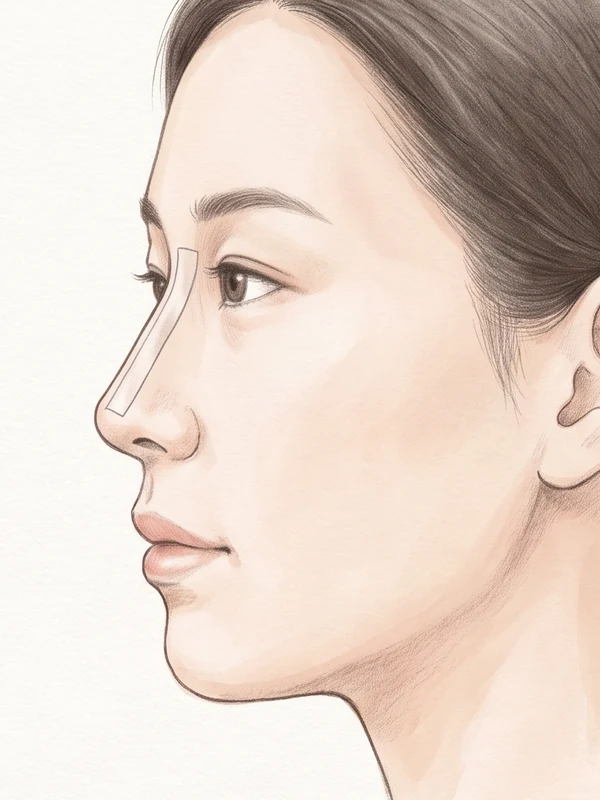
- When the implant is showing throughAfter removing the silicone, perform revision using cartilage, artificial dermis, Gore-Tex, or autologous tissue.
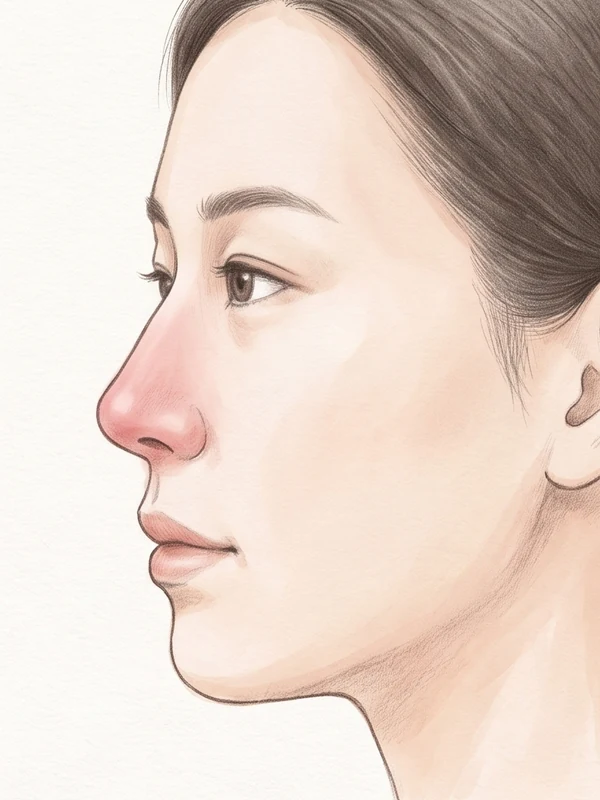
- When thin skin looks reddishAfter removing the silicone, perform revision using Gore-Tex or autologous tissue.
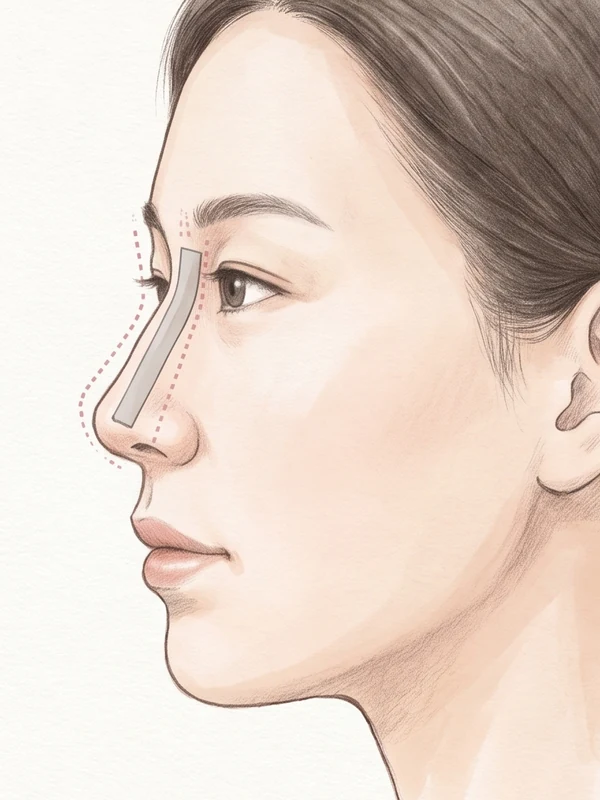
- When the implant is crookedAfter correcting with a correction procedure or filler, if there is a problem with the implant, perform revision surgery.
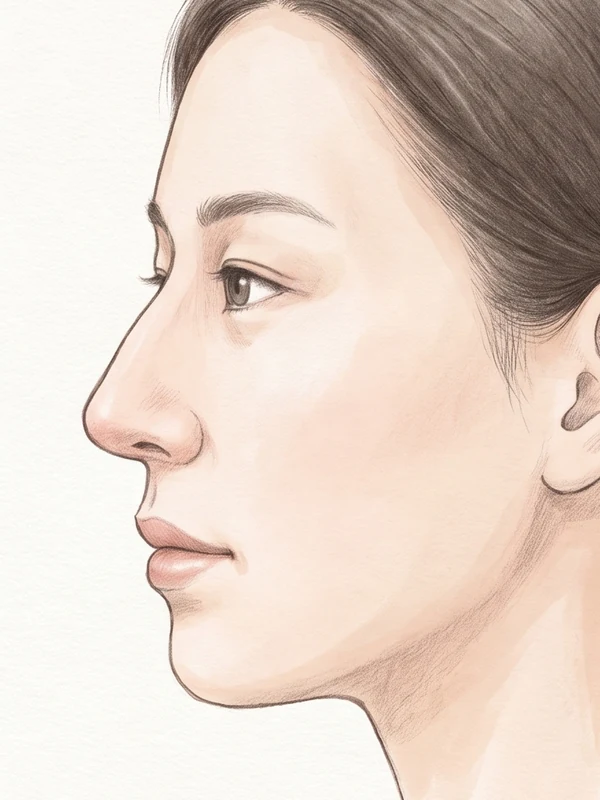
- When the nose is too high after surgeryAfter removing the implant, replace it with an implant that suits the facial shape
Revision Rhinoplasty Process
- 01
Precise Preoperative Analysis
The previous surgical method and the current shape of the nose are reviewed, and the position of the implant, grafted cartilage, nasal tip support structure, skin condition, and the degree of scarring and adhesions are analyzed. Based on this, the cause of revision surgery is identified and the scope of correction is planned.
- 02
Checking the existing implant and deformed structures
As needed, existing implants are removed or replaced, and tissue that has been deformed or has adhesions due to prior surgery is assessed. The condition of remaining structures needed for reconstruction, such as the septum and nasal tip cartilage, is also evaluated.
- 03
Nasal Structure Reconstruction and Correction
The deformed nasal bridge and nasal tip structures are corrected, and if needed, insufficient support is reinforced using autologous cartilage or similar. Depending on the individual’s condition, the nasal bridge, nasal tip, septum, and other structures are selectively reconstructed to form a stable nasal structure.
- 04
After surgery
The position and shape of the nasal bridge and nasal tip, left-right balance, and support are checked so that a more stable and natural nasal line can be formed.
Points of Revision Rhinoplasty
Revision Rhinoplasty — KakaoTalk 1:1 Consultation
If you are curious about your previous surgical history or your current nose condition, you can inquire via KakaoTalk before consultation.
Revision Rhinoplasty Frequently Asked Questions
I am not satisfied with my nose surgery. When can I have revision surgery?
In general, revision surgery is considered after postoperative swelling and inflammation have subsided and scar tissue has sufficiently stabilized, and about 6 months later is often considered. However, if there are problems that require immediate treatment, such as infection, implant exposure or protrusion, or skin damage, early removal or treatment may be needed depending on the condition.
My nose has become too high. Can it be lowered?
It may be possible. After checking the height and position of the current implant, the condition of the nasal tip, and skin laxity, the existing implant can be removed or replaced with a lower implant, and the height and line of the nasal tip can be adjusted together.
After nose surgery, the implant seems warped or shifted to one side. Can it be repositioned?
If the implant has shifted or the axis of the nose itself is crooked, the cause is identified and then the existing implant may be removed or repositioned, and if needed the nasal bone and cartilage structures can be corrected together.
The nasal tip looks too pointed, or the cartilage shows through. Can I have revision surgery?
If the skin is thin or the shape and position of cartilage grafted at the nasal tip are inadequate, the contour may show through or be palpable. After assessing the existing grafted cartilage and skin condition, we consider refining or repositioning the cartilage and, if needed, reinforcing the soft tissue.
After nose surgery, the nasal tip is upturned and the nose has become shorter. Is this contracture?
If the nasal tip gradually lifts after surgery and the nose has become shorter, several causes, including contracture, should be identified. Scar tissue and adhesions, capsules, the presence of inflammation, and the nasal tip support structure are evaluated, and if necessary, the existing implant can be removed, adhesions released, and the nasal support structure reconstructed using autologous cartilage or similar materials.
Do existing implants have to be removed during revision rhinoplasty?
It is not always necessary to remove it. If there are no problems with the type, position, and shape of the existing implant and the condition of the surrounding tissue, it may be retained. Conversely, if there are problems such as malposition, showing through, inflammation, or contracture, removal or replacement is considered.
Septal cartilage was already used in the first surgery. What cartilage is used for revision surgery?
It depends on the type of cartilage previously used, the amount of remaining cartilage, and the support needed for revision surgery. Depending on the condition, other autologous cartilage such as ear cartilage or rib cartilage can be considered, and it is selected according to the required amount and purpose.
Is revision rhinoplasty more difficult than the first surgery?
In general, revision surgery involves more factors to consider because the normal structure may have changed due to previous surgery, and scarring and adhesions may have formed. It is important to accurately evaluate the existing implant and grafted cartilage as well as the condition of the skin and soft tissue before establishing a surgical plan.
I have had nose surgery two or three times. Can I have revision surgery again?
The possibility of revision surgery is not determined by the number of surgeries alone. However, as surgeries are repeated, scarring and adhesions increase and the available tissue or skin surplus may decrease. Therefore, the currently remaining tissue and skin condition must be assessed to determine the range that can be safely corrected.
If I have revision surgery, can my nose completely return to how it was before the first surgery?
Removing the existing implant does not necessarily mean a complete return to the pre-surgery state. This is because cartilage may have been excised or repositioned in the previous surgery, and scars and adhesions also remain. The goal of nasal revision surgery is not so much to restore the original state as to correct the current cause of the nasal problem and recreate a stable structure and a natural line.
After Dorsal Hump surgery, can a revision be done by adding only osteotomy?
Question details: I had Dorsal Hump surgery last October under partial anesthesia and via a non-incisional approach. The protruding hump was removed, but because they said the shaved surface was not wide, no osteotomy was performed; the tip was corrected with cartilage repositioning and cartilage tying. After the swelling subsided, from a full side view it is straight, but the sides of the nasal dorsum protrude so at a 45-degree angle it still looks like a hump, and on the front view the shaved portion of the dorsum looks wide like a trapezoid. 1. By narrowing with osteotomy, can the protruding sides and dorsum be corrected? 2. If I add only osteotomy, will it affect the tip?
1. If the nasal bones still look wide on the front view even after hump removal, osteotomy can improve it. Also, osteotomy reduces the shape of both sides of the nasal bones, so the bone width decreases and, as a result, the dorsum may appear slightly higher. 2. Osteotomy has little effect on the tip.
Three months after nose surgery, my tip seems to have dropped. Do I need revision surgery?
Question details: I’m wondering if the tip drops again after nose surgery. It has been 3 months since surgery, and the tip seems a bit lower. I asked not to make the tip too high during surgery, and I regret it.
Immediately after surgery, due to swelling and tissue tension, the tip can look slightly higher, and it settles naturally over time. It is hard to say all of this is tip droop. However, if the original tip support is weak or the skin is thick and heavy, surgery should account for long-term changes. At 3 months, swelling and scars have not fully matured, so it is better to continue observation.
What is checked before nose revision surgery?
The condition of existing implants and grafted cartilage, the surplus of skin and soft tissue, the degree of scarring and adhesion, and the support structure of the nasal septum and nasal tip are comprehensively checked. After accurately identifying the cause of the revision surgery, the necessary parts are selectively corrected.
In what cases is revision nose surgery considered?
Revision is performed when, after previous rhinoplasty, the shape of the bridge or tip looks unnatural or asymmetry has developed, or when re-correction is needed due to implant malposition or show-through, tip deformity, contracture, and so on. Previous surgery may have left scarring and adhesions inside the nose and changed its structure, so the condition of existing implants and grafted cartilage is checked first.
What are the steps of revision nose surgery?
We analyze the previous surgical method, the current shape of the nose, implants and grafted cartilage, and skin condition to identify the cause before proceeding with revision. As needed, existing implants are removed or replaced, and deformed or adhered tissue is checked. Next, the necessary structures among the bridge, tip, and septum are selectively corrected, and insufficient support structures are reinforced with autologous cartilage and other materials. Finally, we check the position and shape of the bridge and tip, left-right balance, and support.
Depending on the individual, side effects such as bleeding, infection, swelling, asymmetry, and scarring may occur, and the degree may vary. Please make your decision after sufficient consultation with a specialist.
View together by rhinoplasty type
Please review our complete guide to Low Nasal Bridge, Upturned Nose, Arrow Nose, Deviated Nose, Dorsal Hump, Alar Reduction, revision rhinoplasty, and Rhinoplasty.
View rhinoplasty types and revision, with 3D CT analysis, on one page.
NOSE Low Nasal BridgeLow nasal bridge surgery can be performed in various ways depending on the height and shape of the nose, skin thickness, and overall facial proportions.
NOSE Upturned Nose/Short NoseAn upturned or short nose refers to a shape in which the length of the nose is relatively short or the nasal tip is lifted upward so that the nostrils are highly visible from the front.
NOSE Arrow Nose/Long NoseAn arrow or long nose refers to a shape in which the nasal tip droops downward or the length of the nose appears long relative to the face.
NOSE Deviated NoseA deviated nose refers to a shape in which the nasal bridge or nasal tip bends to one side away from the facial midline, making the nasal line appear asymmetric.
NOSE Dorsal HumpA dorsal hump refers to a shape in which the nasal bone and cartilage forming the nasal dorsum are overly developed or protruding, so that the middle portion of the nasal dorsum appears bulged in profile.
NOSE Alar ReductionAlar reduction is a surgery that adjusts the width and shape of the alar to create a more balanced nose shape when the alar is widely spread to the sides or the nostrils appear large, making the nose look wide and blunt.
Revision Rhinoplasty — KakaoTalk 1:1 Consultation
If you are curious about your previous surgical history or your current nose condition, you can inquire via KakaoTalk before consultation.